Tl;DR : Nigel reflects on his understanding of Chan Buddhism, its skillful practices and where to learn the ropes. This article is intended as a springboard for interested readers to dive deeper into the Zen Buddhism practice.
Encountering Chan Buddhism in Singapore
When the student is ready, the teacher appears. That was truly my experience of encountering Chan Buddhism, otherwise referred to as Zen Buddhism. This student-teacher encounter happened over a spontaneous meeting a few years ago and sparked what seems like a lifelong love affair with the Dhamma.
To practice and understand the Dhamma is a rare and precious thing.
Few people in the world are presented with this opportunity.
Most people are circling around, driven by ignorance and desire, unaware of the possibility of getting off this wheel of samsara, the wheel of greed and hatred.
Excerpt from Settling Back Into The Moment (Joseph Goldstein, American writer and co-founder of Insight Meditation Society with Jack Kornfield)
I consider myself as having drifted from Chan practice since that encounter. Recently, I’ve spent more time reading early Buddhist texts and practising in the Thai Forest tradition. Nevertheless, Chan teachings continue to provide me with a strong grounding in daily practice and in the understanding of dharma.
Let’s talk about what could be useful to your journey. In this article, I hope to share an introduction to Chan Buddhism and Zen Buddhism in Singapore, based on whatever limited exposure I’ve had to the organisations and teachers that I’ve encountered to date. I’ll write on what I’ve found unique in Chan Buddhist and Zen Buddhist practices since this is possibly beneficial to any Dharma practitioner, or anyone interested in Dharma. This article will also point towards communities, activities based in Singapore, teachers, and resources you could tap into to begin your own Chan Buddhist or Zen Buddhist journey.
May this article be a fruitful encounter with Chan Buddhism for you.
What is Chan Buddhism?
This is a huge and important question, one that I’m unfortunately not qualified to answer. But I’ll share what I might know!
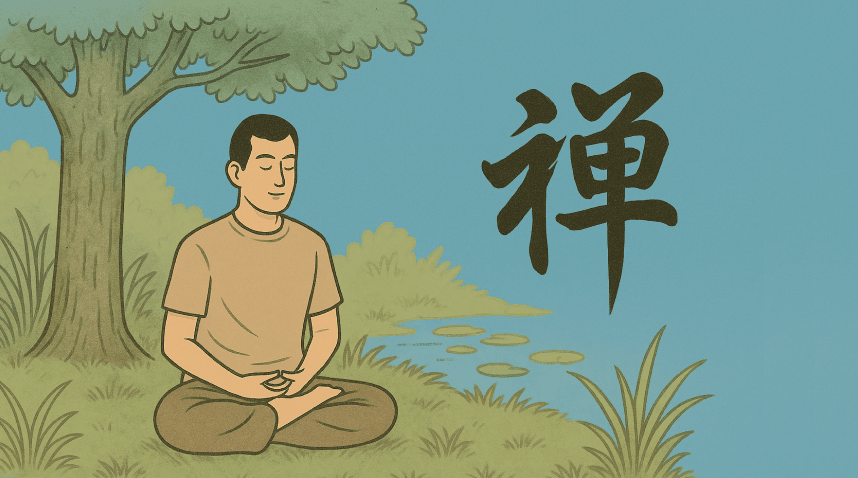
The literal answer is that (禅) Chán is simply the Chinese form of Zen Buddhism. Rooted in the teachings of Bodhidharma, often regarded as the first Chinese patriarch for transmitting Chan Buddhism to China, Chan Buddhism emphasizes meditation (禅修) and direct insight over ritual and scripture.
At its heart, Chan Buddhism invites practitioners to be aware and actively engage in the present moments of daily life. The goal, according to Master Sheng Yen’s The Effect of Chan Meditation, is to live life with wisdom and compassion. Meditation is the main focus towards achieving this goal.
On the historical and conceptual level, this is possibly too wide a topic to cover. To properly place Chan Buddhism in history and in practice, I’d like to refer you to Orthodox Chinese Buddhism, a work of Chan Master Sheng Yen (圣严法师). For the diligent student, you may want to read at least the following chapters:
- 4.4 Can One Become a Buddha Instantaneously? (pg 100)
- 4.9 How Many Schools of Buddhism Are There? (pg 115)
- 4.12 What Are the Sudden and Gradual Approaches to Enlightenment? (pg 124)
The volume is an incredible reflection of Master Sheng Yen’s scholarly understanding and spiritual realisation.
For the purpose of this article, it’s probably sufficient to understand Chan as Zen, and Zen as Chan. I personally use ‘Chan Buddhism’ to refer to the more distinctly Chinese traditions of Zen present in Singapore, such as Dharma Drum Mountain and Wisdom Light Meditation; whereas I tend to use ‘Zen Buddhism’ to refer to the other non-Chinese traditions of Zen which I’ve encountered in Singapore, such as Joyful Garden Sangha (local chapter of the Plum Village tradition) and Kwan Yin Chan Lin (local chapter of Korean Zen Master Seung Sahn’s tradition)
As you can see, it’s a very arbitrary distinction that I’m making between Chan and Zen Buddhism in this case. I will be introducing both in broad strokes throughout this article, hopefully with no offence to anyone.
Temples and communities offering Chan Buddhist / Zen Buddhist practice in Singapore
In my opinion, the best way to understand Buddhism is to practice and experience it for yourself. It’s easy to have preconceptions about certain practices and traditions, not least because assumptions require no effort. Unfortunately, it’s possibly also costly (in terms of one’s time and energy) to have misconceptions, because you could be denying yourself some real insight. All this probably holds true for Chan practice too. Ehipassiko!
Dharma Drum Mountain Singapore

Dharma Drum Mountain was a place of Chan cultivation founded by Master Sheng Yen in Taiwan, and they have a local chapter in Singapore. If the Chinese language is no barrier to you, and you’d like to understand Chan practice, I highly recommend the introductory dharma course at Dharma Drum Mountain Singapore 法鼓山新加坡护法会 entitled “快乐学佛人” or Joyful Dharma Practitioner. The course syllabus is insightful and engaging. It introduces useful concepts that can be directly applied to daily living, and illuminates your understanding of dharma.
If Mandarin Chinese is not your strongest suit, Dharma Drum Mountain has also introduced English study groups in recent years, including one based in the Asia Pacific (APAC) region. With over 200 chapters internationally, you will not have to worry about being able to find a community or access to Master Sheng Yen’s teachings and instructions. More about Master Sheng Yen’s life story can be accessed here: Youtube video.
Wisdom Light Meditation Society
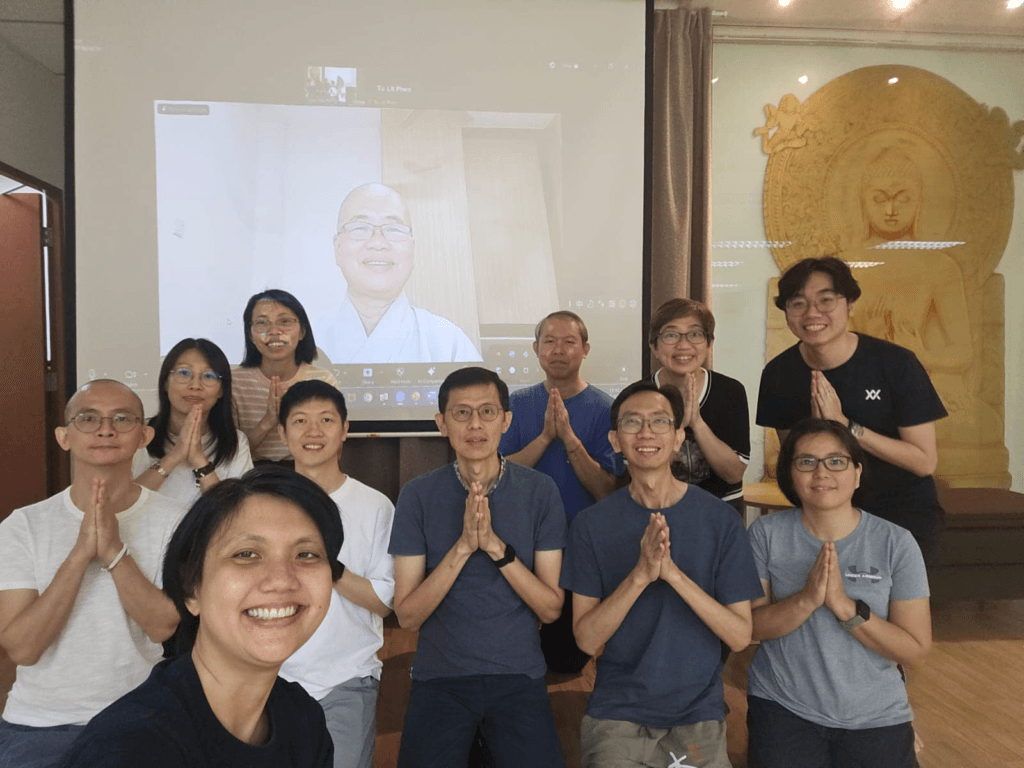
Another community that could help you to progress in Chan Buddhist practice and understanding is Wisdom Light Meditation Society 慧灯静修会. Founded by Master Ji Cheng 继程法师, a contemporary of Master Sheng Yen, this is a rare opportunity to receive instructions from a living Chan master and his disciples. Similar to Dharma Drum Mountain Singapore, Wisdom Light Meditation Society organises regular meditation classes, meditation retreats, and has even introduced English meditation instruction in recent years.
Joyful Garden Sangha

Joyful Garden Sangha is the local chapter of the Plum Village tradition of Thich Nhat Hanh. The community and practice has been described by some as “second to none” in terms of inclusivity for practitioners of all races, backgrounds, spiritual traditions, sexualities (yes they are LGBTQIA+ friendly) and nationalities. The fact that this local chapter is led by a skilful and committed lay sangha (non-monastics) also speaks to the strength of its members’ conviction regarding each person’s potential to be liberated from their suffering.
Joyful Garden Sangha organises once-a-month day retreats called Day of Mindfulness (DOM) on the last Sunday of each month. Beginners are encouraged to attend DOM in order to understand Plum Village practices. Subsequently, one can join Joyful Garden Sangha’s regular practice sessions on Monday and Thursday nights too.
Kwan Yin Chan Lin
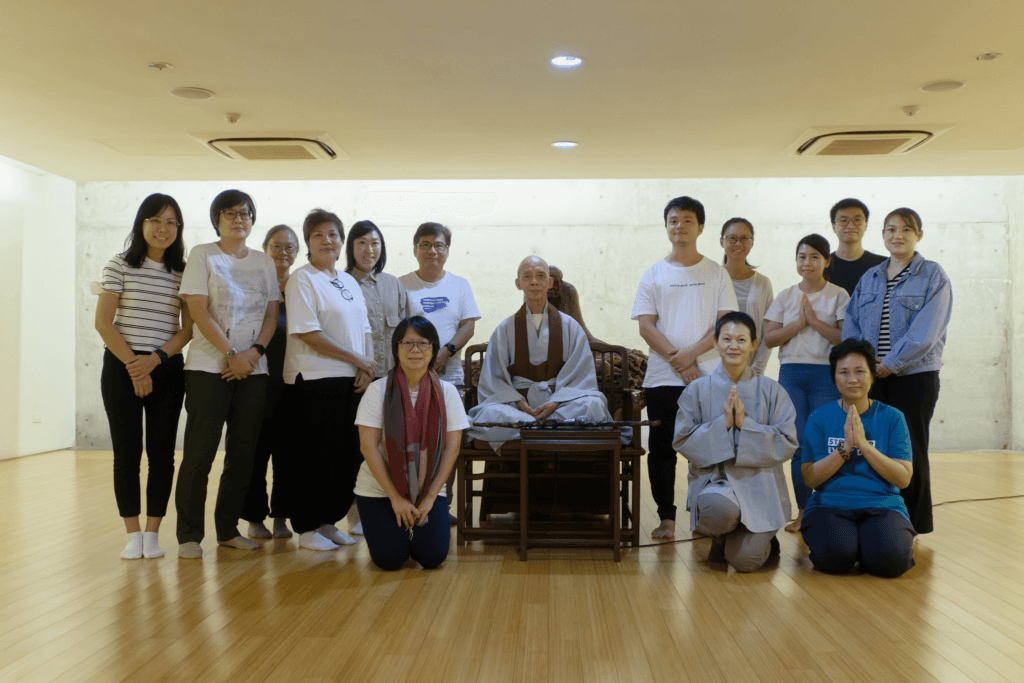
Kwan Yin Chan Lin, founded by Master Chi Boon in 1991, teaches based on the lineage of the late Zen Master Seung Sahn. I understand their meditation practice to be koan-based, but I haven’t attended their meditation course. What I’ve really enjoyed thus far from this lineage of Zen Buddhism, are the talks on Musangsa channel. Seung Sahn International Zen Center Musangsa provides Zen training following the teachings of Zen master Seung Sahn. Their teachers also visit Singapore from time to time. One such example was Master Dae Bong’s visit during Vesak in 2024!
The titles of Musangsa teachings are almost like Zen koans in themselves, for example: What is Your Correct Situation? and Don’t Know What the Result Will Be. They really help me to access the beginner’s mind (初心) whenever that gets rusty, and I start getting into meditation sits with some kind of pompous ‘been there done that’ attitude. I can imagine Master Dae Bong or Master Seung Sahn saying “We’ll have none of that”, or “Hah!” (an explosive martial art-type sound used in Zen practice grounds such as Musangsa). These are very good reminders to stay humble, if ever one were needed.
Skillful practices which I’ve encountered in Chan/Zen Buddhist traditions so far
1)Tuning the body
During the introductory course at Dharma Drum Mountain Singapore, I got to experience their Eight Form Moving Meditation. Unlike practising in the Theravada tradition where some beginners might go into meditative postures (e.g. ‘just sit’) without detailed preparatory steps, Dharma Drum prescribes specific movements to help tune the body, in order to prepare for longer periods of sitting meditation.
Later on, I came to appreciate that such a practice of ‘tuning’ or ‘becoming aware of the body’ is fundamental to how a meditator moves through everyday life, and it is not just a practice confined to formal sits. How apt in that case, that Dharma Drum emphasises body awareness. One could probably draw parallels between the Chan Buddhist emphasis on body awareness, and the practice of Kayanupassana (Pali for ‘body contemplation’) for the Theravadins.
If you’d like to learn such a technique, be sure to attend Dharma Drum Singapore’s Meditation Classes. They are often oversubscribed, and a seat has to be booked in advance via EventBrite.
2)Moment-to-moment awareness
At Joyful Garden Sangha, every moment we experience could be an object of meditation. When we listen, we practise deep listening. When we lie down to rest, we are also paying mindful attention to the body relaxing and the breath. When helping to clean the Sangha home or to prepare it for practice, that gesture is service meditation.
Within just one Day of Mindfulness practice, I was introduced to all of these types of meditations and more. The emphasis on moment-to-moment awareness in the Zen practice of the Plum Village tradition has powerfully prepared me for the Buddha’s teaching on heedfulness, and facing the danger in heedlessness. As they would also say at Dharma Drum – where the body goes, the heart-mind goes (身到哪里,心到哪里). I felt wonderful to be surrounded by like-minded people practising joyfully and with contentment.
3)Meditation objects: Alternatives to breath meditation
Through Chan and Zen traditions, I also learnt that there exist meditation objects other than breath. Even while Annapannasati or ‘mindfulness of breathing’ remains highly recommended wherever I go, certain practitioners may find Kōans helpful, and some others prefer recitation of the Buddha’s name (nìanfó 念佛) as meditation objects that are beneficial to their practice. We each have such diverse dispositions towards what calms our minds after all.
In fact, when we recite ‘Buddho’ in the Luang Por Chah tradition of Thai Forest Buddhism, I find this quite similar to the recitation of the Buddha’s name. Of course, there may be a difference between the aspirations of practitioners from different traditions. Regardless of Buddhahood, or Arhatship, or Bodhisattva vows, when you’re just getting started, meditation is just meditation!
If you’d like to experience Kōan meditation you might want to check out the meditation courses at Kwan Yin Chan Lin. Kōans are “a seemingly paradoxical or enigmatic statement, question, or story used as a tool for meditation and contemplation in Chan and Zen Buddhism”, according to The Lion’s Roar. I have yet to pick up kōans as a meditation object myself, so I’m not able to share much more.
4)Social service and community work
As I’ve mentioned earlier regarding service meditation, I find social service and community work to be quite consistently a part of Chan or Zen Buddhism.
Perhaps, because these traditions belong to the Mahayana lineages whereby helping others and liberating other sentient beings (in addition to seeking one’s own liberation) is an important part of practice. That is not to say that Theravadins only fold their legs and sit quietly. Theravada teachings also emphasise the importance of cultivating the Ten Paramī, of which Dana-parami (generosity) is the first. Thai Forest Tradition teachers condense the basis of Buddhist practice as dana, sila, bhavana (generosity, morality and mental cultivation).
The topic of generosity is something for us to ponder at some point as a journey along the path of Dharma – our relationship to others, our relationship to society, our relationship to ‘Nibbana’, and what the concept of ‘service’ means amongst all of that. When we volunteer, is it really Me that is helping the Others? Or is it the case that I am getting a chance to learn generosity and build other spiritual virtues (or paramī)? Each of us will need to find our own answers.
The further I journey along the Theravadin path, the more I understand that social service and community work could also be seen as skilful means of “Emptying out the self,” which resonates deeply with the Chan insight of 無 (wú, nothingness). “Empty out yourself” is a point that my teacher, Luang Por Ganha constantly emphasises.
One of the first teachings I received from Luang Por Ganha was that “Work is happiness, happiness is work”. Just as we go to work in order to contribute to society and volunteer in order to build our skills and paramī, I believe that Chan or Zen practitioners are also leveraging social service as a practice ground for the ultimate realisation of No Self (or Anatta). If we go into these practice grounds desiring anything else other than Giving (such as wanting to get praise, or a high salary, or to win status), Luang Por Ganha cautions that we can only expect mental health problems.
With that, I’m now empty of tips and references related to Chan or Zen Buddhism. Please reach out to correct me if any of this seems erroneous or if you’d like to comment on any of these reflections. I hope this article was of some help to you!
Thanks to Loh Wei from Dharma Drum Mountain Singapore for proofreading and contributions, and countless other noble friends and noble teachers that have guided and continue to guide me in the Noble Eightfold path. May any merits accrued benefit these kalyanamittas, my teachers (lay and sangha), my loved ones, and all sentient beings connected with me in one way or another.
To explore other events, activities, communities and temples in Singapore and Southeast Asia, you can also look up our very own Handful of Leaves’ Buddhist Directory!