
TLDR: For a year, I tried to stare only at the Stupa and grew irritated with everyone else. Open awareness turned the whole scene into practice.
Editor’s Note: This is an edited version of the article first published on RYI’s Student Blog. We thank Dominic for sharing his insights with us.
Since arriving in Boudha in 2018, my curiosity has often wandered to the minds of those circumambulating the Stupa:
What captivates their attention? Which practices occupy their thoughts? Is the priority the completion of as many koras (circuits) as possible, or the state of mind that blooms from this walking meditation?
What Are We Really Doing During Kora?

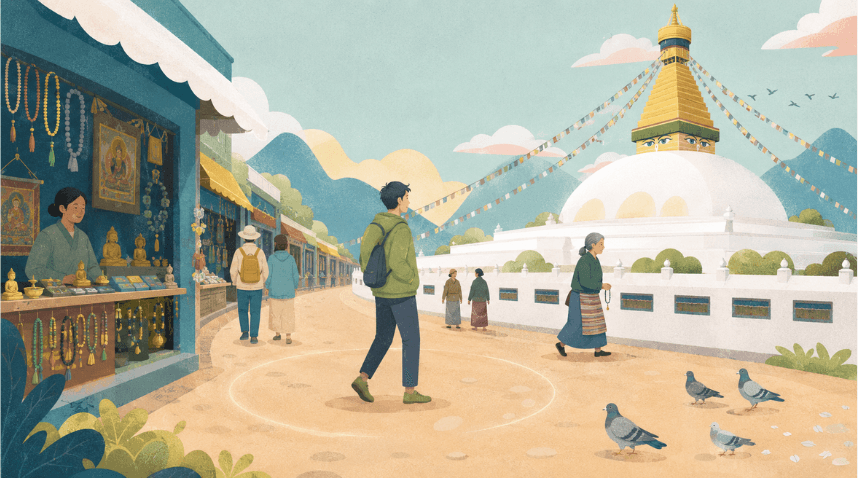
This curiosity stemmed from my own struggles with distraction in my first year here, amidst the captivating allure of shops brimming with statues, malas, and thangkas – there were just so many things to see! My gaze would invariably drift, lured by the sight of a new Manjushri thangka or an intriguing bronze frog statue, despite the majestic Stupa standing resolute before me. Guilty thoughts came frequently: here I was in the presence of one of the world’s great stupas and I was so unable to keep focused.
In an effort to counter this, I initially endeavoured to tether my mind solely to the Stupa, striving to immerse my mind fully in its magnificent presence. But this rigid focus was uncomfortable in its own way as well, not least because I would get easily irritated with the crowds. Judging my chosen focus as superior, I would silently judge in my minds everyone who it seemed to me weren’t concentrating on the stupa. Hardly the best frame of mind to be in, to be sure!
The ‘kora-practice’ that I’ve come to in the end has ultimately been to walk with an open, spacious awareness, with my attention just very lightly resting on the path in between the shops and the stupa. I take it as a kind of middle way approach between samsara (the shops) and nirvana (the stupa), that allows me to accept both without falling into distraction or a kind of conceited judginess.
It’s something derived from the open awareness shamatha practice that Chokyi Nyima Rinpoche teaches during the annual Fall Seminars:
Everything is welcome on the path, people, objects, and even the stupa are all part of a wonderful, constantly unfolding and changing illusion that I’m a part of as well.
From Counting Circuits to Counting Kindness
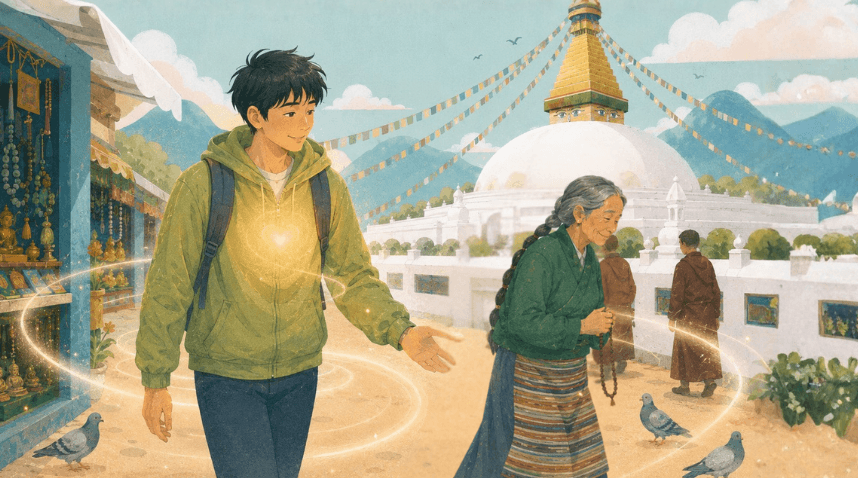
This practice helps me to take in with great affection everyone I see while doing kora, from the shopkeepers with their eyes peeled and on the lookout for customers, to the tourists in the thrall of their guides, to the young guys dutifully photographing their picture-hungry girlfriends, and even to the male pigeons puffing up their chests in the effort to impress their female counterparts. It also gives me enough spatial awareness to step out of the way of elderly Tibetan ladies barelling forward in their drive to accumulate merit!
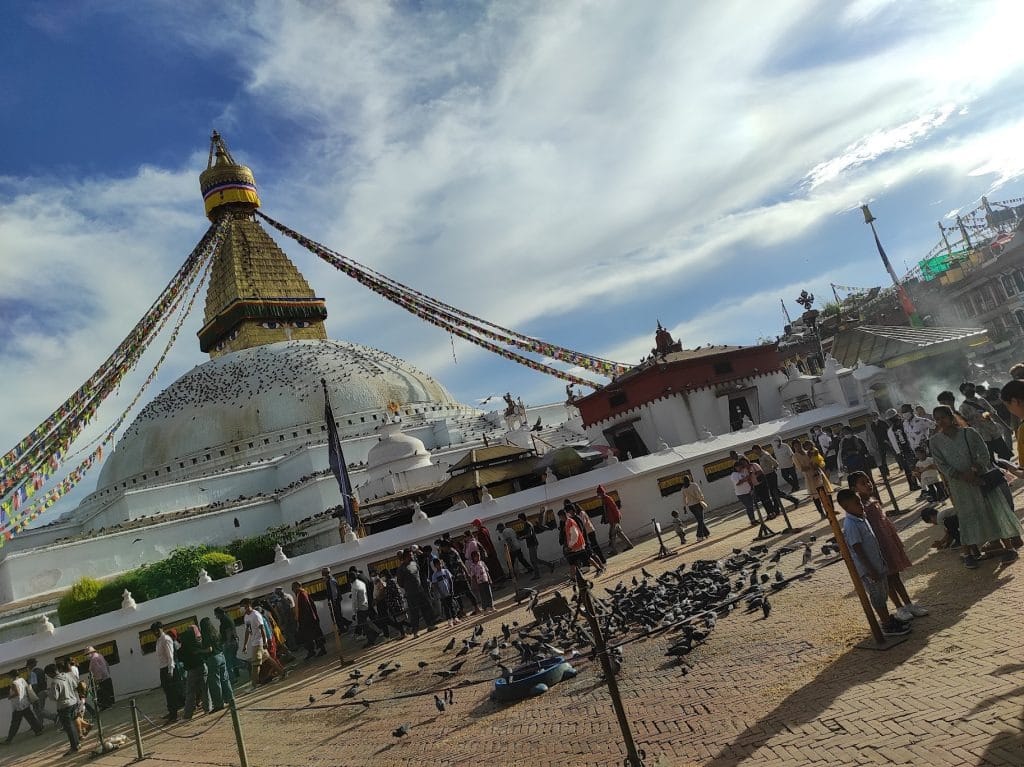
I offer up this little sharing in the hope that it’ll be of some small benefit to you in your own kora and path-walking. Together, may we tread lightly yet purposefully, nurturing seeds of understanding and kindness in every step.
Wise Steps:
- Rest attention lightly on the contact of your feet as you walk, keeping awareness open to the whole scene, for example notice heel–toe while letting shops, voices, and the Stupa pass through.
- Catch judgement the moment it tightens the chest and switch to kindness, for example silently wish “may you be well” to the person who just bumped you.