
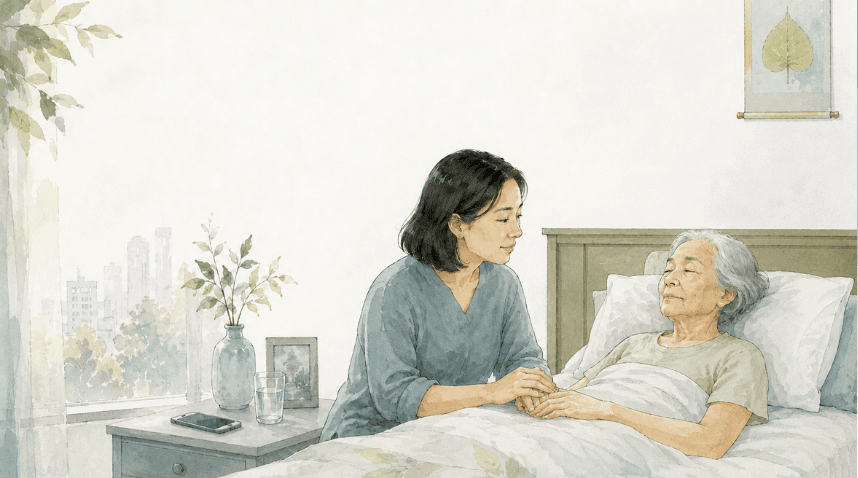
TLDR: My mother was a lifelong Buddhist who planned her final rites well in advance. When my overseas sister tried to convert her in her final days, the family spun into confusion and fear. This is how I steadied myself, respected my mother’s wishes, sought guidance from a monk, and learnt to hold interfaith differences with gentleness.
Editor’s note: Key individuals and roles have been masked, given the sensitive nature of this life event.
The Quiet Faith My Mother Carried
My mother never made a show of being Buddhist.
She didn’t quote suttas or correct anyone’s beliefs.
She simply practised. Quietly.
I grew up watching her bow before the altar, chant softly before bed, and make offerings with a calm that seemed to lighten the whole flat. The smell of incense was part of home. Her faith wasn’t dramatic; it was a quiet practice. Never pushing others to be Buddhist and being ultra chill when my sister converted to another faith.
When she fell ill, she didn’t panic. She had arranged her funeral rites years earlier and even noted the chants she hoped the monks would recite. She used to joke that her children only needed to turn up and not mess anything up.
None of us expected the “messing up” to come from faith itself.
The Call That Changed Her Mood
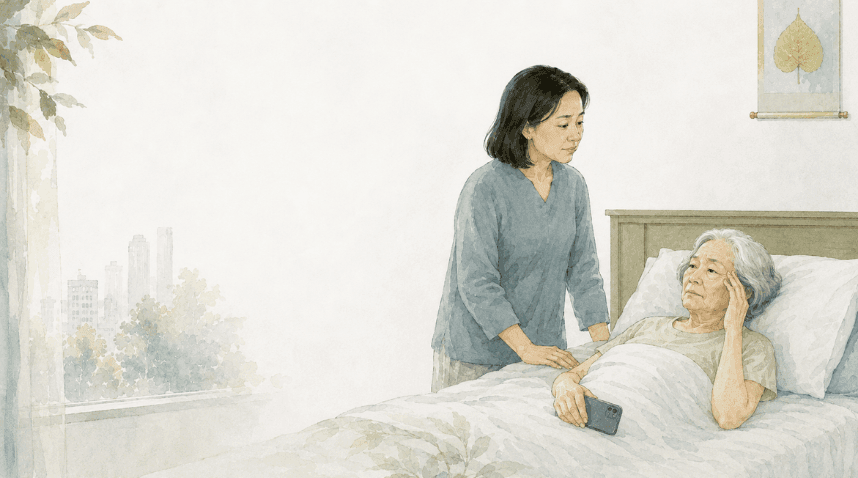
One evening, when her illness had weakened her badly, my sister from overseas called. She belongs to another religion and believed she was helping. She said conversion would guarantee salvation and pressed the point on my dying mom.
I wasn’t there. Our mother was too frail to say much that night.
The next morning, our helper pulled me aside, with a shaky voice: “Sir, Madam is different today. Something happened yesterday.”
In the room, I saw a look I had never seen on my mother. She was a fog, a lostness. She struggled to meet my eyes.
I learnt she had verbally agreed to convert because she was exhausted and overwhelmed. It wasn’t a free choice. It was pressure at a moment when she could barely hold a cup in her hand.
The Panic That Made Me Regress
I froze, then spiralled.
What if her life of practice was being overwritten?
What if she died confused?
What if this changed her rebirth?
Instead of thinking clearly, I did the most childlike thing: I leaned close to my mom and kept repeatedly saying, “Buddha is good. Buddha is the best. You cannot convert.” It was almost embarrassing. Fear made me sound like a five-year-old guarding a toy.
My mother looked at me with tired eyes, confused by my tone, my urgency, the storm around her.
In that moment, I realised the main problem wasn’t my sister’s action. It was my untrained reaction.
Settling Down
As I walked away from her bedside. Anger came next. It was hot and sharp. Why do this when Mum was so weak?
“How could my f***ing sister hellishly do this to mom??! Is she insane??” I muttered under my breath. If I had not controlled myself, I would have bought the earliest air ticket to the USA to hit her.
Why force what she didn’t believe? Do you lack basic human decency?
Anger helped no one. It only made the room heavier.
So I stepped outside. I breathed slowly and remembered a teaching I had heard many times: if your mind is messy, don’t go near the dying; they feel everything. That thought steadied me.
I went back in, sat by Mum’s bed, and held her hand without saying anything. No chants. No arguments. Just presence. Her shoulders softened. She didn’t need me to fight for her religion. She needed me to be calm.
Seeing her shaky with my angry tone was enough to make me not raise this up in front of her.
When She Passed, We Followed Her Wishes
Two weeks after that, my mother passed away. My sisters moved with the national day parade like precision.
They respected her original Buddhist funeral plans fully with the chanting, offerings, and the rites she had chosen and trusted. No one mentioned the phone call. No one tried to claim a last-minute change of faith.
It felt as if Mum’s steadiness guided us back.
A Monk’s Guidance On What Faith Really Is
Still, a lingering anxiety would not leave. I went to see ShifuYG, whom I trusted, and told him everything, including the childish “Buddha is good” moment.
He listened, then said something simple that cleared the doubt: if your mother had deep confidence in the Triple Gem, no pressured statement can uproot that. Faith is not a legal contract; it is the pattern of the heart. What she lived by is what she carried.
He added that at the moment of death, it’s the state of mind that matters, love, peace, and gratitude more than any external declaration. Keeping a kusala (wholesome) mind state is key.
Something in me let go then. I was relieved. My mother’s life spoke louder than any phone call-driven conversion.
Letting Go of My Sister’s Actions
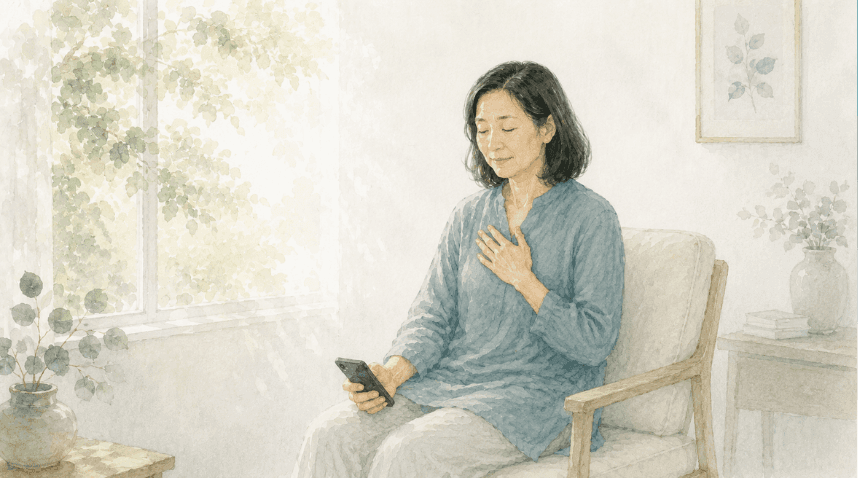
Once fear eased, anger had nowhere to sit. I started to see my sister differently. She acted from her love language. In her pursuit of what she thought was best, it created confusion. She did not mean it. She truly thought she was helping.
Our beliefs clashed, but our intentions were not enemies.
Forgiveness wasn’t instant, but it became possible. It felt like a continuation of my mother’s gentleness. What would Buddha do? I would ask myself.
He would forgive again and again.
What This Taught Me About Interfaith Families
In Singapore and Malaysia, mixed-faith families are common. When sickness or death arrives, differences can sharpen quickly. The Dhamma keeps bringing me back to a few truths:
- Protect the dying from conflict. Peace of mind is the best gift. It matters more than winning a religious argument.
- Don’t weaponise religion. No faith thrives on pressure; real faith is offered, not imposed.
- Respect lifelong practice over last-minute confusion. Decades of cultivation outweigh a frail moment.
- Steady your own mind first. The dying absorb the emotional weather; a calm presence helps more than frantic chanting.
- Forgive sooner than you feel ready. Forgiveness is not approval; it is laying down a weight.
- Remember intention. The quality of the heart shapes the journey on; love and clarity travel further than fear.
Closing
My mother died as she lived: quietly Buddhist, quietly steady.
Her faith did not falter. Mine almost did.
This whole episode showed me what the Dhamma looks like off the cushion: not flawless serenity, but the courage to pause, breathe, and choose kindness even when the heart is shaking. If your family has wrestled with faith at a hard moment, may this story remind you that clarity and compassion can find their way back in.