

From Meditation Hall to Comic Page: Reimagining the Jataka Tale Mahasilava
TLDR: A lay meditation practitioner brings a Jataka tale to life through the creation of a comic, guided by the Buddha’s teachings. In doing so, the process reframes the author’s understanding of suffering and its place in the modern world.
“Better than a thousand verses comprising useless words, is one beneficial single line, by hearing which one is pacified.”
– The Dhammapada, Translated by Venerable Narada Thera
A Time of Awakening
Sitting with eyes closed in a dark meditation hall, I listened to my teacher’s voice chanting and explaining the Anapanasati Sutta, the authoritative teaching on using the breath as an initial focus for meditation.
I felt transported to the time of the Buddha. Gradually, as I began my meditation practice, I gained a vivid understanding of the Buddhist period within Indian history, a significance I had not experienced before. So this was the Buddha’s teaching! These were its effects on the land and the people!
The practice of Anapanasati, followed by Vipassana (insight meditation), was eye-opening. Over the years, as I continued my meditation practice, the Lord Buddha’s life and the constellation of beings around him became familiar companions. They guided me; they inspired me, and they became a wholesome presence in my mind. Episodes from the Buddha’s life inspire practitioners as much as his parables. Against this backdrop, the colour and energy of the Jataka tales sprang forth.
What were once amusing cartoons in my childhood became teachings that came alive with pulsating incidents. In that light, I recalled the Lord Buddha’s previous lives when he triumphed over the most harrowing circumstances. Meditation practice truly makes the teachings of the Buddha more vivid.
A New Journey
One day, I brought the sensibilities of my filmmaking career into the creation of a comic book, as a whimsical departure from my well-trodden path. Thus, I began a new journey.
I selected the Jataka tale (ancient Buddhist stories that recount Gautama Buddha’s past lives) Mahasilava. It is about the time Lord Buddha was born as King Mahasilava, who pledged never to take a life. However, the King lost his kingdom after being betrayed by one of his ministers. Nevertheless, heheld fast to his noble intention and faced the most dangerous circumstances.
My initial reading of the story, some years earlier, had left an impression of tremendous tension and stress. This was nothing short of King Mahasilava’s painful story of endurance.
When I set out to create the comic, author and comic book artist Anupam Arunachalam introduced me to Harsho Mohan Chattoraj, one of India’s most prolific illustrators in the field. Having this fortunate encounter with Harsho, I decided to involve him in my project.
Harsho specialised in what would be considered in Buddhist parlance as the realms of hungry ghosts. Initially, we interacted through a scribbled draft of the entire comic.
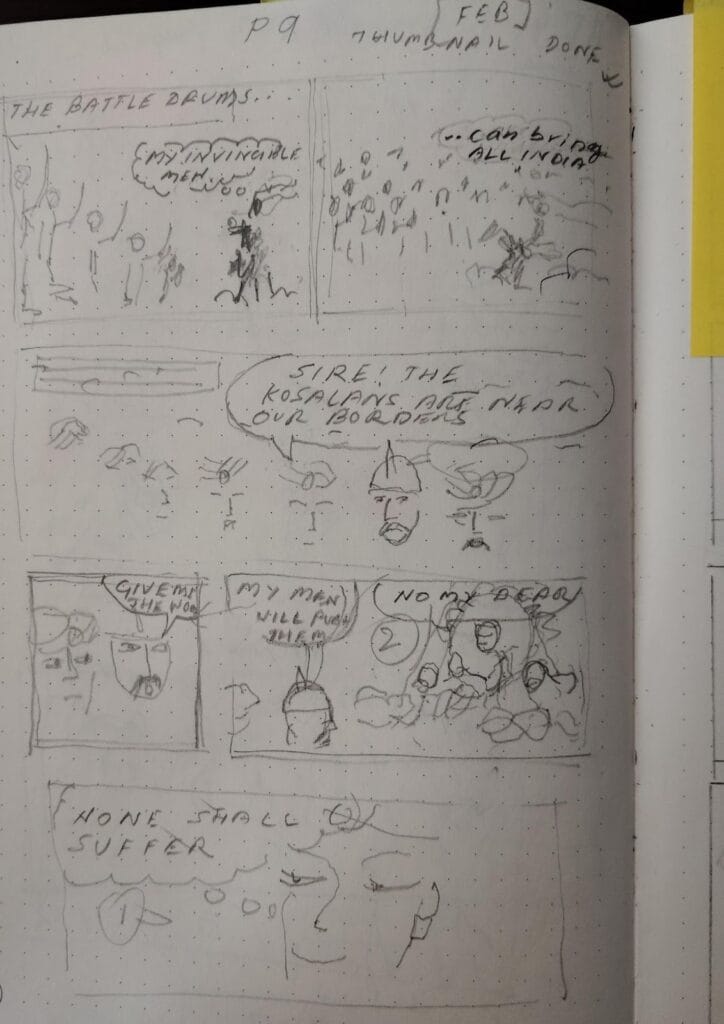
The Process
Months of virtual conversations unfolded between Harsho and me. Throughout the whole process, we met in person only twice. The pages trickled into life intentionally and gradually.
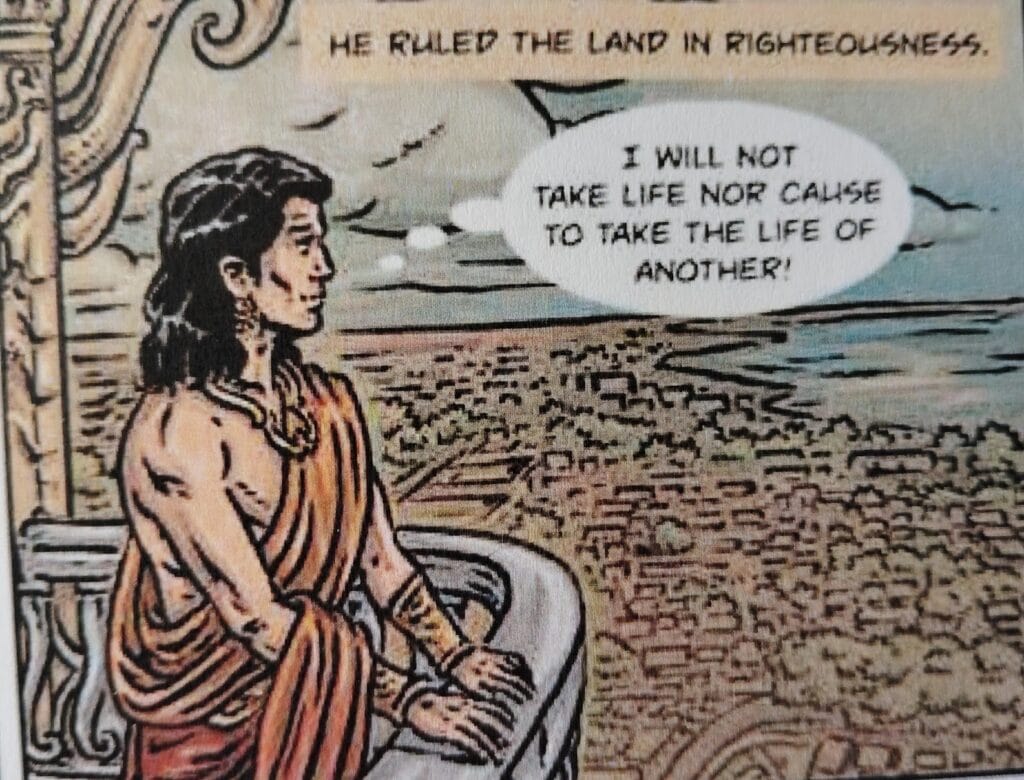
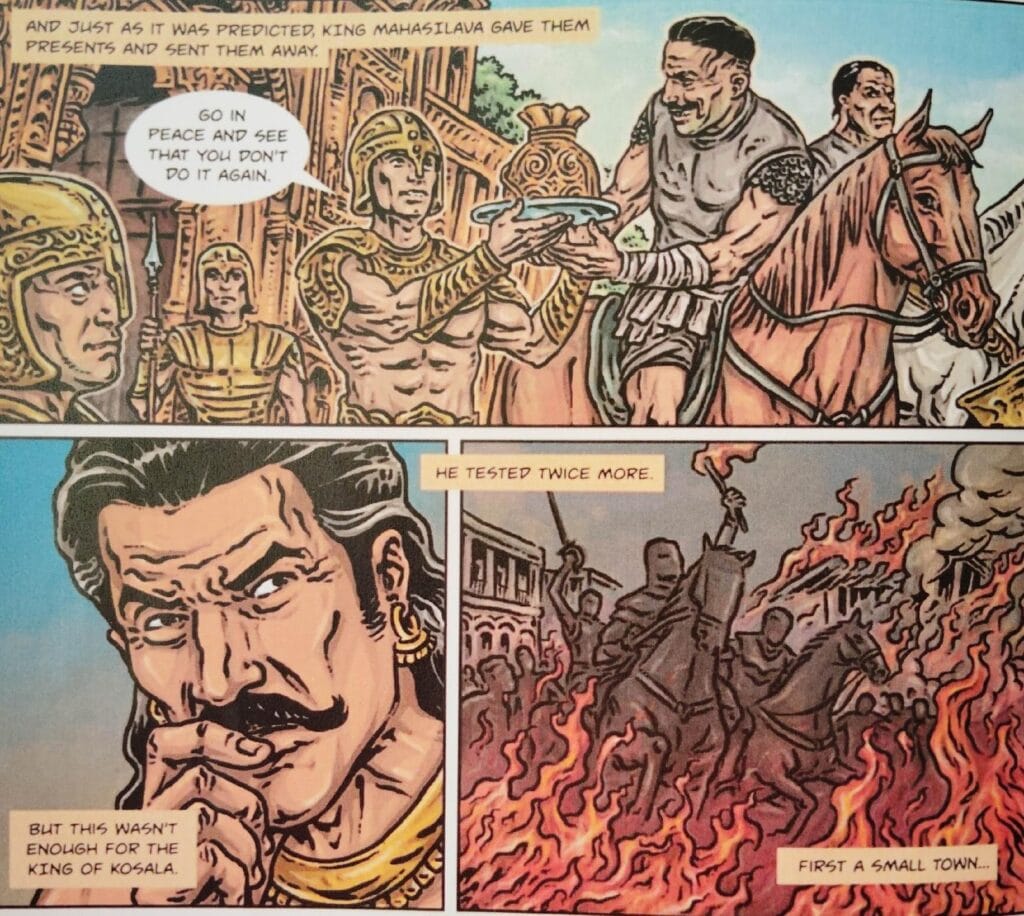
We collaborated panel by panel, line by line. Harsho illustrated far more than he had intended to. Mahasilava’s world started taking form. I suggested imagery from archaeological sites like Ajanta and artefacts from Gandhara and Pala. “As long as it was Buddhist,” I thought. The eclectic references somehow harmonised.
Throughout the creation process, I took up sketching for the main purpose of communicating with Harsho. Along with my daily dose of meditation, I added another hour to practice drawing. I drew with a meditative approach: focusing solely on the act of moving my pencil across the paper.
In another way, sketching trained me to observe. As the comic progressed painstakingly, my scribbles formed drawings over time, and I even had a go at experimenting with colours.

Harsho considered my inputs with utmost seriousness. Preserving his individuality, he arrived at unexpected results that rendered King Mahasilava’s story with striking vividness. Finally, we completed the comic!
The Cover
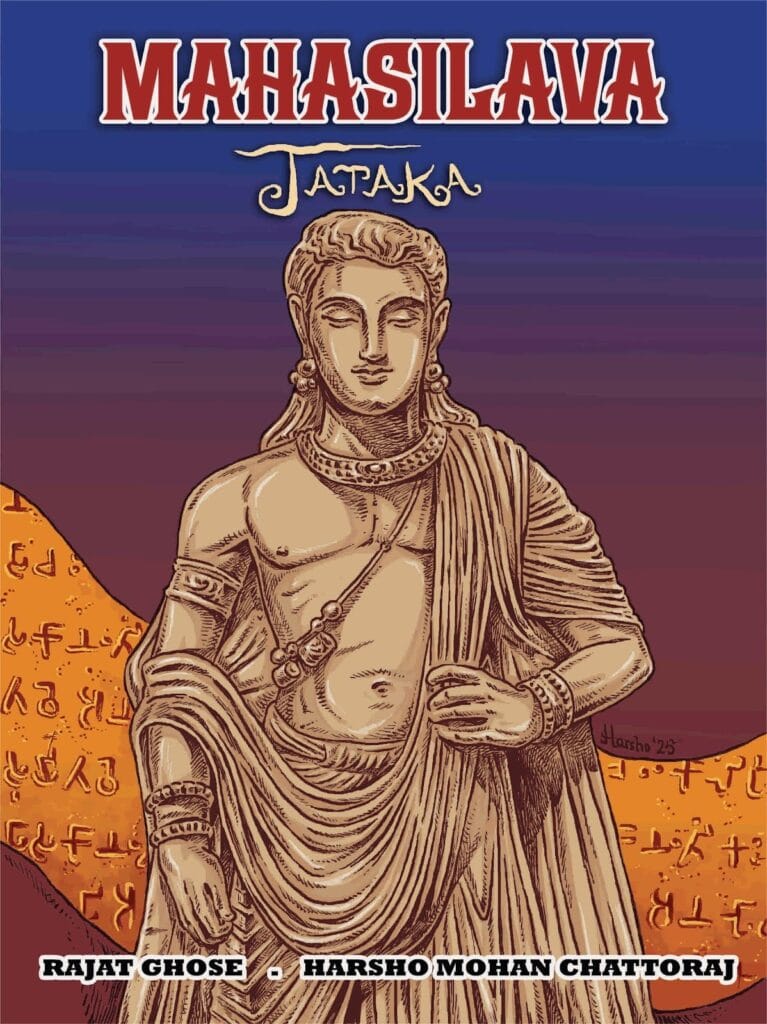
During our collaboration, Harsho had visited Abu Dhabi, where he saw a Gandhara statue of the Bodhisattva. Since then, Harsho had the idea of designing a cover image based on the statue. When he finally created a cover, it was an image of Mahasilava presented as a sculpture, preserved for timeless posterity.
Final Thoughts
The comic turned out differently than I expected. The story emerged with a raw edge, in which a reader commented that some parts were too violent and gruesome. But hey, I chose to stay true to the Theravada text. (Spoiler alert!) When the story progresses to a charnel ground with hungry jackals and corpse-feeding Yakkhas (powerful nature spirits in the Buddhist Cosmology), there is no way of softening the blow of reality.
Turning to today’s entertainment industry, a question arises. How literal and unflinching has entertainment media become? How much do audiences, including younger ones, stomach these days? The eventual question is, to what end are we consuming? Such images and stories shape the mind towards desire and aversion, strengthening the ignorance that clouds our understanding of suffering and impermanence. Few people pause to see this influence clearly.
By contrast, the Jataka tales resolve very differently. They do so peacefully, leading most viewers from suffering to a place beyond suffering. Stories from the Buddha’s past lives imbue the reader with peace and wisdom.
Once exposed to these stories, readers and audiences may be inspired to navigate emotions, reach a state of equanimity and understand impermanence. This was the Dhamma direction from which I developed the comic Mahasilava. I hope this interpretation of the Buddha’s past life as King Mahasilava brings peace and happiness for all beings.
Wise Steps
- Read translations of the Jataka Tales in their original form from the Theravada Canon. Each story contains particular teachings of the Lord Buddha, which are relevant to the everyday practise of the Dhamma.
- Be mindful of consuming entertainment, which may perpetuate one’s greed, aversion and delusion.
MAHASILAVA is a 24-page comic written by Rajat Ghose and illustrated by Harsho Mohan Chattoraj. It is currently available on Amazon Kindle in the US, UK, France, Italy, Germany, Netherlands, Japan, Brazil, Mexico, Canada, Australia and India.
All text and images of MAHASILAVA Comic by Rajat Ghose illustrated by Harsho Mohan Chattoraj are Copyright Rajat Ghose 2025