Who is Asking to be Born, Again?
Wrestling with Karma, Illness, and the Buddhist Truth of Rebirth
TLDR: What if rebirth isn’t just about a next life but something we’re already living through in every moment? This reflection explores how karma, suffering, and impermanence shape not only our bodies and stories but also the deeper questions of who we are and who keeps being reborn.

Last Wednesday, after facilitating our Care and Share session with Rainbodhi Singapore, someone in the group said something that really made me pause. He shared that he’s a Buddhist, but doesn’t believe in rebirth. I wasn’t offended or eager to debate; it just genuinely made me stop and reflect, questioning something I’d long taken for granted in my own understanding.
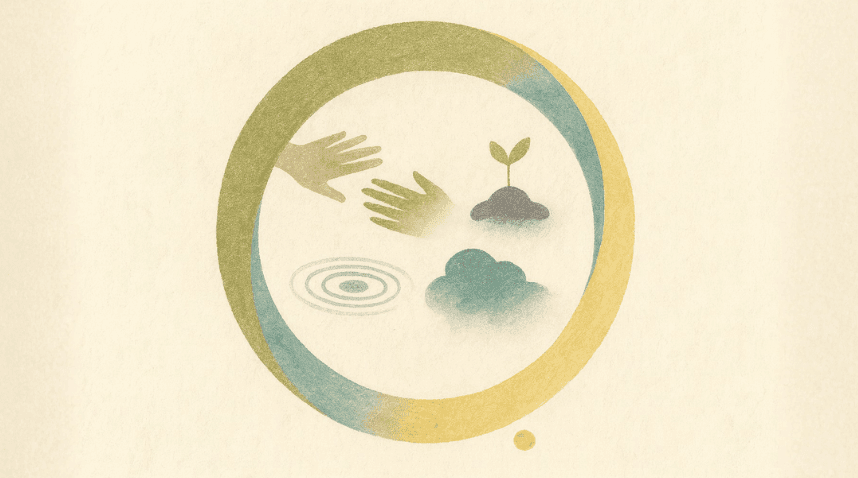
Caught in the loop: The endless cycle of cause and effect
Buddhism, at its heart, speaks of cause and effect — karma shaping the contours of our lives, even beyond this single breath of existence. Rebirth isn’t just a doctrine. It’s a thread that runs through the entire fabric of Buddhist teaching. So how can one hold the identity of a Buddhist and yet not hold this belief? The contradiction made me pause.
I began to share, not as a teacher but as a fellow Buddhist. From what I’ve read, studied, and wrestled with, I’ve come to believe that this life right here, right now isn’t the full picture. It’s one of the chapters, not the whole book. It is samsāra (cycle of existence).
I began to explore the idea of rebirth by asking myself.
“Why are some born into privilege and others into poverty? Why are some born in India, others in Singapore? Why do some enter the world with illnesses or disabilities, despite their parents’ clean bill of genetic health? Why do some stumble upon the Dharma, while others are born far from it, wrapped in entirely different belief systems?”
Yes, some might explain it all away as nature versus nurture. But even nature raises its own quiet mysteries.
Why this body, this gender, this face, this skin, this sexual preference? Why do we cross paths with certain people, out of billions in the world, as if drawn by some invisible thread? It makes me wonder: isn’t there something deeper at work behind it all?
The late Dr. Ian Stevenson, a psychiatrist from the University of Virginia, documented thousands of cases where children recounted past lives with uncanny accuracy with names, places, events they couldn’t possibly have known. Are these simply coincidences? Or are they fingerprints left behind by previous lives?
But we don’t even have to leap into the afterlife to see rebirth at play. Think about last week, today, and the week ahead. How each choice, each moment, leaves ripples in the river of our life. Or look further back: would your 10-year-old self recognize the person you are today? Would a passport photo from that time prove your identity now? We die and are reborn constantly, in our bodies, in our beliefs, in our stories.
To me, that’s the quiet miracle of Dharma. It doesn’t ask for blind faith. It asks for presence. It asks us to look at suffering. Not to deny it, but to understand it. And that understanding leads us to awakening and far away from ignorance.
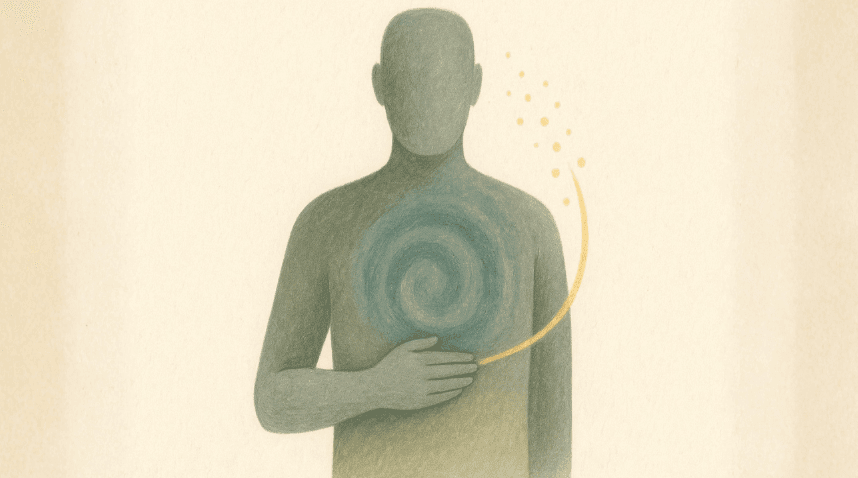
When Karma Speaks Through This Body
There are days when I feel so helpless about getting through the same day every day, unplugging the PEG tube, not being able to eat, sleeping with a tube attached to the stomach. Once the body was strong, effortless, full of thoughtless motion.
Now, every movement is a negotiation, every breath a pact between fragility and perseverance.
I’m 46, or close enough, and as a queer gay man, suffering comes all too naturally for me. As a cancer survivor, I’ve carried it through my bloodstream, through the ache of radiation, and through the contamination of chemotherapy. Even after 12 years of remission, I still carry it in the scars and in the silent complications. The PEG tube nestled in my abdomen is one of them, a constant reminder of the threat of aspiration risking my health. This isn’t survival in the triumphalist sense. This is endurance, raw and intimate.
Even speaking takes effort, the neck stiff with tension, muscles strained and unforgiving. I speak too loudly and garishly, as I can’t hear the tone of my voice, echoing back to me. That voice now becomes a soft memory of the one that once sang, shouted, laughed.
I used to think of sickness as something that happened to others—distant and abstract. Cancer shattered that illusion with brutal intimacy 12 years ago.
The deterioration came slow, then all at once. The body that once danced, laughed, ate with joy, slowly deteriorated and turned into a battlefield.
I remember the taste of metal in my mouth from chemo, the sheer exhaustion that felt like gravity had doubled. And then, after all the treatments had been done, a new challenge: I could no longer eat safely. I had to learn to feed myself through a tube. It felt dehumanizing at first, but with time, it became part of me—part of my strange, new survival.
There’s a saying that always stays with me: ‘If you ever feel upset about having no shoes, just turn around: you might see someone struggling to walk without feet.’
I’m not saying this to compare struggles, but to remind myself how lucky I am just to have my two legs. Every step I take is a gift I don’t want to take for granted.
Coming face-to-face with death not once, but over and over reshapes the very architecture of my beliefs. It’s like watching the walls of everything you thought you knew slowly crumble, leaving behind only what truly matters.
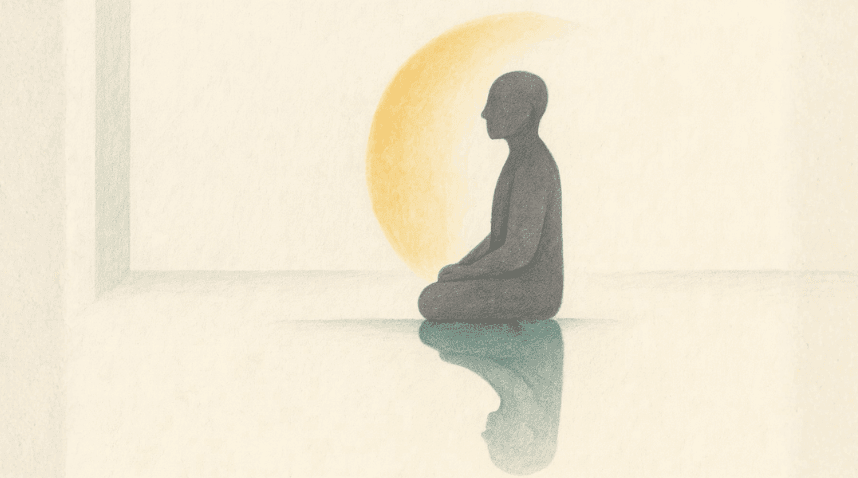
Seeking Answer, Not Comfort, in the Dharma
In those moments of stark clarity, I didn’t turn to the Dharma seeking comfort or cosmic rewards. I turned to it for understanding. Buddhism never promised me miracles. It didn’t hand me hope wrapped in illusions. What it gave me was something far more profound: a language for suffering, and a path that points to its end.
And that idea, the possibility of awakening stirs something deep in me.
Because let’s be honest: we’re all marked by the imprints of our karma.
None of us walk through life untouched without suffering. Some wounds are visible, like the ones etched into my body but most aren’t. We all carry grief, fear, confusion, aching questions we can’t quite name.
My suffering isn’t just the PEG tube or the cancer.
That ache isn’t unique. It’s human. Reborn again and again.
And it’s what keeps pulling me toward the Dharma, not for escape, but for release.
The Buddha said, “I teach suffering, its origin, its cessation, and the path. That’s all I teach.”
I started seeing life through the lens of samsāra. Birth, aging, sickness, death. Not as poetic notions, but as lived truth. The relentless spinning of existence. And it made me ask: who is it, exactly, that keeps being born into this? In the Dhammapada, it is written:
The more I studied, the more I practiced, the quieter my world became. I noticed things I never had before, the exact texture of silence, the moment before a thought arises, the softness of a kind intention. The PEG tube, once a symbol of brokenness, became a reminder of impermanence.
My suffering was not unique. My body, my pain, even my thoughts, they were all passing clouds. Buddhism gave me a language for this. It gave me refuge.
But this is not detachment in the cold sense. I feel everything more deeply now. I cry more often. I laugh more honestly. I love more fiercely. And understanding karma better now, the question haunts me: Who is asking to be born, again?
When you’ve brushed against death, you can no longer pretend life is permanent. You see through the facade. You see people scrambling to hold onto illusions, and you want to whisper to them: it won’t last. None of it. And yet, there’s beauty in that. There’s freedom. Because when nothing is solid, everything can be fluid.
As the Heart Sutra says, “Form is emptiness, and emptiness is form.”
These days, I don’t look for a future without pain. I look for presence within it. I try to meet each moment fully, however it comes—through a feeding tube, through breathlessness, through gratitude. And in those moments, I sometimes feel it: a stillness, a clarity, a knowing that maybe, just maybe, the one asking to be born again… doesn’t need to be born at all.
Maybe the question itself is the answer.
And maybe that is enough.
Wise Steps:
- Recognize patterns in your life as reflections of past actions. Karma is not punishment, but a mirror showing what still needs to be understood.
- Use suffering as a teacher, allowing pain and challenges to deepen your wisdom, compassion, and awareness of impermanence.
- Live with mindful intention, planting seeds through your thoughts, words, and actions that lead to peace and liberation.
Originally published on Substack: Who is Asking To Be Born, Again? by Kyle Neo Kai Fu