Red Envelopes, Open Hearts: The Dhamma in Chinese New Year Home Visits
TLDR: Home visits may seem like an ancient cultural practice to be merely tolerated, but by seeing Chinese New Year (CNY) home visits through the lens of loving-kindness, compassion, joy, and equanimity, we can see Dhamma being practised in our everyday living, not just on the meditation cushion.
Chinese New Year (CNY) often sends a shiver down many people’s spines. From the endless questioning by well-intentioned relatives to the interminable home visits from relatives we barely know, it feels more like modern-day torture than an enjoyable festive season to be savoured.
As I mentally prepare for the yearly CNY home visits, I have begun to reflect that Dhamma is not only practised on the meditation cushion but also in our daily lives. Many meditation teachers have said time and time again that the practice of meditation does not stop at the end of the retreat; it is also only the first half of the practice.
The real practice is in the real world, where you are tasked with living your one true, authentic life.
Loving-kindness
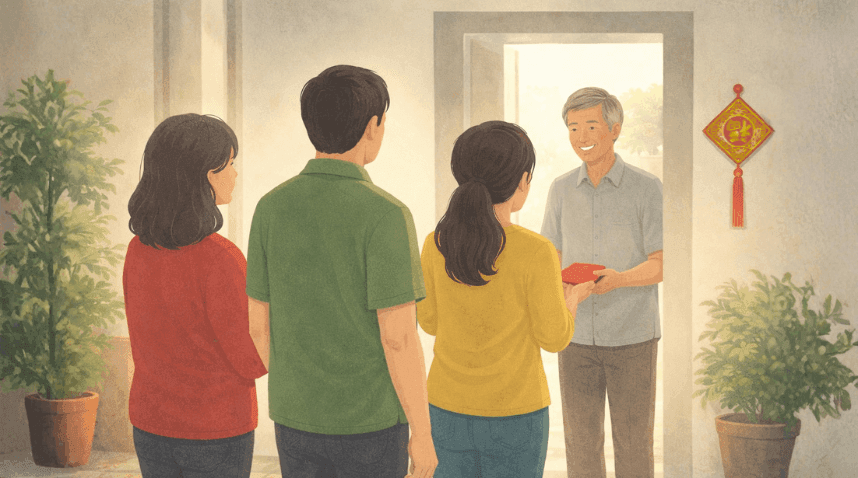
As a young child, I inevitably had my favourite homes where we could significantly fatten our “Red Envelope” collections with little fuss or worries. There were also others: homes belonging to three-times-removed distant relatives we saw only once a year, or homes where someone lived with a mental health condition that felt frightening to a young, ignorant child. “Making a list and checking it twice” was something my father would do, ensuring that no distant relatives, however far, within and beyond Malacca, were neglected. He would check with my mother to confirm that all relatives’ homes had been visited during the 15 days of the CNY season.
CNY home visits are a radical act of loving-kindness. Extending loving-kindness while omitting no one is the practice of the enlightened ones. My parents did not visit only the wealthy or the socially prominent; they visited family, relatives, and friends regardless of social rank.
“Radiating kindness over the entire world:
Spreading upwards to the skies,
And downwards to the depths;
Outwards and unbounded,
Freed from hatred and ill-will.”
– Excerpts from the Karaniya Mettā Sutta.
Compassion
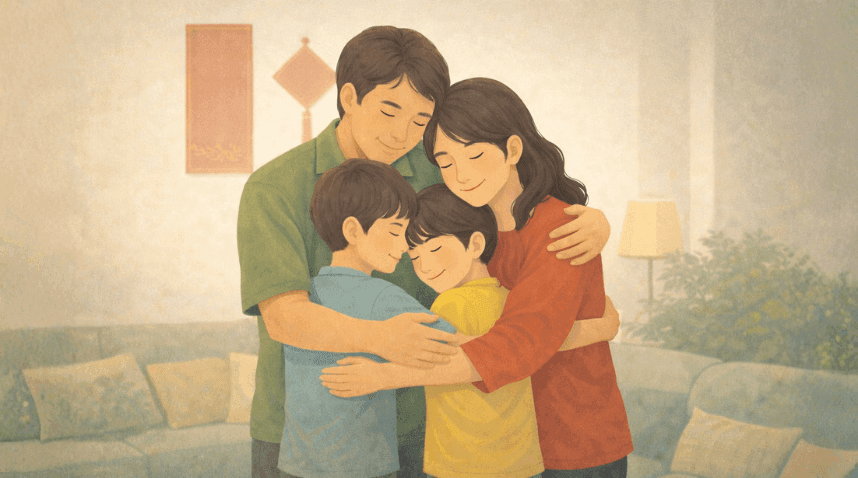
Compassion is a verb. Showing up and bearing witness are great acts of compassion. My parents are by no means trained counsellors or psychologists, but they showed up, year in and year out, and listened to whoever had something to share during our CNY home visits. While this is not my origin story of becoming a counselling psychologist, those extended listening sessions may have planted the seeds in me to be like the Bodhisattva Kuan Yin – she who hears the cries of the world.
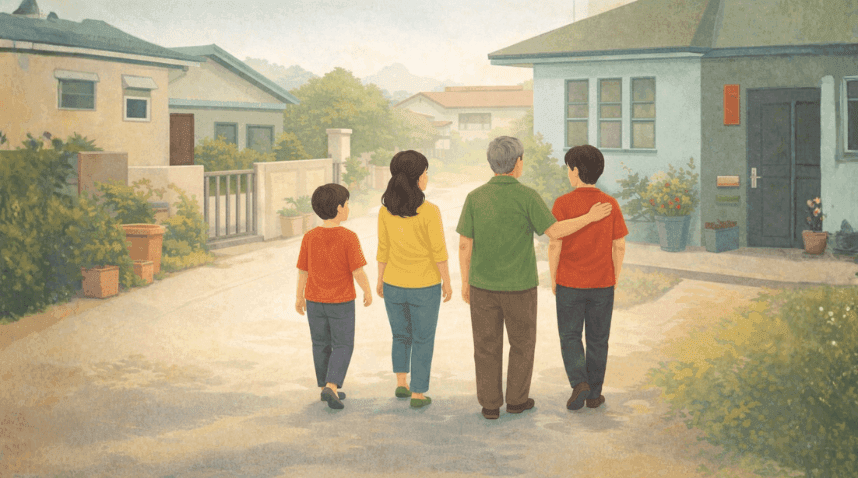
My mother would ensure that my brother and I were well fed before embarking on our 10-hour, 10-home CNY marathon. She would nudge my father when she noticed her children were tired or uneasy in someone’s home. Small gestures, in the grand schemes of things, to care for one’s child. As my understanding of the Dhamma deepens with knowledge and wisdom, I have learned to appreciate these acts of compassion more fully, whether offered to one’s kin or to others, with a knowing heart.
“Even as a mother protects with her life
Her child, her only child.”
– Excerpts from the Karaniya Mettā Sutta.
Appreciative Joy
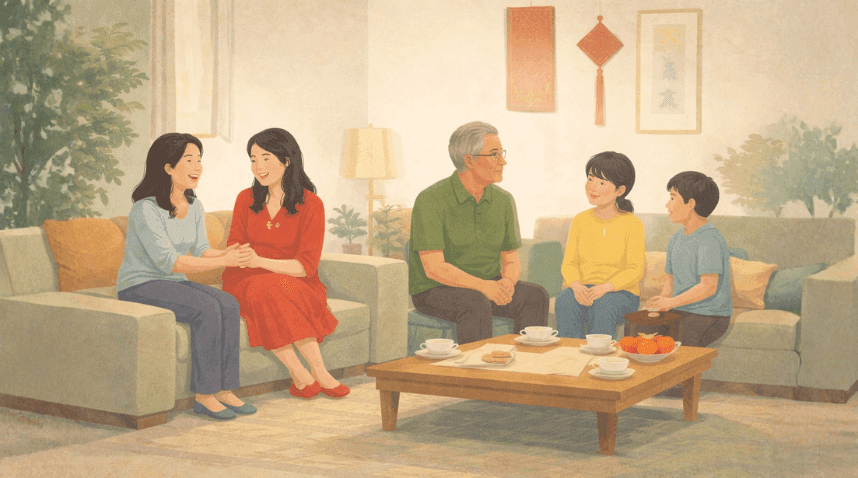
CNY is also a period of mutual celebration. Sharing the happiness and joy of others’ accomplishments is something to be celebrated.
Now we are ever-connected through social media and can easily receive updates from family, relatives, and friends near and far. Yet nothing beats the shared moments when you hear someone else’s success stories in person.
The Dalai Lama says, “The purpose of life… is to be happy.”
Rejoicing in one another’s happiness strengthens bonds that rarely form through online updates alone. And yes, online, because, despite our unlimited phone minutes, how often do we actually speak on the phone anymore? As a self-professed shy introvert, I detest phone calls, but that’s just me, being me.
The COVID-19 pandemic has shown us that, despite digital connectivity, we still crave that in-person connection whenever possible. For those brief two days of public holidays, can we extend this spirit of presence to our family and friends? Let us share our joy as people once did in the old kampong days.
Equanimity
When I was younger, I saw less of the world. Over the years and decades that followed, I have come to observe the cycles of lifeand the eight worldly concerns (also known as the eight worldly winds):
1 & 2: Happiness vs. Suffering
3 & 4: Fame vs. Insignificance
5 & 6: Praise vs. Blame
7 & 8: Gain vs. Loss
One thing that I have learned as a counsellor and a human going through life is that we can always learn from others, not only through our own hardships. Observing how people face both challenges and successes during annual CNY home visits has broadened my understanding of the human condition.
Through the four Brahmavihārās, we can cultivate loving-kindness when we greet our relatives and friends during CNY; listen with the heart and ears of compassion when hearing stories of hardship; celebrate with appreciative Joy by sharing in others’ joys and enriching our “bank account” of shared happiness; and return to equanimity when overwhelmed with others’ eight worldly winds, remembering that all beings are owners and heirs to their own kamma.
The First Noble Truth states that birth is dukkha; ageing is dukkha; death is dukkha; sorrow, lamentation, pain, grief, & despair are dukkha; association with the unbeloved is dukkha; separation from the loved is dukkha; and not getting what one wants is dukkha.
With each passing CNY, I see more clearly the truth of ageing and death as dukkha. Yet rather than being flooded with overwhelming grief, I choose to turn my heart to the four Brahmavihārās, and I hope you might open your heart to them as well.
Zeb’s Reflections
Hearing story after story of life unfolding, regardless of status, makes me more compassionate towards others’ suffering. It’s one of the many factors that helped soften my sensitive heart and led me to seek ways to respond to the world’s cries, eventually guiding me towards psychology.
It also taught me to be equanimous towards others’ pain and suffering. Helping professionals need to be steady in hearing others’ pain, without being overwhelmed by the inevitable cries of life.
Now that I am older and, I hope, wiser in the Dhamma, I feel deep kataññutā (gratitude) toward my parents for teaching me about the Brahmavihārās in their own lived ways. The Buddha’s teachings are not confined to ancient suttas; they are also embodied in daily life.
One does not have to spend 5 years studying formal Buddhist Studies, as I did, nor countless days on the meditation cushion in a silent retreat, to understand the Dhamma. Sometimes, the Dhamma reveals itself simply by observing our parents.
As Ajahn Chah reminds us, “The heart is the only book worth reading.” We can learn by emulating the skilful teachings expressed through our parents’ daily conduct.
May you enjoy deepening your practice through your CNY home visits and celebrations ahead! And in the spirit of inclusivity, may all who celebrate the upcoming Lunar New Year have a wonderful celebration ahead!
Sukhi hontu – May you be well and happy.
Wise Steps
- Experience the CNY home visits through the lens of friendliness and goodwill. Let’s practice Metta within this important cultural celebration.
- We may not be able to solve another person’s difficulties, but we can be present and compassionate to those in pain.
- CNY is a season of shared happiness; let’s share our joy and happy moments during home visits.