TL;DR: Milktea recounts the emotional journey of healing after a breakup, moving from shock and denial to acceptance through Buddhist practice. By embracing impermanence, letting go of attachment, and reflecting on personal growth, she finds peace and clarity with the support of the Dhamma and spiritual friends.
Breaking Up on a Happy Day
It was a fine day in Singapore after a week of travelling when I returned home to my (then) boyfriend. He picked me up, and we chatted as usual before he dropped me off after lunch.
Later that afternoon, he mentioned wanting to talk. We sat at the park near my place, and then he broke the news…
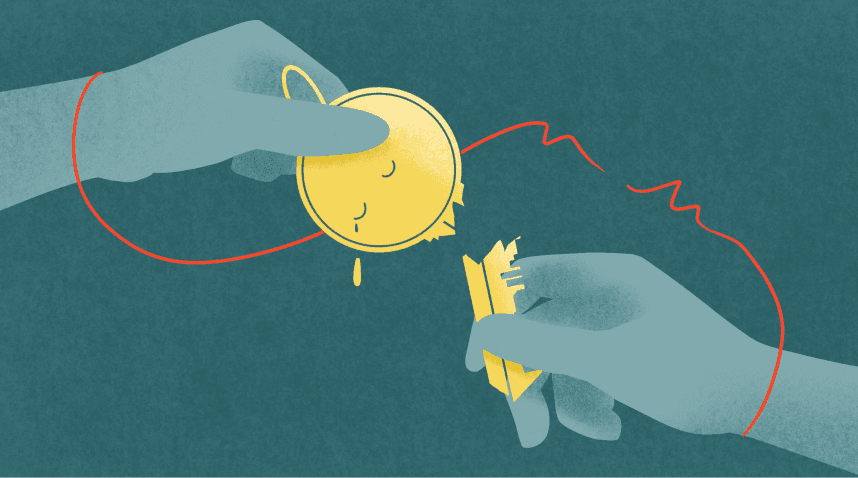
After 4 years of cruising together, he called it quits.
The reason?
The relationship had become draining for him. He felt emotionally disconnected and unable to be vulnerable with me. He also mentioned feeling burdened whenever we discussed marriage plans.
I was shocked. I thought we were doing okay.
He had always seemed enthusiastic about building a future together—starting a family, buying a home, planning our wedding. I had saved up money, researched potential neighbourhoods, and even thought about how our home could be.
But now that was gone.
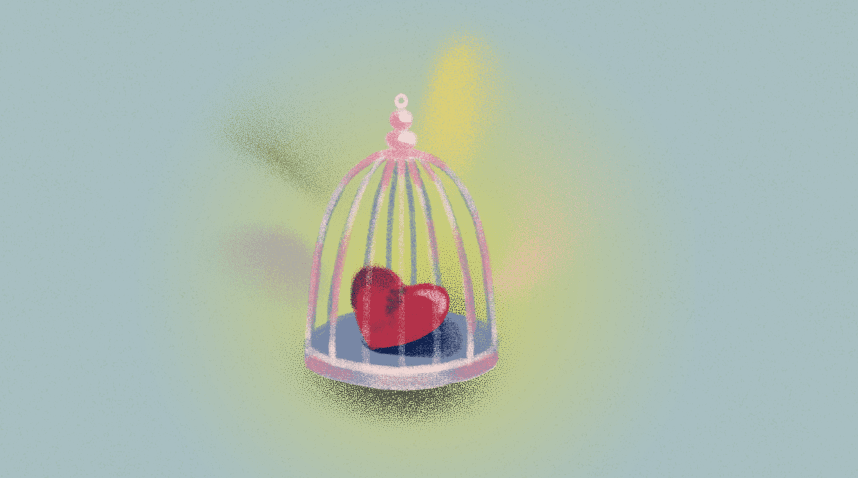
It felt like my world had shattered.
I suggested giving ourselves space before discussing it again.
Denial Stage
The breakup request felt abrupt, and I wasn’t emotionally prepared, especially after a mentally tiring trip.
For the first few days, I couldn’t accept reality. We agreed to a week of no contact to confirm if this was the right decision. During that time, I grieved, shared stories with friends, and reflected deeply.
I realised I had made mistakes in the relationship. A mentor pointed out that as an extrovert, I needed to learn to listen better, not just talk about my needs. It hit me—I could have been a better partner.
When we met after the week, I shared my reflections, prepared for any response. I told myself, “Whatever happens, happens. All conditioned things are impermanent.”
But his answer remained the same. It was better for us to part ways. Even after confirming multiple times, reconciliation seemed unlikely.
It was time to face reality.
Anger and Resentment Stage
I attempted to find closure by accepting reality, but the grief lingered. Despite knowing I shouldn’t dwell on what was, my heart struggled to accept. I repeated the same stories to my friends, feeling like a broken record. They knew every detail, in various retellings and languages.
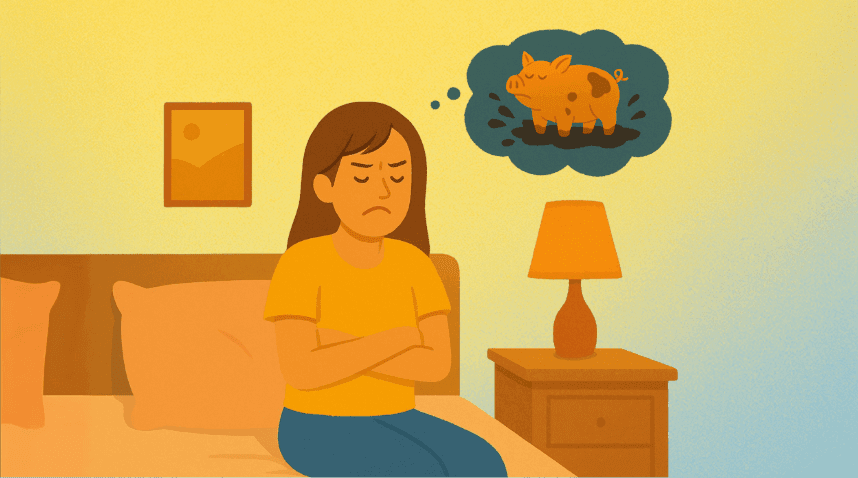
I compared myself to a pig playing in mud—knowing it was dirty but unable to resist. How long would I burden my friends with negativity from the breakup? They were understanding, but I realised I need to stop.
No amount of mud slinging at his flaws or the relationship would bring back the past I hung on to. It would only bring more ill will to people around me.
Realisation and Acceptance
It was time to face reality, to delve into my inner world and to revisit Buddhist teachings (the Dhamma).
During meditation, I realised I had been fixated on our future, the fantasy of “happily ever after.” My attachment to these future plans blinded me to his current needs. Continuing the relationship would only perpetuate unhappiness, not love.
Reflecting on impermanence and conditioned arising, I understood that clinging to memories and failures would only lead to suffering. Just as all things arise and pass away, so too did our relationship.
The Buddha’s teachings on impermanence (anicca), suffering (dukkha), and non-self (anatta) guided me to let go fully. By assuming there was a fixed ‘me,’ who was in a relationship and was supposed to continue existing in that manner, I was holding onto what was changing, wishing it was otherwise.
Moving On
Accepting reality, I found relief.
Despite friends suggesting my time was wasted (due to societal norms of being a female with ‘expiry dates’), I disagree.
Time is only wasted if you didn’t learn from the experience. I have learnt much about my flaws and my shortcomings. It is not easy to shine a light on your darkest spots. Lessons are gained even in the deepest depths of pain.
I now have more time and energy to attend to the things that I’d neglected when I was dating. I am also reflecting on how I can improve as a person. To build myself out of the ashes of a ‘failed’ relationship and to emerge a stronger and wiser individual.
Leaning on my Dhamma friends (kalyanamittā) has been a great balm to my wounds.
They stir up kusala (wholesome) mind states within me. They encourage me to workout to keep my mind stable.
In summary, my time together with my ex-boyfriend was right for us then, and I cherish those moments. I’m glad to conclude the chapter with a smile. It was a good 5-year journey. Now, I wish him happiness on his path ahead.
Mind-Tricks for Letting Go
Two practices supported me through this process, thanks to the Triple Gem (Buddha, Dhamma, Sangha) and my Dhamma friends:
Consider Opposite Values: When I feel angry or disappointed about an incident or memory, I switch my mental state to focus on the positive values I uphold. For example, when I felt angry because my (ex) partner exploded without warning, I shifted my mindset to, “I am upset because I value calmness.” This approach helped to stop the narratives surrounding the breakup. This trick prevents the mind from spiralling into negative states about the person, and it reframes the thinking towards oneself without making it personal.
Cultivate Non-Attachment to Stories: When mindfulness is sharp, I observe feelings and narratives as they arise and fade away. If I dwell on or follow these fleeting stories, it only leads to dukkha (dissatisfaction). I recognise them as narratives rather than a reality to be grasped onto. I acknowledge them and allow them to pass naturally.
These tricks continue to help me navigate future challenges, ensuring a wholesome mindset.
Wishing everyone reading this a wholesome day ahead! 😊
TL:DR: The time after post-breakup can be challenging. In this article, we’ll discuss how one can cultivate an inner environment of peace, as well as sculpt a healthier and more positive mindset, to themselves, their partner, and their future.
Letting go is only one part of the journey. What comes next is the process of healing—for both you and your former partner. Even if the breakup was mutual and handled with care, emotions do not disappear overnight.
Navigating a breakup can be emotionally overwhelming, but healing is possible with mindfulness and self-compassion. Buddhism teaches us to meet our emotions with mindfulness, not suppression. Allow yourself to feel the sadness, the loss, or even the relief without judgment. Grief does not mean the breakup was wrong; it simply means something meaningful has ended.
Here are a few ways to heal with wisdom and self-compassion:
Sit With Your Feelings Without Clinging to Them
After a breakup, the mind often spirals into what-ifs and regrets. Thoughts like “Maybe I should have tried harder” or “What if I never find someone like them again?” may arise.
Instead of pushing these thoughts away or drowning in them, observe them with mindfulness. Treat them like passing clouds—real, but impermanent.
A helpful practice is to sit quietly and acknowledge:
“Right now, I feel sad. And that’s okay.”
“Right now, I miss them. But feelings come and go, just like everything else in life.”
This simple awareness helps you create space between yourself and your emotions, rather than becoming consumed by them.
Release the Need for Closure
One of the greatest sources of suffering post-breakup is the belief that we need a perfect ending—a conversation that wraps everything up neatly, a reason that makes complete sense, or an answer that soothes all wounds.
But life is rarely that tidy. Sometimes, people part ways without full clarity. Sometimes, emotions remain unresolved.
Buddhism reminds us that seeking control over impermanence only creates suffering. Instead of seeking “perfect closure,” allow yourself to make peace with what is.
Closure is not found in words from another person; but in your acceptance of what has passed.
Cultivate Loving-Kindness for Yourself and Your Former Partner
It is easy to dwell on pain, resentment, or guilt after a breakup. But holding on to negative emotions only prolongs suffering.
A gentle Buddhist practice to support healing is Metta Bhavana (Loving-Kindness Meditation). Even if your heart feels heavy, take a moment to send these wishes:
To yourself: “May I be at peace. May I heal. May I grow.”
To your former partner: “May you be happy. May you find peace. May you live with ease.”
At first, this may feel difficult—especially if the breakup was painful. But over time, releasing love rather than bitterness frees you from emotional entanglement.
Loving-kindness does not mean you have to stay in contact, reconcile, or agree with everything that happened. It simply means you choose to let go with grace, rather than resentment.
Shift Your Focus to Growth
Relationships are not failures just because they end. Every relationship—no matter how long or short—teaches us something about ourselves, our needs, and our capacity to love.
Rather than fixating on what went wrong, ask yourself:
“What did I learn from this relationship?”
“How did this experience shape me into a better, wiser person?”
“What kind of love do I want to cultivate in my future relationships?”
By shifting your perspective from loss to growth, you honour the experience rather than regret it.
Embrace the Space That Has Opened
A breakup is not just an ending; it is also a beginning. It is the opening of space where you can rediscover yourself, reconnect with old joys, and explore new experiences without the constraints of a relationship.
Give yourself time to:
Reconnect with previously neglected hobbies and passions
Strengthen friendships and family connections.
Spend time in solitude to nurture self-awareness and self-love.
Instead of rushing to fill the void, allow the empty space to breathe. In time, you will realise that this space is not loneliness—it is freedom.
Closing Reflections: Love as a Path, Not a Destination
In Buddhism, love is not seen as something to possess, but as something to cultivate.
True love is not about holding onto a person; it is about wishing them well, whether they walk beside you or take a different path.
A breakup, when handled with wisdom and compassion, is not a failure of love—it is a continuation of love in another form. It is the recognition that, sometimes, the most loving thing we can do is let go.
So as you step forward from this ending, remember:
Love is never lost. It simply transforms.
Pain is temporary, but growth lasts a lifetime.
Your capacity to love remains, and it will find new ways to bloom.
No matter where you are in this process, be gentle with yourself. Healing takes time, but every moment of acceptance, every breath of kindness, is a step toward peace.
Other HOL Articles for those dealing with breakups:
TLDR: Explore a unique collection of Buddhist resources designed to guide you through heartbreak. Transform your sorrow into compassion with our ‘Breakup Dhamma Playlist’
Editor’s note: A thank you to all the heartbroken Buddhists who contributed to this article!
Your heart feels shattered, and your world is turned upside down. The pain of a breakup can be all-consuming, leaving you wondering if you’ll ever feel whole again. But what if this heartbreak could be more than just suffering?
Enter the “Breakup Dhamma Playlist” – a curated collection of Buddhist teachings designed to guide you through a heartbreak towards the calm shores of acceptance. This is inspired by popular culture to have a playlist for everything from ‘falling in love’ to ‘life sucks’.
These timeless teachings offer more than just comfort; they provide a roadmap for transforming your pain into wisdom, and your sorrow into compassion.
Not a punishment
As you navigate this difficult time, remember that your pain is not a punishment or a sign of weakness. It’s a natural response to loss, and more importantly, it’s an opportunity. An opportunity to deepen your understanding of impermanence, to cultivate compassion for yourself and others, and to discover strengths within you.
This playlist brings together the wisdom of respected Buddhist teachers and the Buddha’s own words. Each entry offers a unique perspective on dealing with loss, letting go, and finding peace amidst turmoil.
Whether you’re grappling with fresh heartbreak or nursing old wounds, these teachings can offer solace, insight, and practical guidance.
As you explore these resources, approach them with an open heart and mind. Some may resonate more strongly than others, and that’s okay. Take what serves you, reflect on it deeply, and allow it to support your healing journey.
The Heartbreak Playlist
“Loss of a Partner” – Q&A with Ajahn Anan (Spotify): In this insightful Q&A session, Ajahn Anan addresses the pain of losing a partner. He emphasises the importance of understanding impermanence and cultivating equanimity. The first 3:49 minutes provide a compassionate introduction to dealing with loss from a Buddhist perspective.
“Grief, Loss, and Celebrating a Life” by Ajahn Brahm: While originally addressing the loss of a loved one through death, Ajahn Brahm’s wisdom applies equally to the “death” of a relationship. He encourages us to celebrate the good times shared and to use our grief as a catalyst for personal growth and deeper understanding of life’s impermanent nature. You may skip past the eulogy
The Buddha’s Words (SN 47.13) Quote: “How could it possibly be so that what is born, created, conditioned, and liable to wear out should not wear out? That is not possible. So Ānanda, live as your own island, your own refuge, with no other refuge. Let the teaching be your island and your refuge, with no other refuge.” The Buddha reminds us that all conditioned things, including relationships, are subject to change. He encourages us to find refuge in the Dhamma and in our own practice, particularly through mindfulness meditation.
“Letting Go” by Bhante Sujatha (Insight Timer): This short 6-minute meditation is perfect for those moments when emotions feel overwhelming. Bhante Sujatha’s soothing voice guides listeners through a simple yet powerful practice of letting go, ideal for quick relief during difficult days.
“Practising with a Broken Heart” by Ajahn Achalo (YouTube): While the entire talk offers valuable insights, the segment on compassion from 20:59 is particularly relevant. Ajahn Achalo teaches how to cultivate self-compassion and extend that compassion to others, even those who may have hurt us.
How to Heal your Broken Heart by Mahindasiri Thero (Youtube): Choose someone wise and supportive to share your heartbreak, avoiding those who might exacerbate negativity.
Loneliness and the Illusion of Connection by Thich Nhat Hanh (Youtube): Technology offers an illusion of connection but doesn’t address the deeper loneliness within.
Conclusion:
As you work through your heartbreak, remember that healing is a process, not a destination. Remember, healing is not linear. There will be ups and downs, moments of clarity followed by waves of grief.
This is all part of the process. The goal isn’t to eradicate your feelings, but to learn to relate to them with mindfulness and compassion.
As you listen to these Dhamma talks and incorporate their wisdom into your life, you’ll find that your heart not only heals but expands, becoming more resilient and compassionate than before. Remember, just as the Buddha taught, you are your own island, your own refuge. Trust in your innate capacity to heal and grow. This pain will pass, and you will emerge stronger, wiser, and more open-hearted than before. May these teachings guide you towards peace and renewed joy.
TLDR: This article takes you through my journey of getting into depression and a general description of the experience.
Note to readers: this article only reflects my personal journey through mental illness. Please seek professional medical advice if you are feeling unwell.
Living in blissful delusion
Just like many other young adults, I got into a long-term relationship. The relationship was rocky with its ups and downs. But eventually, following the typical Singaporean rite of passage, we decided to get a BTO housing apartment after four years together.
When the commitment of buying a house together came, it made me think about the differences in values between me and my ex.
Living in blissful delusion, I had a strong belief that if we stay together, we can work things out. There was a strong craving for romantic feelings and physical touch from another person.
The downfall
Right before the day when my ex and I were supposed to select the apartment to purchase, we got into a big fight about our differences in values. Eventually, the relationship was broken.
Not knowing what a failed relationship meant, I woke up not knowing what to do on weekends. In the past, weekends meant going out with someone.
Having a change in routine, the void and emptiness started developing. I didn’t know what to do during my free time.
Still not knowing about the emptiness that was ravaging me, there was a lack of awareness of my own thoughts and feelings. I went about my university life, taking my final year papers in anticipation of graduation and a new phase of life. Unknowingly, I became quieter than usual (I am quiet by nature) and I looked sad.
Then during a meeting with a mentor, he remarked to me, “Someone commented that you looked depressed. Are you okay?”
After that meeting, a new word entered my vocabulary, “Depression”.
Drowning in the flood
While living in blissful ignorance of my depression, I was going about my final university days, trying to pass exams and getting a job.
It turned out that depression was affecting my performance in daily life. I was replaying the thoughts of my broken relationship every single hour. Wanting to find answers to the questions in my mind, no answers could be found.
“Could I have given in more so the relationship would work out?”
“Why can’t the differences between us be reconciled after trying for years?”
The more I craved for answers, the more I tried to replay all the memories and past feelings to find answers. Unknowingly, I sank deeper in the rabbit hole.
Struggling with the raging memories, I could not focus on the daily tasks at hand. I performed poorly for my internship and my exams. I managed to graduate but without a return offer to my internship company due to poor performance.
Whilst I was jobless as a fresh graduate, I had all the time in the world to find a job. I had more time to drown myself in my sorrows as well. I replayed my memories from the past even more to try and find answers.
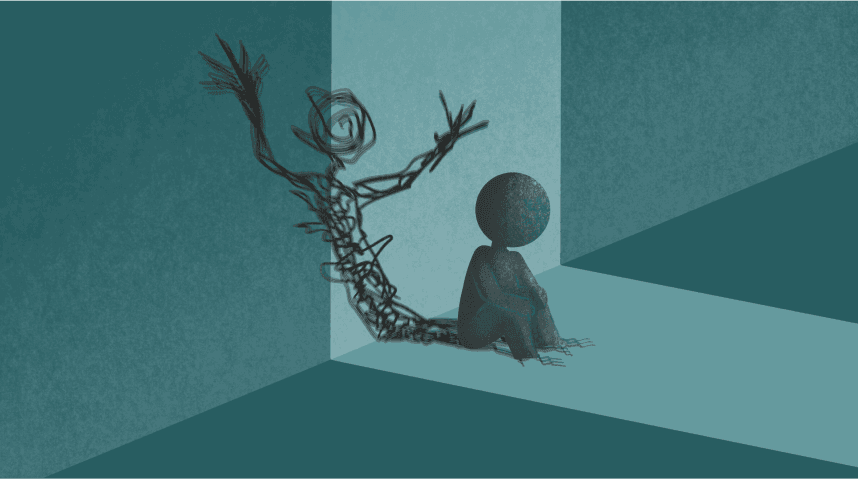
Eventually, it came to a point that I was crying uncontrollably in the middle of the night, alone in my room. I was drowning in my own thoughts and emotions of the past.
I hit rock bottom and thoughts of ending it all came. I was jobless, I was suffering from my thoughts and emotions and I felt trapped in pain.
Note: I will not elaborate on depression. Because thinking about it will only strengthen the intention. To anyone who is reading this, feeling depressed or not, having that awareness of depression or sadness will be the first step. The second step is to set the intention and overcome the sadness.
All mental phenomena have mind as their forerunner; they have mind as their chief; they are mind-made. If one speaks or acts with an evil mind, ‘dukkha‘ follows him just as the wheel follows the hoofprint of the ox that draws the cart. – Dhammapada 1
A mind full of negativity will only create more negative thoughts. Then suffering follows.
When I realised that I was drowning in negativity, the first thing was to acknowledge that I was in a pit and to stop digging further. Acknowledging the present situation was the first step to make me feel better and move toward recovery.
Conclusion
The intent of the article is to share my own experience of falling into depression and a general description of the experience.
The main point here is to be aware of strong negative thoughts and feelings that lingers in your mind. Being aware of the strong negative thoughts and feelings, acknowledge that you are feeling sad.
Then set the intention to see the negative state of mind as it is, not fighting the negative state of mind (not wanting the negativity) and not giving in (delighting in your pain) to the negative state of mind.
It’s not going to be easy. But overcoming the negative state of mind to have a peaceful state of mind will be worth it.
My next article will focus on how my unexpected journey into the Dhamma brought much needed relief from suffering.
Make your body and mind happy while you are trying to recover from illness (mental and physical). Do light exercises and eat healthy so your body and mind are happy and ready to change.
Acknowledge your negative thoughts and feelings. Show yourself care like how you would advise your best friend.
Celebrate each moment you feel the peace away from your troubling mind.
TLDR: Lydia shares her cycles of emotions when going through a breakup and how she eventually bounce back with the support of loved ones, healthy distractions, and deep realizations.
I was heartbroken after my first break-up. I would like to share some things that helped me through the process and I hope that it will be useful for you!
Before getting attached I used to have many crushes but they never knew until I finally told them a long time after. I used to feel needy and wondered when I would ever find a boyfriend but I had high expectations and never really settled down.
After I became more passionate about Buddhism when I was in Year 4 of university I felt that I had more emotional stability. I had fewer cravings and felt that there were more meaningful things to life than looking for a partner.
Eventually, I fell in love and found a boyfriend. Impermanence then waged war on my relationship and we broke up.
Here are realisations that helped me through the breakup, I hope that they will be useful for those going through their share of breakups
1. I am still very loved!
Post break up I felt abandoned, rejected and feelings of guilt came up. I asked myself what I should have done better.
I was unable to accept that the person I loved chose to move on. Even knowing the teachings of impermanence, I could not believe and accept that his feelings for me had changed.
I think the most important thing that helped me through was support from family and friends. To remind myself that I am still very loved. To spend time with them and to purposefully distract me till I achieve mental stability to process the difficult perceptions of abandonment and rejection.
2. It’s okay!
It’s okay to be sad or depressed. I used to see crying as a sign of defeat or weakness.
I wanted to set a timeline for myself to heal, recover and move on, but I couldn’t. And it’s okay because creating a timeline for myself to move on added to the suffering.
There is a strong societal stigma pertaining to depression because it seems that the person is depressed out of their own choice.
But how can we forget that no one wants to suffer and we all want to be happy and peaceful?
While some aspects of managing depression are within our control, I think that we can be very helpless when strong emotions arise.
We can try to modify the aspects as much as we can such as avoiding triggers, distracting ourselves and not falling into habitual patterns of unwise decisions. But sometimes, we might still fail and become demoralised as a result.
Through this experience, I really feel much more compassion for people who have gone through depression. It is not just a clinical diagnosis but a difficult life situation, which might persist for a long time.
So, I tell myself it’s okay. It’s okay to still feel sad, it’s okay to feel needy and lonely. It’s okay to have thoughts of wanting to find someone to love you. It’s okay that I still don’t know how to love myself well. It’s really okay.
And this acceptance is loving kindness and compassion to oneself. I always struggle with loving kindness for myself, not knowing how to love myself. But this acceptance is the first step. Ajahn Brahm used to teach us, ‘Be kind, Be gentle and Make peace.’ His teachings have really helped me through this difficult period.
To open the door of your heart to whatever you are experiencing, and to sit tight and remind yourself that the storm will pass. Once you get used to the process, it is about bracing yourself and preparing for the storm too!
Another teaching that was useful is the analogy of the hand. If we put our hand in front of our face, it covers our whole world and our hand is the world.
But if we put our hand back to where it belongs, at the end of our arm, we can now see the whole world.
There was a time when the break up was the world to me. There was nothing I would think of except feelings of sadness and I felt so unmotivated to do anything at all. I could not see the love from my family and friends and I was so fixated on a love that I could not get.
I believe it was a lot of romanticising the good times and forgetting the difficult times. But if you deliberately remind yourself of the other things in your life, it reminds you of the blessings that you already have. And these blessings too, are impermanent.
Ajahn Brahm also taught that a relationship that ended is like a concert that ended. All concerts come to an end no matter how good it is, such is the nature of life.
3. Awareness of what you need
Post break up I was trying to act as if nothing happened. I was trying to continue my work and Dhamma commitments as much as possible, but it was a huge mistake.
What I needed was probably just to rest and to spend time with people I love.
There was a strong desire to reconnect with my previous boyfriend but every contact brought back difficult emotions. Yet I was still unable to let go.
Sometimes, our thoughts can feel very real and justified, although it might not be the best decision for us. This was probably my first experience with how we cannot fully trust our thoughts.
What helped me was that when the strong desire arose, I decided not to react or take action but I went for a jog instead.
After the jog, the compulsion to act was weaker, and I made a different decision. Even if you still decide to act in the same way after coming back to it, then so be it.
I can almost understand how obsessive people can be post-breakup. Although I was not obsessed to the extent of being a stalker, I could see many obsessive thoughts in me at one point in time.
Acknowledging that I needed rest and help is also important. To know that I am not in a good place now and hence to take a break from the commitments at hand.
I also realised that I needed to care for myself and to do things that made me happy.
Things that did help me were going to nature, especially going to the beach and listening to the waves was very therapeutic. Talking to family and friends or crying when you need to, listening to Dhamma talks, chanting and meditation and having adequate rest help.
In Summary
All in all, breakups suck! But Ajahn Brahm also teaches us that our life experiences are our kammic ingredients, whether good or bad. It is up to us what kind of kamma we make out of it.
Even with poor ingredients, we can still make a delicious meal. With our dog poo experiences, we can fertilise our mango tree, and it can be transformed into delicious mangoes!
And when we taste yummy mangoes, we are reminded of the dog poo in it. So when you see happy relationships, we must also remember to go – Sadhu Sadhu Sadhu, because who knows what kind of dog poo others have experienced?
Lastly, it will all pass, good or bad. And good, bad, who knows. Taking refuge in the triple gems and guarding my kamma and keeping myself close to the practice is probably what is most meaningful for me in this lifetime. That being said, a broken heart still takes time to heal. So be kind and patient with yourself and give yourself as much time as you need. Buddha bless!
Wise Steps:
Breakups suck, and acknowledging that sucky-ness is the first step to being in tune with your emotions.
Don’t believe all your thoughts! Such events can trigger different thoughts that might seem very real but actually aren’t real.
To know what you need and take part in activities that might help such as jogging, exercise, nature walks