TLDR: Your job title is a persona, not who you are. Venerable Thubten Chodron’s talk shows how status, praise, and social validation pull us into fragile identities, while what truly shapes our life is our motivation and how we treat people.
I went to Venerable Thubten Chodron’s talk expecting to hear something about career.
What I walked out with was a clearer look at the stories I use to hold myself together.
Most of us live inside a simple loop. Someone asks, So what do you do? We answer with a job title. And somehow that single word carries our sense of worth.
Marketing. Engineer. Founder. Unemployed. Between jobs.
We know these are just labels, yet they decide how confident we feel in a room. How easy it is to speak up. How much we shrink or relax when we meet someone new.
Venerable Chodron compared this to the way people build profiles on dating apps or social media. We choose what looks good. We hide what feels inadequate. The result attracts attention, but it is not really who we are.
A job title works the same way. It is a persona. Useful in society, but thin as a description of a human being.
That is why leaving a job you dislike can feel so frightening. It is not only about losing income. It is about losing the version of yourself that the world recognises.
When Opinions Cancel Each Other Out
She told a story that cut through a lot of this.
Two nuns were asked to evaluate the same person, thirty minutes apart. One said she was a wonderful example. The other said she was negligent and lazy.
Same person. Same day. Two opposite judgements.
Venerable Chodron called these opinions mental energy. They appear, they disappear, and they change depending on who is looking. Yet we let them decide how we feel about ourselves.
When praise comes, we feel taller. When criticism comes, we shrink.
Nothing solid actually happened. A thought passed through someone else’s mind and landed in ours.
What matters more is why we do what we do.
In Buddhist terms, motivation is what creates kamma. The intention behind a decision shapes what it becomes later. You can hold power and look impressive while planting a lot of harm. You can hold an ordinary job and still be building something wholesome if your actions come from care rather than fear.
Your Job As a Training Ground
One of the most practical parts of the talk was how she framed daily life.
Every morning, set an intention. Try not to harm anyone. Try to be helpful when possible.
At night, look back. What did I do today? Why did I do it?
Notice where you reacted, where you became defensive. Where you avoided something uncomfortable. Acknowledge it without turning it into a story about being a bad person. If something needs fixing, fix it. Then let it go.
Your workplace becomes the training ground. The deadlines, the awkward meetings, the difficult colleagues, the emails that make your chest tighten. They show you exactly where you still cling and where you still push away.
If one comment from a boss can ruin your whole day, something inside you is asking to be understood.
What Failure is Really For
She also spoke about failure in a way that felt quietly steady.
Do your best with a good intention. That is enough.
Most of the pressure we feel does not come from our bosses. It comes from the expectations we quietly pile on ourselves. I should already be further along. I should not be struggling like this.
An admissions officer once said the most important question was not about achievements, but what someone does when things go wrong.
Even monasteries fail. Venerable Chodron spoke about several attempts to start projects that did not work out. Each one taught her something. None of them meant the effort was wasted.
I thought about my own work, the things I have started and closed. Maybe those were not signs of being lost. Maybe they were part of learning how to walk this path.
What Stays When Everything Else Falls Away
Toward the end, she spoke about death.
When you die, your job title does not come with you. Neither does your reputation. What remains are your habits of mind. The ways you learned to respond. The kamma you built through your intentions.
We spend a lot of time polishing a version of ourselves that will not last. The work that actually matters is quieter. How we speak to people. How do we treat those with less power? How we handle our own mistakes.
That night, I worried less about what I am becoming on paper.
I paid more attention to who I am becoming at work, in conversations, and in the small moments no one else sees.
Wise Steps
Notice the label you cling to: The next time someone asks what you do, watch what happens inside you. Pride. Shame. Tension. Relief. That reaction shows you how much weight you are putting on a few words.
Start your day with one clean intention: Before opening your inbox, set this quietly. Try not to harm anyone. Try to be helpful when you can. Let that be more important than looking impressive.
Use work as your mirror: When something at work upsets you, do not rush to fix the situation first. Ask what it reveals about your expectations, fears, or need for approval.
TLDR: This reflection shares a personal reflection on why and when to leave a job. It offers guiding questions to help uncover your own push and pull factors, reflect on your intentions, and assess your readiness to leave. Ultimately, it encourages making career choices with clarity, compassion, and intention.
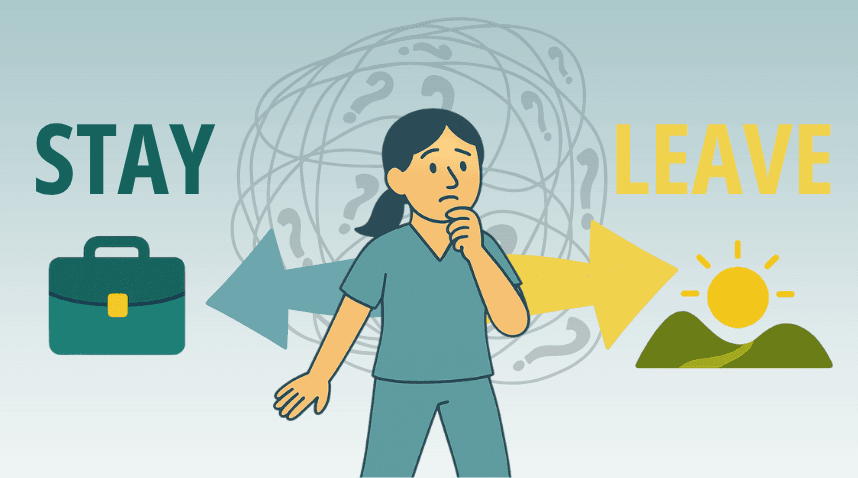
“Should I quit my job?”
Many of us might have had this thought cross our minds when our work doesn’t fully align with our values. This misalignment could be due to various reasons, such as a heavy workload, family commitments, location of the workplace, or an unsupportive work culture.
The first time this question came up was in my second year working in healthcare. The work demands had become overwhelming, and I started to experience burnout. I began to question if this career was truly for me and started reflecting on the misalignment I felt.
Eventually, after countless rounds of reflections, I managed to overcome that phase of burnout. I learnt how to better manage my boundaries and priorities, and I also started to apply self-care and self-compassion (karuṇā) in my journey. I began having regular check-ins with myself, which helped me ensure that I did my work intentionally instead of getting through each day to fulfil the work demands.
The second time this question came up was in my fifth year of work. This time, the conditions were different. I wasn’t feeling burned out, and I enjoyed the supportive work culture. Many of my seniors and colleagues empowered and supported me, and some of them even became my friends whom I enjoyed hanging out with outside of work.
There weren’t many push factors; rather, the workplace became my comfort zone. This time, the choice to leave wasn’t driven by aversion, but by a desire to pursue what truly mattered to me.
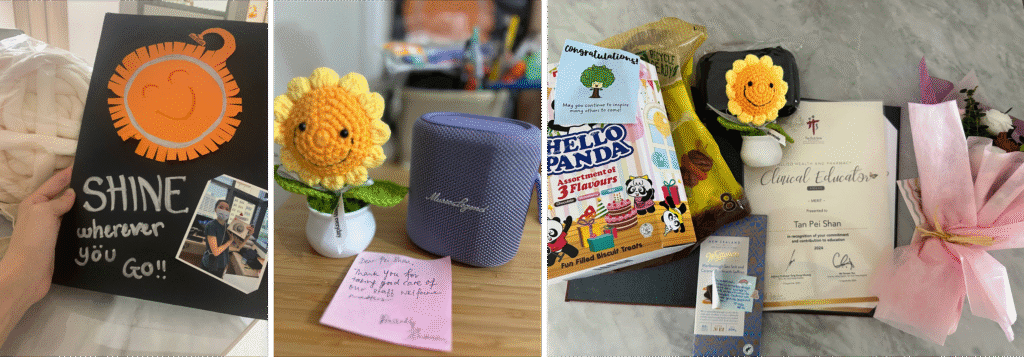
Farewell gifts from my colleagues 🙂
Some of my relatives and my parents were initially concerned about me leaving. Additionally, a few of them remarked that I was really lucky to have a stable and supportive work environment.
Here are some guiding questions that enabled me to reflect deeper and ultimately decide why and when I should leave.
A. “Am I still growing in areas that align with me?”- Reflecting on push and pull factors
My workplace gave me opportunities to explore wellness at work, leadership, and clinical education, which were areas that I really enjoyed. However, these took up only about 10–20% of my time, and the majority of my day was still spent on the usual work routines.
After some time, it felt instinctive to me that since work took up the majority of my waking hours, it should be aligned with what mattered to me.
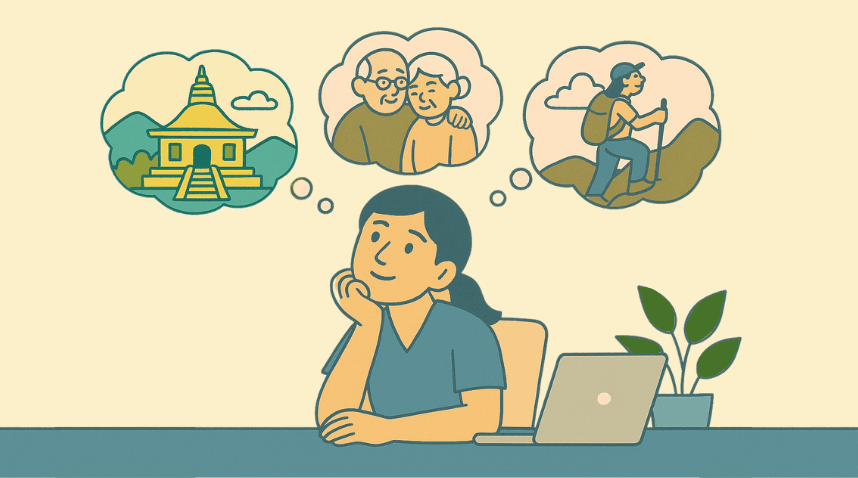
I reflected on what I would want to do if I had more time:
To spend more time with my grandparents (they’re getting older and time with them is really precious)
To go for Buddhist retreats
To visit Plum Village in France (it’s been on my bucket list for 4 years!)
To explore other areas within healthcare, like palliative and home care
To try out teaching yoga and music
These became the pull factors that gave me the courage to venture out of my comfort zone.
When you’re free, maybe you can also take some time to reflect on your own “push and pull factors” at work too!
Push Factors (Why do you want to leave your current job?)
Pull Factors (What matters to you and is calling you forward?)
B. Understanding your intention: Uncovering the deeper layers behind your desire to leave
Sometimes I hear my friends say things like: “I want to leave my job because the work demands are overwhelming.” “My boss is horrible.” “The work environment is toxic.”
But not many of us pause to really reflect on what those words truly mean, or what deeper values and lessons are behind our suffering.
Here are some examples of how we can try to look deeper:
Example:
What we say or feel
What we might really value
“My boss is horrible.”
I value leaders who are open to feedback and change.
“I feel limited at work.”
I want to grow in a specific area, but the current system doesn’t support it.
“The work environment is toxic.”
I need a safe space that allows for mistakes and learning.
“Work demands are overwhelming.”
I value work-life balance and personal wellness.
“The job doesn’t pay enough.”
I want to feel valued and have the financial freedom to enjoy life.
(These are just some examples of what might be true for some people. It may or may not apply to your own situation.)
If the misalignment is something that can be changed in your current role, you might not actually need to leave your job. For example, in my second year, I was able to overcome burnout by learning to prioritise and set clearer boundaries with my time and energy.
Leaving your job isn’t always the answer to a “better life”. Sometimes, things aren’t greener on the other side.
A friend of mine left her job due to burnout but unknowingly landed in another job that had even more demanding expectations. She ended up struggling again and had to terminate that contract too.
It’s important to know why you’re leaving, and to carry those values with you when you’re looking for your next role. For instance, if you value a good work culture or work-life balance, maybe you can ask the interviewer about the team culture, or even request a shadowing session before committing.
C. Do I have enough? Am I ready to leave?
After contemplating my decision, I also spoke to my sister and some friends who had left their careers to understand more about their journeys. I explored platforms and networks that could support my next steps. I also calculated my savings and estimated expenses to ensure I have enough to tide through my unemployment period.
I remember reading a post by The Woke Salaryman that said: “You should have X months of salary saved in your account (X being the number of months you plan to take off). So if you want to take a 6-month break, aim for 6 months’ worth of salary saved in liquid cash.”
All of these conversations and preparations helped me feel more assured that I would be okay even if I leave my job.
Conclusion: Life after leaving
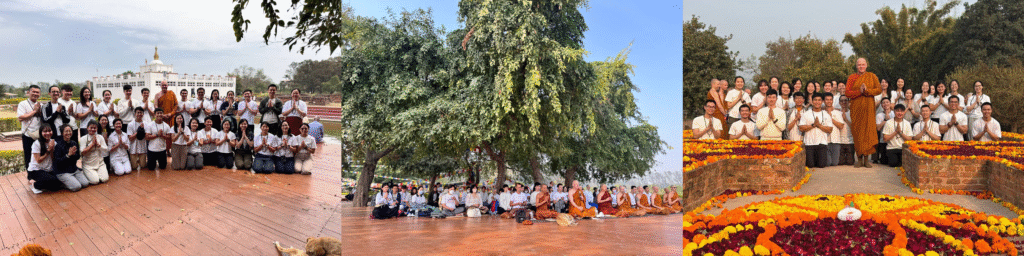
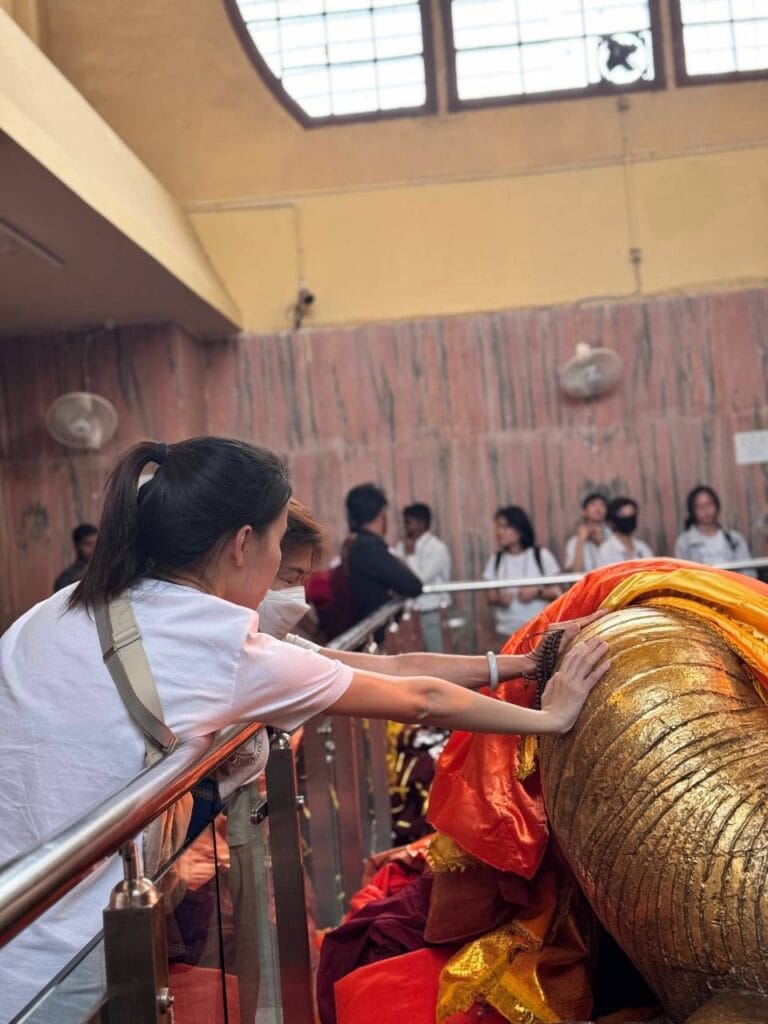
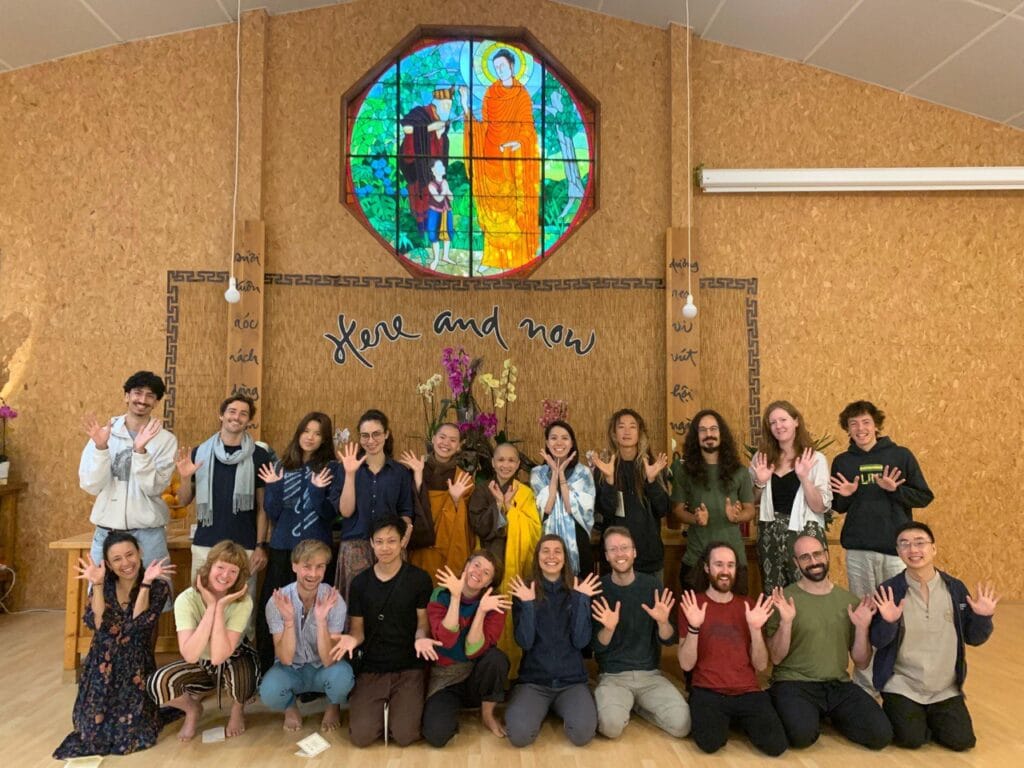
It’s been months since I left my job and I’ve been focusing more on the things that matter to me. I have gone for retreats, pilgrimages in Nepal and India, and I finally visited the Plum Village in France last August. I’ve been spending more time with my grandparents, teaching seniors yoga once a week, exploring music, and doing locum healthcare work.
Photos taken on my pilgrimage.Photo taken at Kushinagar (Buddha’s death place) on my India PilgrimagePhoto taken at Plum Village Retreat in August
I realised that we actually have some control over how we spend our time. We’re not necessarily limited to the traditional 8–5 lifestyle, especially if we’re willing to trade some stability for a bit more freedom.
“Our vocation can nourish our understanding and compassion, or erode them. We should be awake to the consequences, near and far away, of the way we earn a living.”
Whatever path you choose, may it lead you toward becoming a kinder, wiser, and more fulfilled version of yourself.
Wise Steps:
Reflect on your push and pull factors — Take time to identify what’s making you want to leave your current job and what’s drawing you toward something new.
Uncover your deeper values — Go beyond surface frustrations and ask yourself what you truly need to feel fulfilled and supported at work.
Assess your readiness — Review your finances, talk to trusted people, and make a plan to ensure you’re prepared emotionally and practically if you decide to leave.
TLDR: While advice from others can be helpful when facing a crossroad, we know our situation best first-hand and can make decisions that others may not understand. As long as we make choices with a rational and calm mind, we can trust the process and conditions to guide us.
How many of us have pondered the possibility of leaving our current job? Is it due to excessive workload, lack of progress or recognition, a misalignment with personal value, or just the thought of exploring something new?
This thought had been running through my mind for the past year, but I was held back by another question: “Are you sure? Many would’ve wanted your position. It seems foolish to let go of something good when you don’t know what comes next.”
The inner skeptic
This discouraging thought mostly stemmed from worry or fear of what others would think – of how foolish they might perceive this action, or how foolish I would seem.
The skeptic in me remained strong until something bigger shook it. Early last year, team restructuring was announced, with a stronger emphasis on delivering more efficient results, and the resignation of all overseas team members.
At first, I took these responsibilities as a challenge — after all, I had taken on growing roles over the past years.
I also believed this was what a good leader must do: to be the pillar of support for the team, especially during tough times.
Soon enough, 14-hour workdays became the norm. Days were filled with meetings to ensure ongoing operations, maintain process continuity from departing colleagues and fill vacant positions as soon as possible.
Lunch was eaten at the desk to save minutes that could be spent working, no breaks were taken to quickly cross off hands-on tasks from to-do list. Eventually, self-care routines were abandoned and the no-work-on-weekends boundary was crossed.
How do we know when it’s enough?
This was a personally challenging period, but I gritted my teeth and pushed on. Positions were filled, trainings were conducted, and frequent meetings with the new overseas team were established.
But not without a toll on body and mind – skin breakouts, weight gain, poor sleep, heart palpitations, and lack of energy for anything else.
After a few months, I realised I needed help — this wasn’t something I could manage on my own. My boss was surprised when I broke down in our catch-up call; he thought I was handling the situation quite well! He gave me a two-week break and arranged for a colleague to stand in during that time.
Reviewing boundaries
I used the time to rest, eat better, and try out a gym trial. Establishing a healthier routine helped me regain some balance.
Then, I came to a realisation: this situation wasn’t personal and it could have happened to anyone. While I couldn’t control the outcome, I can put in my best effort and allow the result to materialise.
The anxiety stemmed from the mindset that “it’s my full responsibility to keep things going at the same high standard as on normal days”. These weren’t normal days, and while it was my responsibility as the manager to keep things going, there were still things beyond my control – and I had to know where to draw the line. And for sure, I wouldn’t be able to manage the situations if I wasn’t well.
Returning to work after the two-week break, the same pressures and demands remained. Though it was clear that the world didn’t crumble without me, I knew I couldn’t return to the same routine.
I informed my boss and team that I needed a morning gym session everyday — this was my new boundary to make things work. The shift in mindset also helped to alleviate unnecessary pressure.
As the situation slowly found balance after a year, I knew deep down that I would leave the company once things stabilised. Vacant positions were filled and systems were implemented to improve operations with the new team. The turning point came one morning, during regular work planning call with a team member. A thought struck me: this is it, it’s time to leave.
Nothing extraordinary was discussed during the call, only the routine had lost the purpose for me.
Not until another team member resigned, did I realise that there is no ‘good time’ to leave. After considering practical matters — typical monthly expenses, how much saving there is, how long I can sustain myself, how I will use the time off well, and how I can manage the emotions that may arise during the time off; and having sat on my resignation letter for a few days to ensure it wasn’t an emotional decision, I formally submitted it to my boss.
It was fortunate that the remaining team members had been groomed for independence and growth. Most areas were already running smoothly without much direct involvement from me. After serving a three-month notice period to assist with the transition, I left the company.
Living with uncertainty
Without a new job or a fixed plan in place, it felt bittersweet to leave a workplace of 12 years and the people I had worked closely with. It felt liberating, yet apprehensive of what the future might hold. With body and mind care at the forefront, I’ve learnt to hold plans lightly.
Coincidentally, several opportunities to join retreats arose. I seized them and planned for extended self-practice periods.
The past 2 months have been filled with retreats, both as a participant and as a volunteer to the organising team. Providing small assistance to others on their paths has brought me joy and gratitude.
There are still moments of doubt and uncertainty, but it also gave me time for introspection and realisation. There are also moments of annoyance when friends ask if I’ve started looking for another job or what my next step is. But I’ve learnt to simply say: I don’t know yet.
I do aspire for conditions where a suitable career aligning both spiritual and material growth arises for me. But for now, I’m taking things slow and that feels alright 🙂
Wise steps:
Be clear about our boundaries in both personal and work life, so we can make decisions with a clear mind rather than out of emotion.
Assess practical matters, sit with the decision if needed, and trust the choice made.
It’s okay not to know the immediate next step and to say so when asked.
Editor’s note: This is an adapted article in collaboration with Ro. Do check out Roberta’s blog of reflection and learnings.
TLDR: As we navigate our careers and choose ‘what’s next’ for us, how can we figure out the core values that matter to us? Ro explores more.
I met a distant younger cousin at a family funeral service a few weeks ago. I had last connected with her when she was a semester away from graduating with her Undergrad business degree and she was eagerly picking my brains about how to get hired and tips on interviewing well.
Enthusiasm & Jadedness
At the time, she was brimming with youthful energy, optimism, and a people-pleasing energy that made me sit back in my seat and appreciate the gumption. I wanted to bottle the zest and drip it into my morning coffee.
We were now meeting 8 years later and she is now working in a risk management division of a Major consulting firm in the city. Younger her would have been ecstatic at the notion of her future self working in a ritzy office, with a nice handbag and shoes, her hair glossy from professional salon appointments.
To my dismay, instead of being excited or passionate about her job and industry, she was jaded, unhappy about her career, and was thinking (nay, daydreaming), about changing industries and doing something “creative”. What had driven her to make the choices she had to become a working professional, only to backtrack and feel a sense of disappointment and regret?
Dukkha, unsatisfactoriness, labelled by the Buddha, was written across her face. Attachments to outcomes or how society pushes us to expect that certain jobs are perfect because of high prestige and pay to make us suffer.
Connecting with her at this different stage of our lives, allowed me to see her predicament with a ten-foot pole, with perspective. In a situation I completely related with, she had chosen security, others’ perceptions and potential comforts over her individual core values, and hadn’t given herself any opportunities to optimise her life around these values.
I felt lucky that I had kept a version of my core values alive through my mindfulness networks and constant striving for inner peace. She was feeling stuck with no other way to refill her cup and didn’t know where to start with this pivotal change.
Core Values
We need to regularly and often reflect on our fundamental beliefs and guiding principles. These are the ‘North Stars’ that guide our decision-making and behaviours. Without reflection, we can get swept up in the pressure of our networks, our parents, friends and acquaintances – and lose direction, purpose and clarity in our life choices. What are we working for? What are we contributing to?
The Buddha talked about Samma Ditthi or Right View, which encourages us to see things as they truly are. Having this at the back of our heads unblinds us to the reality that lies ahead. For everything we work towards, there is a craving with a corresponding Dukkha. We, as lay people, have to know that we need to choose a life that has manageable Dukkha and confront that reality.
Having met so many inspiring and strong-minded individuals, I can see the common thread through them is that they live their lives with dignity, boundaries and a strong sense of their own core values which are unique to each of us, even if they do evolve over time.
Identifying Your Core Values
This requires deep introspection and thoughtful consideration. So many of us don’t give ourselves the chance to discover our values, by copping out and blindly stating that we don’t know what we want. Well, here are some questions that I often use to help me identify what is important to me, and what may have changed over the years.
What activities or experiences make me feel most fulfilled and energized?
What qualities do I admire most in others, and why?
What are the common themes or principles in my happiest memories?
When have I felt the most authentic and true to myself?
In what areas of my life do I consistently invest time, effort, and resources?
When have I felt the most aligned with my purpose or sense of meaning?
What legacy do I want to leave behind, and what values are essential in shaping that legacy?
If I could only live by three to five guiding principles, what would they be?
Prioritising your Core Values
To uphold our core values in all aspects of our lives, we must make hard decisions to align our decisions with long-term goals and aspirations. This is where the disparity can occur, as we’re making choices and navigating our lives every day.
However, these moments of consideration, however difficult, will result in harmony with our choices and allow us to live a life authentic to us. Here’s what helped me to integrate my core values into my daily life:
Goal Setting. Ensuring goals align with core values and activities that are important to you.
Decision Making. Cross-reference decisions with your core values, to ensure they match up.
Boundaries. Ensure you have boundaries that uphold your core values in relationships and at work.
Evaluating and Adjusting. We don’t always get it right, and often factors outside of our control will lead us to places we need to come back from. We need to constantly adapt to these changing circumstances and stick to a regular practice of self-reflection to evaluate our current actions and core values. We can always make necessary changes to get us back aligned with our ultimate goals.
When prompted, my little cousin reflects on her decisions as a result of the pressure and expectations from her parents and her comparisons with her university cohort.
When all her friends were securing impressive, high-paying corporate jobs, it’s natural that she felt behind in life and rushed to secure her rights to brag. It’s a reminder that all that glitters is not gold, and being on the inside of the big corporate machine, my cousin realises that it’s not where she belongs.
At 27, she will have to navigate a career change with resilience and motivation, but I have no doubts that when she hones in on what really brings her alive and what kind of work she really wants, this uncertainty will all make sense as an invaluable period of learning and unlearning.
It’s a reminder to us all, that we mustn’t forget to check our internal compass. Our core values will always point us in the right direction, even when the path ahead seems uncertain.
Wise Steps:
1. Use questions to guide your introspection. You can ask yourself what activities make you feel most fulfilled and energised.
2. Analyse happy memories: Look for common themes in your happiest experiences as these themes often point to your core values.