
Is There a Right Time to Leave My Job?
TLDR: This reflection shares a personal reflection on why and when to leave a job. It offers guiding questions to help uncover your own push and pull factors, reflect on your intentions, and assess your readiness to leave. Ultimately, it encourages making career choices with clarity, compassion, and intention.
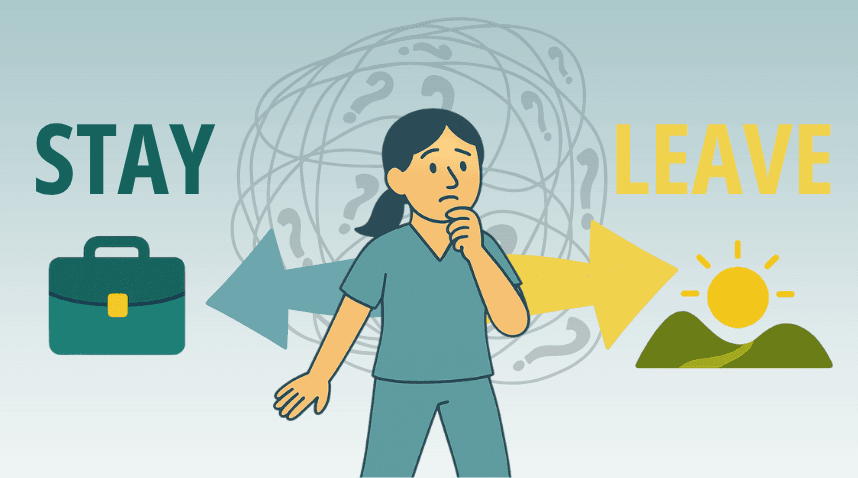
“Should I quit my job?”
Many of us might have had this thought cross our minds when our work doesn’t fully align with our values. This misalignment could be due to various reasons, such as a heavy workload, family commitments, location of the workplace, or an unsupportive work culture.
The first time this question came up was in my second year working in healthcare. The work demands had become overwhelming, and I started to experience burnout. I began to question if this career was truly for me and started reflecting on the misalignment I felt.
Eventually, after countless rounds of reflections, I managed to overcome that phase of burnout. I learnt how to better manage my boundaries and priorities, and I also started to apply self-care and self-compassion (karuṇā) in my journey. I began having regular check-ins with myself, which helped me ensure that I did my work intentionally instead of getting through each day to fulfil the work demands.
The second time this question came up was in my fifth year of work. This time, the conditions were different. I wasn’t feeling burned out, and I enjoyed the supportive work culture. Many of my seniors and colleagues empowered and supported me, and some of them even became my friends whom I enjoyed hanging out with outside of work.
There weren’t many push factors; rather, the workplace became my comfort zone. This time, the choice to leave wasn’t driven by aversion, but by a desire to pursue what truly mattered to me.

Some of my relatives and my parents were initially concerned about me leaving. Additionally, a few of them remarked that I was really lucky to have a stable and supportive work environment.
Here are some guiding questions that enabled me to reflect deeper and ultimately decide why and when I should leave.
A. “Am I still growing in areas that align with me?”- Reflecting on push and pull factors

My workplace gave me opportunities to explore wellness at work, leadership, and clinical education, which were areas that I really enjoyed. However, these took up only about 10–20% of my time, and the majority of my day was still spent on the usual work routines.
After some time, it felt instinctive to me that since work took up the majority of my waking hours, it should be aligned with what mattered to me.
I reflected on what I would want to do if I had more time:
- To spend more time with my grandparents (they’re getting older and time with them is really precious)
- To go for Buddhist retreats
- To visit Plum Village in France (it’s been on my bucket list for 4 years!)
- To explore other areas within healthcare, like palliative and home care
- To try out teaching yoga and music
These became the pull factors that gave me the courage to venture out of my comfort zone.
When you’re free, maybe you can also take some time to reflect on your own “push and pull factors” at work too!
- Push Factors (Why do you want to leave your current job?)
- Pull Factors (What matters to you and is calling you forward?)
B. Understanding your intention: Uncovering the deeper layers behind your desire to leave
Sometimes I hear my friends say things like:
“I want to leave my job because the work demands are overwhelming.”
“My boss is horrible.”
“The work environment is toxic.”
But not many of us pause to really reflect on what those words truly mean, or what deeper values and lessons are behind our suffering.
Here are some examples of how we can try to look deeper:
Example:
| What we say or feel | What we might really value |
| “My boss is horrible.” | I value leaders who are open to feedback and change. |
| “I feel limited at work.” | I want to grow in a specific area, but the current system doesn’t support it. |
| “The work environment is toxic.” | I need a safe space that allows for mistakes and learning. |
| “Work demands are overwhelming.” | I value work-life balance and personal wellness. |
| “The job doesn’t pay enough.” | I want to feel valued and have the financial freedom to enjoy life. |
(These are just some examples of what might be true for some people. It may or may not apply to your own situation.)
If the misalignment is something that can be changed in your current role, you might not actually need to leave your job. For example, in my second year, I was able to overcome burnout by learning to prioritise and set clearer boundaries with my time and energy.
Leaving your job isn’t always the answer to a “better life”. Sometimes, things aren’t greener on the other side.
A friend of mine left her job due to burnout but unknowingly landed in another job that had even more demanding expectations. She ended up struggling again and had to terminate that contract too.
It’s important to know why you’re leaving, and to carry those values with you when you’re looking for your next role. For instance, if you value a good work culture or work-life balance, maybe you can ask the interviewer about the team culture, or even request a shadowing session before committing.
C. Do I have enough? Am I ready to leave?
After contemplating my decision, I also spoke to my sister and some friends who had left their careers to understand more about their journeys. I explored platforms and networks that could support my next steps. I also calculated my savings and estimated expenses to ensure I have enough to tide through my unemployment period.
I remember reading a post by The Woke Salaryman that said:
“You should have X months of salary saved in your account (X being the number of months you plan to take off). So if you want to take a 6-month break, aim for 6 months’ worth of salary saved in liquid cash.”
All of these conversations and preparations helped me feel more assured that I would be okay even if I leave my job.
Conclusion: Life after leaving

It’s been months since I left my job and I’ve been focusing more on the things that matter to me. I have gone for retreats, pilgrimages in Nepal and India, and I finally visited the Plum Village in France last August. I’ve been spending more time with my grandparents, teaching seniors yoga once a week, exploring music, and doing locum healthcare work.


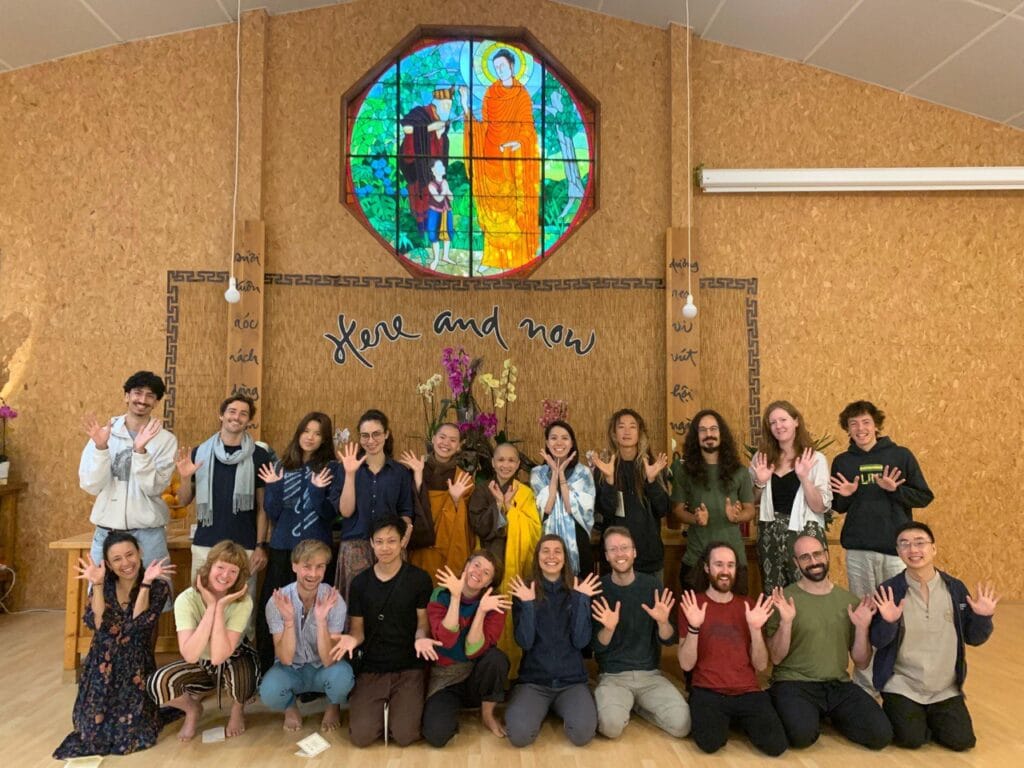
I realised that we actually have some control over how we spend our time. We’re not necessarily limited to the traditional 8–5 lifestyle, especially if we’re willing to trade some stability for a bit more freedom.
Ending off with a quote by Thich Nhat Hanh:
“Our vocation can nourish our understanding and compassion, or erode them. We should be awake to the consequences, near and far away, of the way we earn a living.”
Whatever path you choose, may it lead you toward becoming a kinder, wiser, and more fulfilled version of yourself.
Wise Steps:
- Reflect on your push and pull factors — Take time to identify what’s making you want to leave your current job and what’s drawing you toward something new.
- Uncover your deeper values — Go beyond surface frustrations and ask yourself what you truly need to feel fulfilled and supported at work.
- Assess your readiness — Review your finances, talk to trusted people, and make a plan to ensure you’re prepared emotionally and practically if you decide to leave.