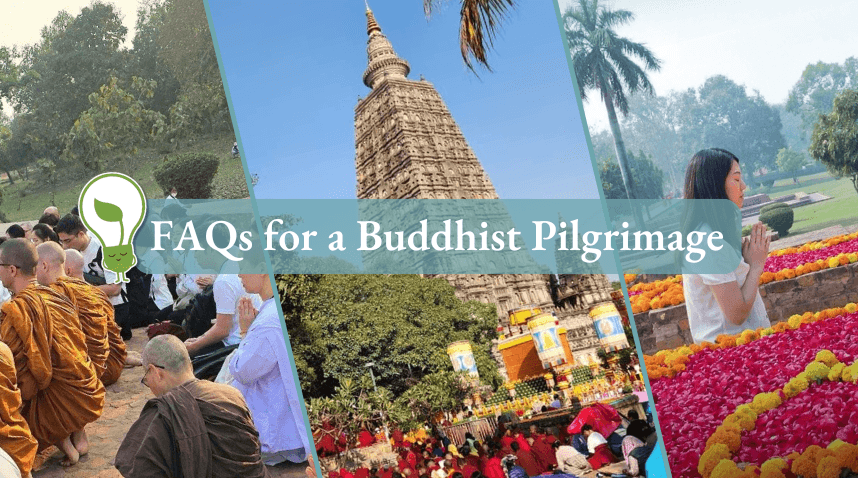
FAQs for a Buddhist Pilgrimage
Caveat: This is based on personal learnings and I seek forgiveness for any errors and omissions.

Why go on a Buddhist pilgrimage
A Buddhist pilgrimage to the 4 holy sites can be a catalyst or accelerant for practice. It is an experiential contemplation of the Buddha’s life and teaching.
It is an opportunity for us to put time and effort into contemplating and understanding for ourselves what the Buddha was trying to teach and gain clarity on how we want to conduct ourselves in daily life through our body, speech and mind.
Going on a pilgrimage is skillful when it strengthens Saddhā (confidence in the Buddha and his teachings as a way to end suffering), inspires Sila (our virtue and commitment to be good) and Bhāvanā (refers to meditation that purifies the mind of unwholesome mental states that tie us to samsara). It gives us a sense of urgency towards spiritual practice.
It is only life changing if you choose to change how you wish to live your life before, during and after a pilgrimage.

When to go on a Buddhist pilgrimage
Peak pilgrimage season is during the winter months of October to March when the weather is cool and dry.
How to go on a Buddhist pilgrimage
Set a clear, wholesome purpose. For example: My intention for this upcoming pilgrimage is to reinforce my refuge in Buddha, Dhamma, Sangha; cultivate virtue and insight; dedicate merit to all beings.
Once you set your intention, have a think about how you would like to align your intention with your behavior, speech and mind at least during the pilgrimage.
Perhaps you would like to make an effort to keep 5 or 8 precepts. 8 precepts are to support renunciation/restraint of sensuous stimulation to create better conditions for a peaceful mind.
Or perhaps you would prefer to put more effort and intention to soften your heart throughout the trip with the 4 brahmaviharas:
– Metta: wish safety and peace to all you meet.
– Karuna: be patient with crowds, discomfort, and others’ needs.
– Mudita: rejoice in others’ devotion and practice.
– Upekkha: meet delays, heat, cold, or disappointment with balance.
It would be good to have a beginner’s humility: arrive not to “collect” places but to be taught by them.
How to prepare for a Buddhist pilgrimage
Prepare the body
If you don’t already have a somewhat consistent meditation practice, it would be good to try getting used to the act of meditating. Try different forms of meditation so that you will have a toolbox you can reach into while you are on pilgrimage – be it metta, breath, walking meditation. This is something you can and should do while on pilgrimage. What better way to honour Buddha than practising what he taught while visiting the holy sites.

On a practical level, one should take supplements to boost your immunity before the trip. You will be exposed to different environmental conditions so it’s good to make sure your body is as healthy as can be. It would also be a good idea to stock up on medication so that you can manage whatever illnesses/symptoms that crop up.
Prepare the mind
It would be good to understand the significance of the holy sites that you would be visiting. Ideally, do some research on the holy sites you are going to visit.
Many suttas begin with “So I have heard. On one occasion the Blessed One was dwelling at Savatthi in Jeta’s Grove, Anathapiṇḍika’s Park…”. Knowing the places and the suttas that were taught at these places really makes the suttas come alive.
I chanted the Dhammacakkappavattanasutta almost daily for a month leading up to the pilgrimage.
This allowed me to chant and reflect on the significance of what occurred at Sarnath. The place where Buddha set the wheel of Dhamma in motion. Without Buddha and his teachings, we would wander endlessly in Samsara (endless cycles of rebirth).
Destined to be born, grow old, get sick and die again and again. It is the place and moment where Buddha taught the Dhamma and a third party (Koṇḍañña, one of Buddha’s first 5 disciples) was able to realise the truth of the Dhamma and find the way out of Samsara. Let the significance of that sink in while you are at Sarnath.
What to expect while on pilgrimage

Expect the pilgrimage to be an extreme form of practice. Think of it like signing up for a marathon when you’ve never gone for a jog longer than 5km before. So to make this whole endeavor more productive, we’d better do some training beforehand.
A pilgrimage in India is likely to be a very different experience from our daily life. We will see, smell, hear a lot of things that we are not used to. It is a good time to practice awareness that the world and the people in it move and change in their own way and in their own time. Expecting or wanting them to behave in ways we prefer is what causes us suffering. Bring these learnings home.
Mindfulness is your friend. Just observe and note everything around you without judging — I like this, I don’t like that. This should’ve been done; that shouldn’t be done. Naturally, you will be exposed to a lot of pleasant, unpleasant and neutral stimuli. This is to be expected if you live in this world.
On a practical level, you can expect roads to be a bit bumpy/jammed, toileting situations that would not be ideal and beggars that may be waiting at the bus and could follow you all the way to the entrance of the holy site. As good as your intention may be to give out some cash, please do not whip out a wad of cash that may cause you to be mobbed.
You may try to hand out tips and snacks to beggars discreetly (usually when they’re alone). Or you could look for a reputable charitable institution doing good work in the area and make a donation there as a way to support the community.
What mental qualities to develop before, during (and most importantly, continuously after) a Buddhist pilgrimage?
Daily life can be repetitive and fast moving. Because of this, we may repeat the same mistakes again and again without taking the time to reflect on which behaviours we want to let go of and which we want to encourage. Many of us live life on autopilot, without really pausing to reflect on what we do and why we do it. Pilgrimage offers a change of pace and a chance to notice the thought patterns, behaviours, and habits we have become used to for better or for worse. Pause, and reflect: what kind of adjustments do we want to make to our lives.
Pilgrimage offers a helpful shift in pace. It is often guided by a wise teacher whom you can seek counsel from. And you’ll have plenty of time with well-practiced spiritual friends who can share their experiences and offer a Dhammic perspective.
For example, do you notice any “me first” habits that cause the heart and mind to become constricted? Perhaps the tendency to become impatient with others when they seem to be “in your way.” Is this how you want to live the rest of your life? Or is there another way to relate to the world around you that would lead to less unhappiness? Do you notice any unhelpful mental narratives running quietly in the background of your mind? What stories do we tell ourselves that assume the world should be a certain way, or should treat us the way we want it to? Does it? We often compare ourselves with those around us: better, the same, or worse. What does that do to our mind and how we treat others?
When we begin to notice these habits, the next question naturally arises. If we want to cultivate a mind that is more open, steady and at ease, what qualities should we encourage? The Buddhist tradition offers a helpful framework in the form of the Ten Pāramīs, noble qualities that gradually train the mind towards generosity, wisdom and compassion. They can serve as a practical guide or “gold standard” that we return to when we are unsure how to respond to challenging situations.
If one does not know where to start, one could try to cultivate the Ten Pāramī to gently bring the mind, speech and actions back to wholesome states again and again while on pilgrimage.
The aim isn’t to beat ourselves up for not being perfect. The aim is to continuously build new patterns that eventually become our habitual response in any given circumstance.
Dana (Generosity):
Generosity begins with letting go of subtle forms of greed and ill will. This might be as simple as allowing someone else to board the bus first even when you are tired and feeling overheated, or choosing not to respond harshly when someone invades your personal space. Each small act of generosity softens the heart.
Sila (Virtue):
Sīla is the foundation that supports all the other qualities. It involves mindfulness in speech, action, and livelihood. On pilgrimage, virtue may be tested through frustration, gossip, or impatience. Upholding Sīla keeps the mind clear and free from regret.
Nekkhamma (Renunciation):
Renunciation does not mean deprivation but a willingness to release selfish desires. It is the choice to step back from constantly seeking comfort, praise, or control. On pilgrimage, Nekkhamma might appear as accepting simpler meals, basic accommodation, or an unexpected change of schedule without resentment.
Panna (Wisdom):
By stepping away from your usual routine, you may have more space to develop wisdom through reflection and observation. We begin to see more clearly which actions lead to peace and which lead to agitation. This understanding grows from direct experience rather than intellectual knowledge.
Viriya (Energy):
This is the effort to keep practising even when familiar habits pull us back into distraction or complacency. Feeling frustrated? Notice how complaining, whether internally or to others, darkens the mind. Feeling uncomfortable? It can be a good opportunity to observe how quickly we try to escape discomfort through temporary distractions such as checking our phone. You might experiment with restraining urges to shop, scroll, or daydream about food back home. Viriya is the quiet determination to return again and again to mindfulness, kindness, and clarity.
Khanti (Patience):
The qualities listed above can seem almost impossible to cultivate at times. This is where patience and forbearance become important. Khanti is the willingness to forgive yourself and try again and again, patiently finding ways to keep the mind clear and wholesome in a sustainable way.
Sacca (Truthfulness):
Honesty and integrity with yourself help you explore where your discomfort is really coming from. It is common to focus on things in the outer world that appear to be causing our suffering. Sacca gently turns our attention inward to understand what is actually giving rise to our unhappiness and how we might respond more wisely.
Adhitthana (Determination):
Determination is the quiet resolve to stay aligned with what you know to be wholesome. Pilgrimage can bring tiredness, discomfort, or moments where old habits resurface. Adhiṭṭhāna is the steady commitment to continue cultivating generosity, patience, and mindfulness even when it feels inconvenient. It is not a rigid stubbornness, but a calm decision to keep walking the path.
Metta (Loving kindness):
Loving kindness is the wish for oneself and others to be well and free from suffering. During pilgrimage you will encounter many different personalities, including those who may move more slowly than you would like, speak loudly, or behave in ways that trigger irritation. These moments can become opportunities to soften the heart and extend goodwill instead of resentment. Even silently wishing others well can gently shift the state of the mind.
Upekkha (Equanimity):
Equanimity is the ability to remain balanced in the face of pleasant and unpleasant experiences. Pilgrimage will bring moments of joy, inspiration, fatigue, and inconvenience. Upekkhā reminds us that these experiences arise and pass according to causes and conditions. By learning not to cling too tightly to pleasant moments or resist unpleasant ones, the mind becomes more steady and peaceful.
It may seem like a tall order to develop all these qualities at once, especially under unfamiliar or challenging circumstances. Instead, you might set small and achievable intentions each morning to keep in mind throughout the day. For example, “May I open my heart to opportunities to be generous with others today.”
Remember not to be too hard on yourself if you slip up. Slip ups are simply data points to reflect on. Rather than avoiding or judging them, we can learn from them and try again with a little more understanding the next time.
And most importantly, remember to carry these learnings back home and continue incorporating these positive changes into your daily life.
Suggested simple routine at a holy site
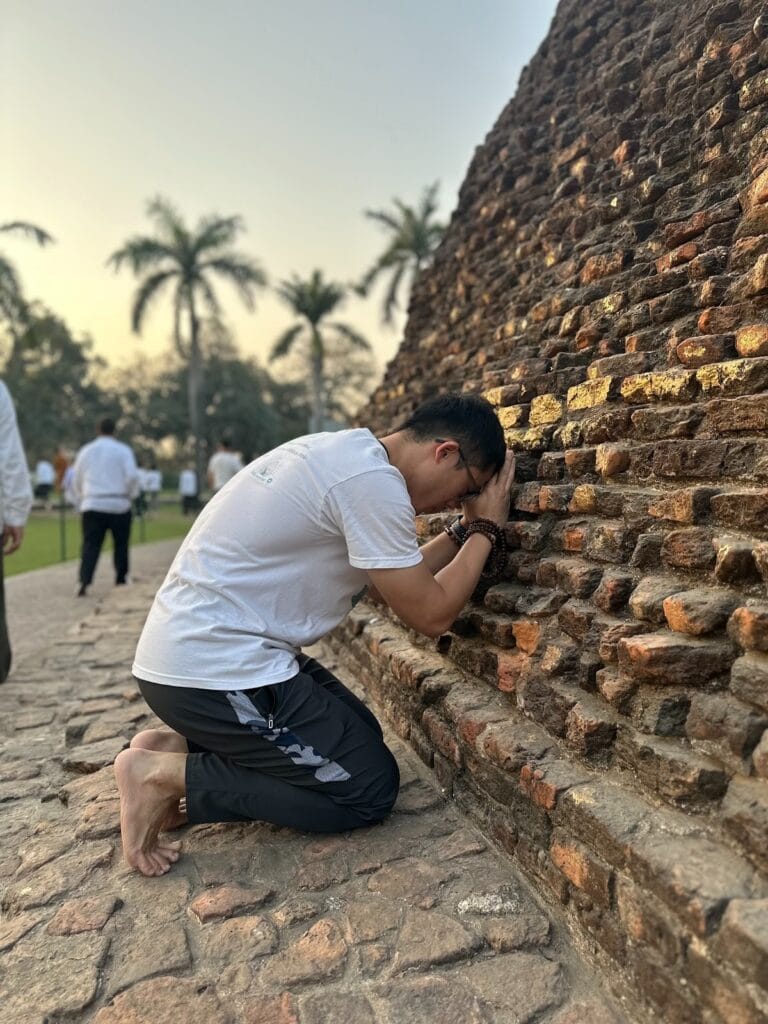
Arrival: three bows; short recollection of the Buddha.


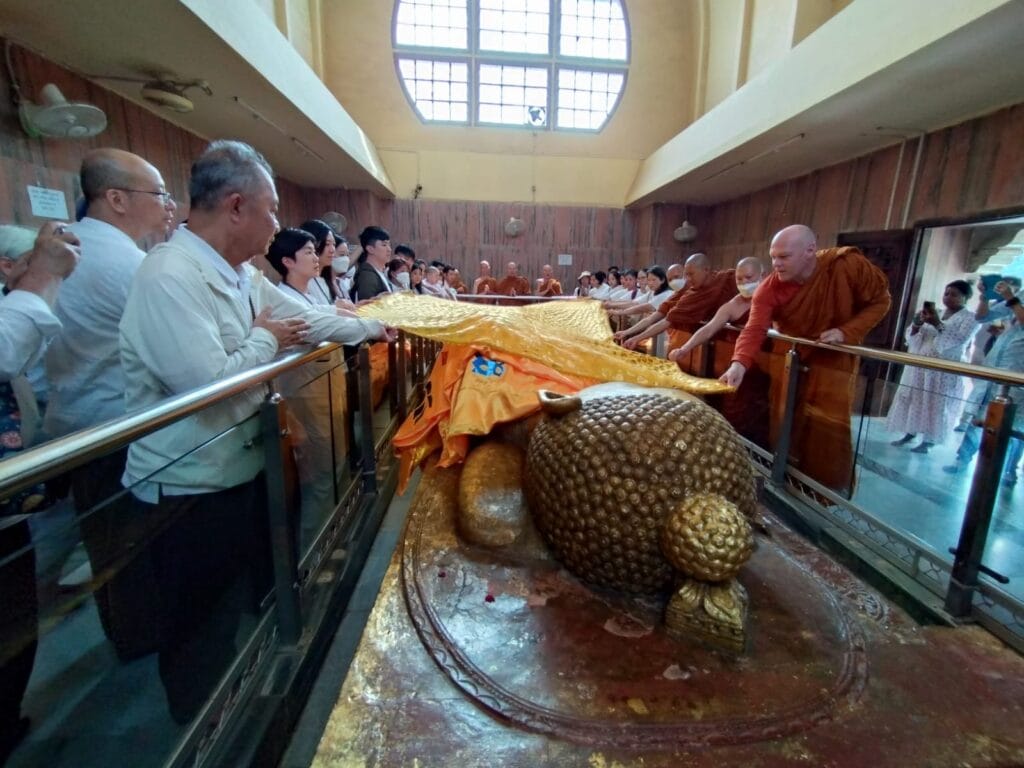
Dedicate merit: “May all beings be happy; may this goodness support liberation for all.”
Offerings you can make on pilgrimage
The greatest offering you can make to the Buddha would be paṭipattipūjā — an offering of practice.
In the Mahāparinibbāna Sutta, when people were worried about how to honour the Buddha after his passing, he made it plain that those who practise the Dhamma, who live in accordance with it, are the ones who truly honour and revere the Tathāgata. Not by ritual alone, but by transforming greed, hatred, and delusion in their own hearts.
What this means on pilgrimage is simple, but not easy. Bowing at Bodhgaya matters. Circumambulating stupas matters. Chanting matters.
But the deepest offering you can make at these places is restraint when irritation arises, kindness when fatigue sets in, mindfulness when the mind wants comfort, and patience when things do not go your way.
If you return home unchanged, the offering was mostly symbolic. If you return with even a small shift in how you speak, act, or relate to suffering, then the pilgrimage has already borne fruit.
Nevertheless, please offer flowers, candles, incense and robes as and when the opportunity arises at the holy site to brighten the mind and gladden the heart.
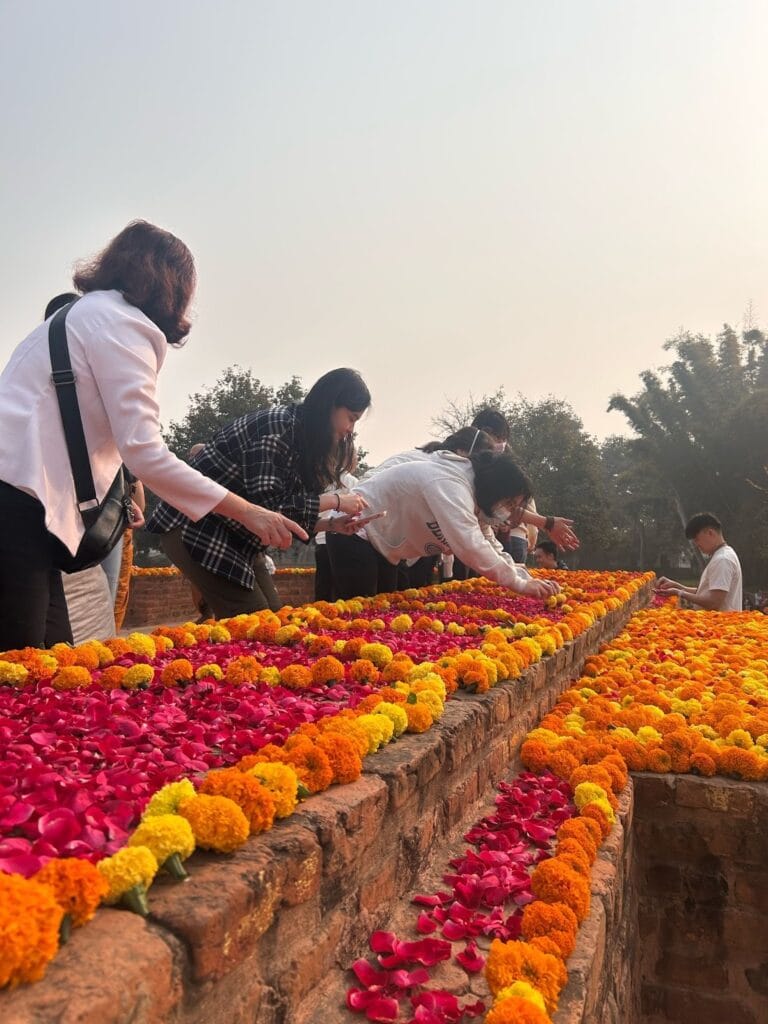
Things to bring (amongst the regular things you bring on holiday)
Bring basic medication. This includes painkillers, diarrhoea medication, rehydration salts, flu medicine, and anything you regularly take. Pharmacies are not easily accessible near some holy sites, they may also not carry the medication you require.
Bring mosquito repellent and itch relief cream. Mosquitoes can be persistent, especially in the evenings, and bites can become infected if scratched repeatedly.
Bring sunscreen, a hat, umbrella, and light long-sleeved clothing. The UV exposure is intense, even on cooler days, and prolonged exposure to the sun will sap your energy quickly.
Bring wet wipes, hand sanitiser, and tissues. Toileting conditions may be basic, and having your own supplies makes a significant difference to comfort and hygiene.
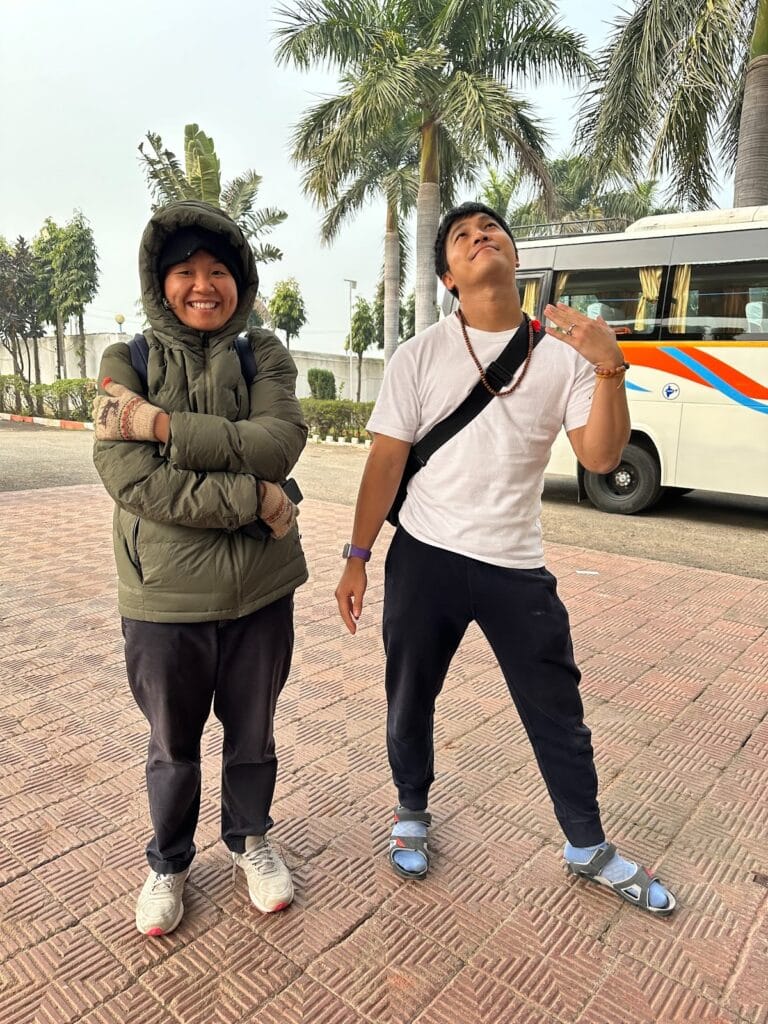
Bring comfortable footwear with good grip. You will be on your feet far more than you expect, often on uneven or dusty ground. You may have to take off your footwear at some of the holy sites so sturdy sandals may make sense.
Bring your meditation gear and perhaps a Dhamma book or two.
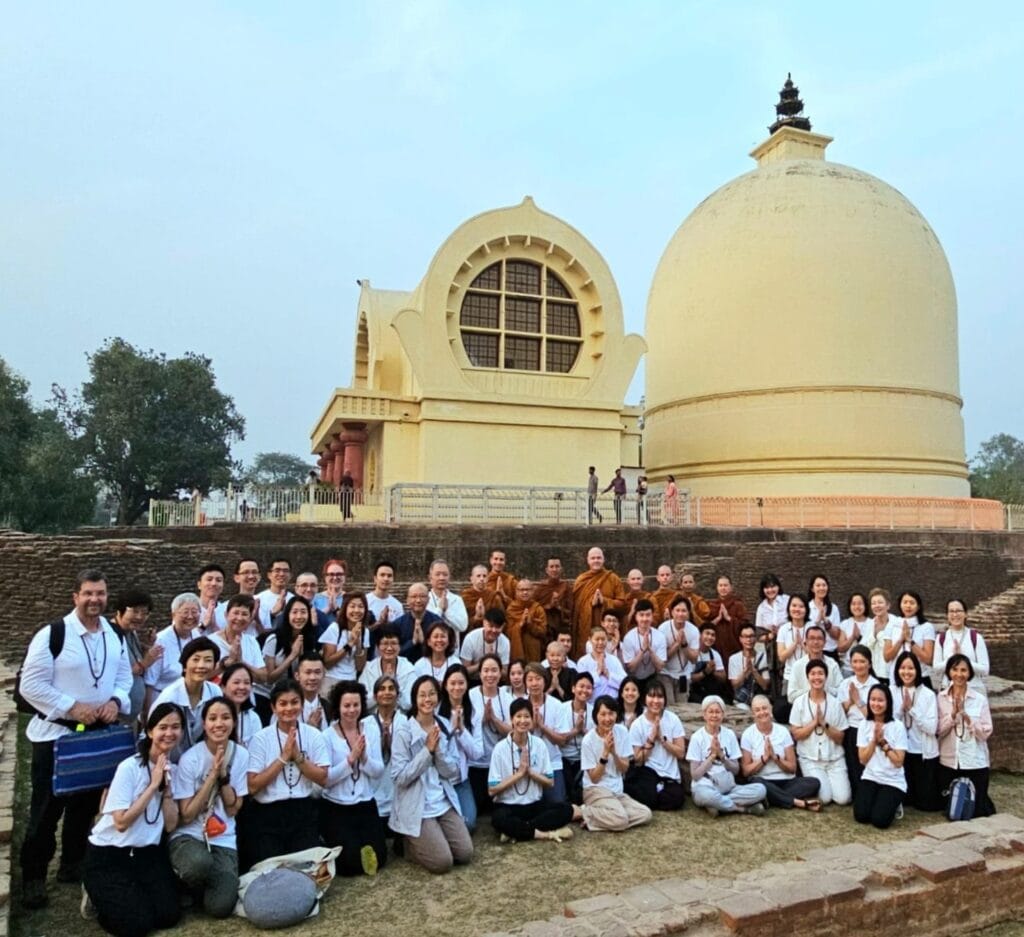
Pilgrims tend to wear comfortable & modest white tops and dark pants.
Things to take note of
Do not underestimate the physical conditions. Heat, cold, dust, long walks, and uneven terrain will wear you down quickly if you assume you can “power through”. Overconfidence usually leads to sickness halfway through the trip.
Do not drink tap water or consume unsealed drinks, even if locals do. Stick to bottled water and check that the seal is intact. Avoid ice, full stop.
Do not eat raw or unpeeled fruits and vegetables. As tempting as fresh fruit may look, food poisoning can derail the entire pilgrimage. Understand you may need your fiber, so banana or mandarins that you can peel yourself would be a reasonable choice. Choose hot, freshly cooked food whenever possible.
Do not carry large amounts of cash in one place or take it out openly. Crowded areas attract attention. Use small denominations and keep money distributed across different pockets or bags.
Do not skip rest or ignore early signs of illness. A sore throat, stomach discomfort, or fever should be addressed early with medication and hydration. Pushing on stubbornly often leads to days lost to recovery.
After returning
Integrate one concrete habit: daily morning sitting, weekly 8 precepts, regular acts of generosity. Let the pilgrimage change your life, not just your photo album.
Recommit and align your life to the Dhamma as a lay practitioner
Find a community near you that can support your practice
Recollect often moments during the pilgrimage that were wholesome and brought joy. Let these memories skilfully brighten the mind and motivate you to keep practicing
Conclusion
A pilgrimage does not awaken us by itself. It simply places us in conditions where practice becomes unavoidable.
If you walk these holy sites with intention, care, and humility, the journey continues long after you return home.
What matters most is not where you went, but how you now choose to live. May you grow in wisdom on your journey.
Other useful resources:
Some chanting resources
https://www.peacebeyondsuffering.org/chanting-04.html
https://www.watpahnanachat.org/chanting
Setting Rolling the Wheel of Truth (Dhamma-cakka-ppavattana-sutta) at Sarnarth
The Not-self Characteristic (Anatta-lakkhana-sutta)
The Fire Sermon (Aditta-pariyaya-sutta)
Buddha’s Extinguishment (Mahaparinibbana sutta) at Kushinara
The Life of Buddha (Between The Lines: An analytical appreciation of the Buddha’s Life by Sylvia Bay)
https://www.buddhistelibrary.org/en/thumbnails.php?album=149