
Ep 69: Why You Feel Unworthy? A Harvard Monk Explains Ft. Haemin Sunim, Zen Monk & Bestselling Author
Summary
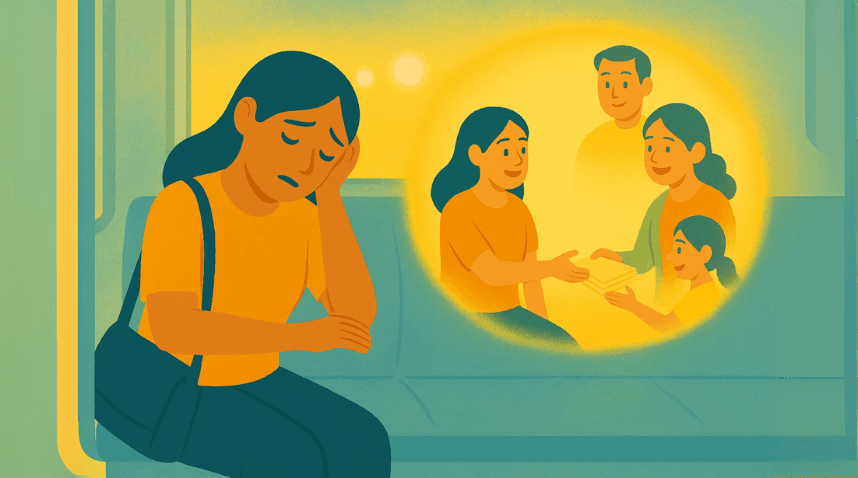
Why do so many of us feel unworthy, even when we’re doing our best, achieving our goals, and trying to keep it all together? In this deeply reflective episode, Haemin Sunim gently unravels the hidden roots of this feeling, revealing that our sense of unworthiness is not a personal flaw, but a learned response shaped by our earliest experiences of needing love, approval, and belonging.
Drawing from years of observing the human heart, he explains how our childhood survival instincts trained us to seek validation from others, making our self worth dependent on external opinions. Over time, this creates anxiety, people pleasing tendencies, and the constant fear of not being “enough.” But what if the very thing we’ve been searching for has always been within us?
Through practical and compassionate insights, Haemin Sunim invites us to reconnect with our inner child, the part of us that still feels unseen, unheard, and unloved, and shows us how to offer ourselves the care and reassurance we may have never received. He also explores how our minds are naturally wired to focus on negativity, and how we can gently retrain our attention toward gratitude, beauty, and everyday moments of joy.
From simple practices like mindful breathing and smiling, to deeper reflections on love, relationships, and emotional healing, this episode is a powerful reminder that true worth isn’t something we earn, it’s something we remember. If you’ve ever struggled with self doubt, comparison, or the need for validation, this conversation will help you come back to yourself with more compassion, clarity, and peace.
About the Speaker
Haemin Sunim is a globally respected Zen meditation teacher and international bestselling author known for his calm, compassionate voice and deeply practical approach to modern spirituality. Blending ancient Buddhist wisdom with everyday insight, his teachings focus on mindfulness, emotional well-being, and finding balance and joy amid the pressures of contemporary life. His work resonates widely for its warmth, simplicity, and ability to meet people where they are.
His books have sold over six million copies worldwide and have been translated into more than thirty-eight languages, with over one million copies sold each in the United Kingdom and Brazil. In the Netherlands, one of his titles became the longest-running nonfiction bestseller in the country, while in South Korea, his work was recognized as the bestselling book of the decade. His teachings and writing have been featured in major global outlets such as The New York Times, The Guardian, NPR, and BBC Radio.
Ordained in the Korean Zen tradition, Haemin Sunim received monastic training in South Korea before pursuing academic study in religion at the University of California, Berkeley, Harvard University, and Princeton University, where he earned his doctorate. He later spent seven years teaching Asian religions at Hampshire College in Massachusetts, bridging scholarly rigor with lived contemplative practice. Today, he continues to teach and inspire audiences around the world through international talks, retreats, and his widely read writings.
Key Takeaways
🧠 Why your brain is wired to seek validation
Your brain is built to scan for threats, and social rejection once meant danger. So approval feels like safety, making you rely on external validation. Over time, this conditions you to tie your worth to how others see you.
👶 How childhood survival shapes adult anxiety
As a child, you adapted to be liked and accepted to feel safe and cared for. You learned to hide parts of yourself that weren’t approved. This shows up in adulthood as anxiety, people pleasing, and fear of rejection.
🌱 The hidden link between belonging and self-worth
Belonging was once essential for survival, so being excluded feels deeply threatening. When acceptance is at risk, it’s easy to believe “I’m not enough.” This is why self-worth often becomes dependent on feeling included and liked.
✨ A simple way to retrain your attention away from negativity
Your mind naturally focuses on what’s wrong, overlooking what’s good. You can retrain it by noticing small moments of gratitude and kindness daily. Where you place your attention shapes how you experience your life.
Transcript
Full Transcript
[00:00:00] Haemin Sunim: Because of this negativity bias, our survival mechanism in our brain constantly scanning for potential dangers. We end up thinking that, oh my gosh, I cannot relax because when I look around, I do see a lot of potential dangers.
[00:00:22] Cheryl: Welcome to the Handful of Leaves podcast.
[00:00:24] Cheryl: My name is Cheryl, and today my guest is none other than amazing Haemin Sunim. Haemin Sunim is a prominent mega monk and author renowned for his bestselling books and large social media following that reach a global audience. He has studied at UC Berkeley, Harvard, and Princeton, and received monastic training in Korea.
[00:00:44] Cheryl: So very nice to meet you today, Haemin.
[00:00:47] Haemin Sunim: Oh, very nice to meet you, Cheryl.
[00:00:50] Cheryl: Apart from writing, the three amazing books, you have also found the School of Broken Heart. You spend about 25 years observing the human heart, both yourself and of others.
[00:01:02] Cheryl: So, to begin, in your own experience when you connected and gave your inner child, what it has never received, what was the most unexpected thing that happened?
[00:01:17] Haemin Sunim: Well unexpected thing was that for me my inner child was very lonely. Yeah. Very, very lonely. And I was surprised that my inner child was looking for a friend. There’s also element of grief. That things didn’t work out like the way I wanted as a child.
[00:01:37] Haemin Sunim: I was helpless, I was depending on other adult, for my wellbeing, but I didn’t receive what I was looking for, things like that. Then you can pause and say, Hey, you know, rather than constantly looking somebody else, looking for somebody else to give me what I want, maybe I, as an adult can give that to my inner child.
[00:02:04] Cheryl: Hmm. Can you speak more about that? About how we can validate ourselves, and validate the hurt our inner child are feeling from a place of an adult that maybe has not have a stable sense of security yet. So being a work in progress.
[00:02:26] Haemin Sunim: Right, right.
[00:02:27] Haemin Sunim: When we are young like a little child or baby, we had to completely depend on other people for our own survival, for a long time, right. If you look at animal, they spend not a long years like the way we do. And they tend to just be able start walking quite quickly, something like that.
[00:02:52] Haemin Sunim: Whereas we, as a baby, it takes a long time, and which means that for our own survival, I have to make sure that my parents will continue to like me, continue to feed me and, provide protection that I need. So, ever since we are very young, it’s a survival mechanism.
[00:03:16] Haemin Sunim: We see if there is any sign that my parents does not like me. Some aspect of me, my parents do not like me. And then, if I detect some parts of me that I see that my parents do not approve, even as a little child, we know then to be accepted to survive, we repress this part.
[00:03:40] Cheryl: Mm-hmm.
[00:03:41] Haemin Sunim: And try to show the part that our parents will approve so that I can ensure my own protections and food and, love from my parents.
[00:03:54] Haemin Sunim: So I ended up liking what my parents like, I ended up try to do what my parents expect me to do, things like that. So then we become very sensitive to how other people think of me. Because it’s the extensions in elementary school or junior high school, high school, we always think about how other my peer groups, my friends, think of me.
[00:04:20] Haemin Sunim: If they do not like me, and they try to exclude me, then it feels as though I have to fend for myself and I have to invoke some very ancient feeling that in ancient time, if you were to exclude it from the group, your tribe, then it basically meant that it was a death sentence.
[00:04:48] Haemin Sunim: Yep. Because it was very impossible to survive alone outside your tribe. So when we were young, in order to survive, we had to fit in. We tried to feel belong to somebody, and therefore we become very sensitive to other people’s opinions about me, right?
[00:05:00] Haemin Sunim: So, we put so much emphasis on how other people think of us. Yeah. So if they don’t like me, then oh my goodness, maybe I’m unlovable. Mm. Maybe I’m unworthy. So my worthiness it depending on other people’s opinions, and if you continue to believe this line of thinking, then of course we become very anxious and incredibly insecure because the whole worthiness is not intrinsic.
[00:05:44] Haemin Sunim: It comes from outside, right outside of us. And anybody who does not like me, I have to go and try to convince them that I am actually not a bad person.
[00:05:57] Cheryl: Mm-hmm.
[00:05:58] Haemin Sunim: I am lovable, I’m worthy.
[00:06:01] Cheryl: The people pleasing tendencies to come up.
[00:06:03] Haemin Sunim: Absolutely. Yeah. It comes right back.
[00:06:06] Haemin Sunim: So that whole thing is for us to survive. It was part of our survival mechanism.
[00:06:12] Cheryl: Mm-hmm.
[00:06:12] Haemin Sunim: So we should give so much love to little boy or little girl within us that trying very hard to be accepted and love, because we wanted to be alive.
[00:06:28] Haemin Sunim: So, like seeking this outer validations, it comes from that kind of mindset, tribal, ancient caveman mindset. We need to be part of the group, otherwise we cannot survive.
[00:06:43] Haemin Sunim: That’s why we want to be part of a, whether it’s a university or, like you wanna have a identity which is bigger than you, whether it’s a political party or whether it’s your nationality.
[00:06:56] Haemin Sunim: People try to identify themselves with something bigger.
[00:07:00] Cheryl: Mm-hmm.
[00:07:00] Haemin Sunim: Thinking that this bigger group will ensure my safety.
[00:07:04] Haemin Sunim: Right. Against the unknowable, all those forces that I don’t know. So, I would say that ultimately if you actually, you know, pause and look into whether it is self worthiness or validations, especially, self-worth that you are looking for, or love, you already have it.
[00:07:29] Cheryl: And I’m very curious, what pain do you see people hide the most behind their smiles?
[00:07:38] Haemin Sunim: Oh, what do they hide? Well sometime, self unworthiness, or sometime, feeling that I’m not enough or feeling of grief that they have not processed sometime or, jealousy or, even shame, or secret desire. Yeah. All kind of things. People hide, I assume.
[00:08:08] Cheryl: It’s so interesting because for us to connect to other people, is for us to have these desires, these feelings to be seen. But then it’s most common that we turn it around and put it away, hide it under the bed, hide it inside a cupboard, and then we end up with so much suffering.
[00:08:27] Haemin Sunim: okay. The thing is, the universe out there is neutral. You know, it’s neither good or bad, but oftentimes, we as a human being make a judgment, make a discernment that this is good and this is bad.
[00:08:47] Haemin Sunim: What we are very good at is detecting potential threat. So we look out and to see what’s the potential danger, what can harm me potentially.
[00:08:59] Haemin Sunim: So we have this negativity bias drawn to anything, any news that is negative. Any negative comment that people make, although there are plenty of positive and happy elements all around us. However, because of this negativity bias, our survival mechanism in our brain constantly scanning for potential dangers. We end up thinking that, oh my gosh, I cannot relax because when I look around, I do see a lot of potential dangers.
[00:09:33] Haemin Sunim: But the thing is, we also can train ourselves to look for things that are nice, wonderful, or invoking, and beautiful, and kind. Because those things also exist out there. It’s just that we end up just zeroing on all those negative and not so good, dangerous kind of situations and end up just consuming those news or consuming those negative chatters, outside and inside and listening to your negative inner critics and thereby, you end up feeling that, oh my goodness, the world is not safe.
[00:10:21] Haemin Sunim: I cannot relax. I cannot trust other people. I cannot trust the universe. I cannot trust God. I cannot trust the Buddha.
[00:10:31] Haemin Sunim: I guess what we can do is that every night when you go to sleep, write down five grateful things. Yeah. So you train your mind to look for things that went well today.
[00:10:46] Haemin Sunim: Things that I felt really grateful, and oftentimes it is the kindness of other people that make me feel very grateful today.
[00:11:00] Haemin Sunim: So rather than overlooking all those wonderful and kind and beautiful and amazing things, and only zeroing on negative news, we can retrain our brain and say, hey, we can slow down.
[00:11:12] Haemin Sunim: We can savour this beautiful, cup of coffee or tea, or we can enjoy this very nice scenery, beautiful weather. Whether it’s having a wonderful conversation with your friends or your parents or enjoying your books, there are plenty of wonderful things around you just that you overlook at them.
[00:11:35] Haemin Sunim: And then second thing that I sometimes say is when you go to bed, say to yourself, something amazing will happen tomorrow. Something amazing will happen tomorrow. Yeah. You just repeat, again and again as you falling to sleep.
[00:11:53] Haemin Sunim: And then once you open your eyes and you say something, amazing thing will happen today. Mm-hmm. Right. And then you’ll see that amazing things all around you.
[00:12:06] Cheryl: This is boiling down to the fact of attention.
[00:12:10] Cheryl: Where we place our attention, are we placing it on the negative things or are we choosing to place it on the things that are positive, amazing and wonderful. in the day-to-day reality of life, right?
[00:12:25] Cheryl: The stressors, the boss, the negative comments. Most often our bodies are tense. We have to almost take a few mini steps before we are able to remind ourselves, hey Cheryl, let’s get out of this victim mindset. Let’s change things up. How would you suggest for people to reconnect with their bodies, to come to the center again, and to be able to then make it a meaningful change towards their mental states and moods?
[00:13:00] Haemin Sunim: Hmm. So the first step is to recognize, oh, this is what’s happening. My body is tense, I’m stressed. So being mindful of what’s happening, in your mind, in your body, that would be the first step. And then second step is you try to relax. If you only have 10 seconds, the quickest way is smile.
[00:13:20] Haemin Sunim: Mm-hmm. So you say, ah, okay, I’m gonna smile for 10 seconds. And then what happen is your facial muscle relaxes. And as your facial muscle relaxes, you begin to feel a little bit relax.
[00:13:50] Haemin Sunim: And if you have two minutes, take a deep breath. Ah.
[00:14:00] Haemin Sunim: The breath itself allows our body to relax and become more peaceful and recenter.
[00:14:00] Haemin Sunim: And then if you have, let’s say, 20 minutes, then I recommend you, go out and walk around, especially, out in a nice park where you can see trees and blue sky and the sound of birds, and then, rather than focusing on all those things that’s internally happening, you shift your attention to outward.
[00:14:26] Haemin Sunim: And thereby you are paying attention to different scenery, as your body moving, you feel a little more energetic and relaxed. There are many different ways to relax, but I guess the first thing you can do is to recognize, ah, this is what’s happening. I am very tense or stress, or I’m anxious. Then you become, ah, this is what’s happening. Yeah. This is called mindfulness.
[00:14:57] Cheryl: And it’s that awareness of just what’s really happening. And that’s the interesting thing, right? A lot of times we are not aware, of what’s truly happening and we spend all our efforts and resources running away, or indulging it.
[00:15:13] Cheryl: So what are the benefits and why should I change my ignorance?
[00:15:19] Haemin Sunim: I think we are addicted to dopamine, especially all those social medias. They are nowadays so good at it, you know, YouTube or Instagram or if you just start looking at it and another very funny or entertaining, pleasurable shorts you can watch.
[00:15:41] Haemin Sunim: The thing is, if we become dependent on those kind of content and find yourself, oh my goodness, I’ve been watching this for one hour, you know, mindlessly, yeah. It’s not as nice to be connected with nature or people around you, especially people you care about, your coworker or your children, your friends, your parents. Then it’s actually, it gives different type of happiness. It’s a serotonin base which has an element of peace.
[00:16:18] Cheryl: Right? Mm-hmm.
[00:16:19] Haemin Sunim: So it’s not enough to feel excited. We think happiness is all about excitement and fun, but if it lacks peace, I think it’s hard to sustain it for a long time.
[00:16:33] Haemin Sunim: For a short period of time it may work, but if you want much longer happiness, I think we can also do more serotonin-based exercise, such as walking and savoring it or having a heart-to-heart conversation with our friends. Things that in nature.
[00:16:57] Cheryl: Happiness is not about excitement, and many people confuse that. I’m in my late twenties and a lot of the activities that a lot of my friends are interested in are all adrenaline based. So the more adventurous, the more risky it is, the better.
[00:17:15] Cheryl: And it’s one thrill after the other that people are seeking. So seeking the excitement, and telling them to slow down, taking into the nature, they say, ah, that’s for old people.
[00:17:28] Haemin Sunim: Maybe it is.
[00:17:33] Cheryl: But the thing that you’re sharing is that really, to really have the choice and option as well, for a longer and more lasting, sustainable happiness.
[00:17:44] Haemin Sunim: Right, right. Yeah, the sort of excitement comes and goes.
[00:17:48] Haemin Sunim: And also if you are dependent on like a substance or the YouTube shorts or food or whatever, if you are just depending on other things so that you feel better, then that’s addiction. And it’s not necessarily good for you in the long run, right?
[00:18:00] Haemin Sunim: You try to numb some of your boredom or grief or some of the things that you need to face. And yet you are refusing to actually process or face the reality.
[00:18:17] Haemin Sunim: So, I think it’s important that if you have addiction, addicted to something, whether it’s shopping or, you know, different type of addiction, right, plastic surgery, you know, mm-hmm, in Korea. So like, you know, try to see what is the thing that I’m trying not to feel.
[00:18:47] Cheryl: Mm-hmm. Yeah.
[00:18:47] Haemin Sunim: Because until you actually face that which you are afraid of, it’s not going to make you fundamentally healthy and happy.
[00:19:00] Cheryl: Mm-hmm. That is very, very deep.
[00:19:02] Cheryl: Yeah. I just wanted to also bring us to the topic of love. You have defined love in your books simply as paying attention and emphasizing that when we are truly paying attention to others, we are not thinking so much about me, myself, and I. And it’s something that is on the top of a lot of our minds, at this age, finding a partner, settling down.
[00:19:30] Cheryl: Of course once you settle down, how do you sustain that relationship? So, what would your advice be?
[00:19:39] Haemin Sunim: One of my master once said there are different way to peel the potato. And one of the ways is to have all the different potato, put it into one bag, and then try to like grind them against each other. Mm-hmm. And then sooner or later, the skin will become very peeled off or soft. I think in any relationship, it reveals something about ourselves.
[00:20:11] Haemin Sunim: And things that you may not have recognized before. And if you see, maybe first experience, if you are in a love relationship, and the way it ended, it provoked something within you, whether it was insecurity or there is a period you think about what happened, what lessons I had to learn.
[00:20:40] Haemin Sunim: Because when we end our relationship, even with close friendships, sometimes we end our friendships, there’s a lot of soul searching. You try to see what went wrong. Did I do something wrong? Whose fault was it? All those kind of questions come up and they are there for us to become mature, spiritually mature.
[00:21:00] Haemin Sunim: So rather than just quickly assigning the blame to the other person, that person was the problem, he’s the one, or she’s the one, have done something bad or wrong, and I’m the victim, rather than just shifting that responsibility and blame onto that person, just pause.
[00:21:26] Haemin Sunim: And what kind of hurt or the trauma that I haven’t processed came up while we are dating? What kind of insecurity am I having? Or why am I avoiding them? Why am I avoiding to be too close? Why can’t I commit? Why do I have commitment issues?
[00:21:51] Haemin Sunim: All these kind of issues that you might have, and that becomes an opportunity for us to look within deeply and to see what kind of work that is needed.
[00:22:18] Haemin Sunim: Like for example, let’s say while you’re growing up, your parents didn’t pay whole lot of attention to you. They were busy, both parents were working. You were just, I don’t know, third child out of, you already had two siblings above you, so you didn’t get a whole lot of attention and thereby you have this strong need to receive validation from other people.
[00:22:56] Cheryl: Right.
[00:22:57] Haemin Sunim: Then whenever there’s a hint of invalidation from your partner or from friends or coworker, and you took that so personally and think of that as a sign that this person doesn’t love me.
[00:23:00] Haemin Sunim: Then this similar thing happens again and again, you know, it becomes a pattern. You get hurt, that is the button, so to speak. And then this is all invitation to look within and discover, oh, I have these issues. When I was young, I was not loved. I didn’t receive a whole lot of attention.
[00:23:22] Haemin Sunim: Maybe that’s why I’m constantly seeking validation from outside. Maybe that’s why I always worry about how other people think of me. I think it’s opportunity for us to examine ourselves deeply and to discover that which we didn’t receive as a child.
[00:23:48] Haemin Sunim: It’s opportunity for us to provide that to ourselves.
[00:24:00] Haemin Sunim: And give it to ourselves. If you haven’t received a whole lot of attention, then you as an adult, you can provide the attention to the inner child within us who wants to be held and receive a lot of attention.
[00:24:14] Haemin Sunim: Then you say to your inner child that I am here for you. I’m not going anywhere. I always love you no matter what. My love for you is unconditional. This kind of again and again reassurance you as an adult can give your inner child, you know, what you have not received it.
[00:24:30] Cheryl: Hello, Cheryl here, and I wanted to share a little bit about the reflections I’ve been having with the conversation with Haemin Sunim.
[00:24:40] Cheryl: The first thing that really changed for me was around the idea of validation and approval.
[00:24:45] Cheryl: I’ve always known that seeking external validation and approval is obviously unhealthy. But knowing that intellectually and feeling it deep inside myself is very different.
[00:25:00] Cheryl: So when Haemin said that the reason why we want so much validation and approval from others all stems from childhood survival instincts, I felt so relieved because I don’t have to judge myself for wanting to be validated, for having that fear of not being approved because it’s really just something that I picked up as a child.
[00:25:26] Cheryl: And now that I am able to understand this, the next time I feel insecure and just anxious about what people will think of me, I realized that deep down there is a lonely inner child that’s scared, that’s hurt, that’s in pain, and instead of judging myself, the adult me that’s present can then give attention to this inner child that’s hurting, to give some love, to give some comfort to the inner child within.
[00:25:52] Cheryl: So all of us have an inner child and sometimes more often than not, I think the inner child would have wounds that have not been healed.
[00:26:01] Cheryl: So, what would you do for your inner child?
[00:26:03] Cheryl: The second part of the conversation that was really insightful for me was about love.
[00:26:11] Cheryl: I’ve always struggled with letting go of people and definitely that’s because I hold people very tightly, especially those I care and love, and that was because I always believed that when people leave, they take something away with them and that whatever that’s been experienced, it will be gone forever, lost with the wind and forever irreplaceable.
[00:26:39] Cheryl: But when Haemin said that the love was never theirs to give, it was something that already exists within us and it was just amplified through the people you love. That was something that I go to and reflect on these days so that I can learn to hold a little lighter and let go a little bit easier.
[00:27:04] Cheryl: Because people coming and going into our lives is normal, natural, and one day we will all have to depart or separate from the people that we love. So to know that within us, there’s something that we can give and that it will never be lost from the loss of our loved ones. And there is hope after painful moments of loss, of grief, there is hope for normalcy and there’s hope for better days to come.
[00:27:37] Cheryl: Well, those are two of my reflections and this is my first time doing it. So, um, definitely let me know what you think, if you like this or what else you wanna hear. Thank you for your time and see you in the next episode. Stay happy and wise.
[00:27:53] Haemin Sunim: Thank you. Yes. Thank you so much.
[00:27:56] Haemin Sunim: Unhappy people wants to make other people unhappy too.
[00:28:00] Haemin Sunim: So when whoever made that comment and you are really hurt, or betrayal or anger, try to see where that comment is coming from.
[00:28:15] Haemin Sunim: Rather than taking it personally, rather than saying, oh, this person is attacking me, and you pause and say, hmm, he made a comment.
[00:28:27] Haemin Sunim: I wonder why, where that comment is coming from. Oftentimes it relates to a deeper wound.
Special thanks to our sponsors:
Buddhist Youth Network, Lim Soon Kiat, Alvin Chan, Tan Key Seng, Soh Hwee Hoon, Geraldine Tay, Venerable You Guang, Wilson Ng, Diga, Joyce, Tan Jia Yee, Joanne, Suñña, Shuo Mei, Arif, Bernice, Wee Teck, Andrew Yam, Kan Rong Hui, Wei Li Quek, Shirley Shen, Ezra, Joanne Chan, Hsien Li Siaw, Gillian Ang, Wang Shiow Mei, Ong Chye Chye, Melvin, Yoke Kuen, Nai Kai Lee, Amelia Toh, Hannah Law, Shin Hui Chong, Dennis Lee, Kayliam, Darren
🙏 Sponsor us: https://vrqbl96dqbz.c.updraftclone.com/support/
Editors and Transcribers of this episode:
Karen Law, Tan Si Jing, Ng Yah Tyng, Cheryl Cheah
Visual and Sound Effects
Anton Thorne, Tan Pei Shan, Ang You Shan