TLDR: I’m not afraid of ghosts. I’m more afraid of how people, driven by ego and craving, hurt each other without realizing it. Through the Buddhist lens, ghosts aren’t monsters but mirrors of our own attachments, showing how unguarded minds can turn longing into suffering.
I’m writing this from a farmhouse in Lamphun, surrounded by a huge plantation.
No neighbours.
No traffic.
No people.
Just a three-storey house sitting wide open in the landscape, surrounded by trees and stillness. You can see everything through the exposed full length windows instead of walls in my room, the clouds, the trees, the vastness of sky.
No, this isn’t a ghost story. I’m not writing about some eerie encounter or haunted experience. I’m writing about ghosts, how they have actually enlightened me. Strange as it sounds, they’ve helped me understand more about people, suffering, and even myself.
Aren’t You Scared of Ghosts?
I posted a story on Instagram showing that house in the middle of nowhere.
One of my friends replied right away. Said it looked like a haunted house. “Aren’t you scared of ghosts out there?”
That made me laugh out loud.
No, I’m not afraid of ghosts. It’s people I’m more afraid of.
From what I’ve gathered after watching hundreds of horror movies, and trust me, I’ve seen enough to last a lifetime. Ghosts usually have a reason for sticking around. They’re not just hanging around for fun.
They want something. Closure, revenge, or peace. They’re usually grieving, confused, or holding onto something they couldn’t let go of when they were alive.
People on the other hand, hurt each other for less. For ego. For greed. For sport. For some pain they haven’t dealt with but expect others to carry. We damage people we love, and half the time we pretend it didn’t happen. Then we call it normal. That’s the part I don’t understand.
We act like there’s all the time in the world, then panic when life doesn’t turn out the way we hoped. That quiet kind of cruelty… that’s what really gets to me.
The Love for Horror Movies
“Psychopath: people who watch horror movies and sleep just fine afterwards.” My sister sent the meme to me with a laughing emoji. “That’s definitely you,” she said. And she’s not wrong.
I’ve always loved horror movies. And since I’ve never actually seen a ghost myself, what I understand about them mostly comes from films, especially Asian horror, which has its own way of telling these stories.
What stands out to me is that most of these ghosts have unfinished business. They’re not random. They’re focused. A lot of the best ones revolve around revenge or betrayal, and often the leading role looks innocent at first — but isn’t.
Ghosts are usually wandering spirits, lost and unaware of what even happened to them. So the strange things they do, moving objects, showing up in reflections, aren’t to be cruel. It’s more like confusion. But to us, it feels terrifying.
I feel for them.
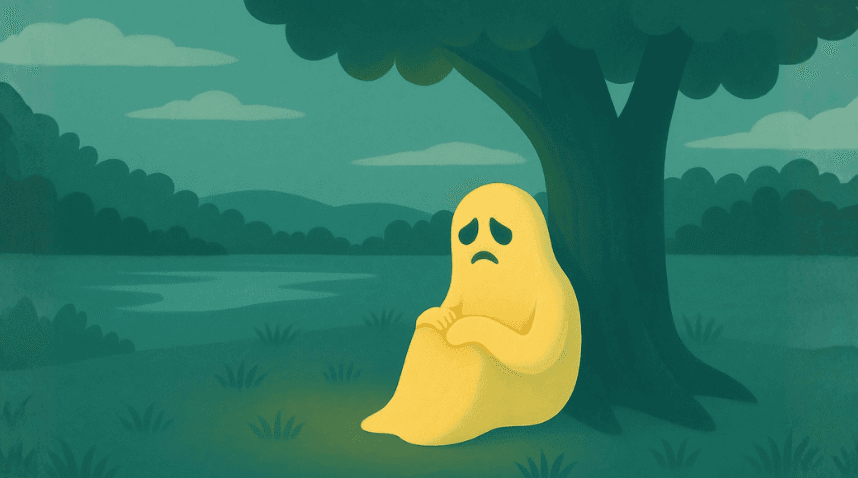
Sometimes they don’t even know they’ve died. They’re still trying to live. Crying at night. Showing up where they used to belong. And somehow, we label that scary. But if you look closer, it’s just grief looking for somewhere to land.
Honestly, we’re not that different. Most of us walk around half-aware, too. Scrolling through our phones like mindless wandering spirits. Distracting ourselves from feelings we haven’t named. Wandering minds that lead to nowhere.
And the loyalty, don’t even get me started. There’s a kind of ghost that waits. By a window, under a tree, at the edge of someone’s memory. Still believing someone will come back. Still holding onto that one promise. It’s heartbreaking. But it’s also kind of beautiful.
I don’t want to meet a ghost. But if I did, I wouldn’t run. Not because I’m brave. Just because my Buddhist practices have shaped how I see things now.
Hungry Ghosts and Me
In Buddhism, there’s something called a Hungry ghosts (pretas) — one of the six lower realms we can be reborn into. They’re beings that exist because of deep craving. They have tiny mouths and giant bellies, always starving, never satisfied. It’s said they were greedy in their past life, and this is the result of their greed.
That idea stuck with me. But let’s not confuse them with the hell beings, the ones receiving punishment in hell and, as the Chinese folk religion believes, returning during the seventh lunar month for their “vacation”. Hungry ghosts are different. They’re around us all the time, not just for a month.
I’ve wondered if I was one of them in my past life. I can’t eat like most people anymore. I’m tube-fed. And weirdly, I’m okay with that. I sometimes joke about it, maybe it’s a sign I should practice more Dāna, be more generous with my time, energy, and charity.
Ghosts: The Dhamma Talk Listeners
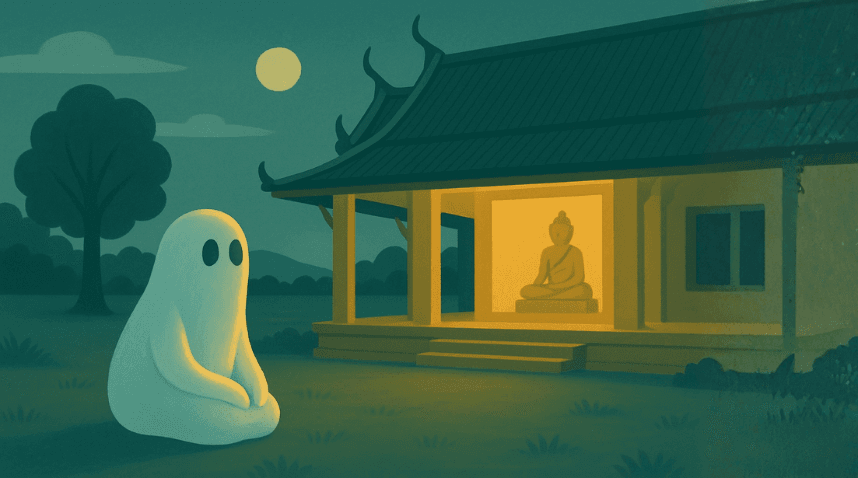
Joke aside, I remembered vividly during a retreat in Pathum Thani, my teacher Phra Ajahn Den told us that ghosts often linger around temples. Not to haunt. They’re listening. They’re drawn to Dharma (Buddhist Teachings).
He said when we pour blessed water onto the roots of trees after getting blessed by the monks, it’s not just symbolic. The spirits are thirsty. They’re waiting for us to share whatever leftovers we had.
My teacher also taught me that whenever I feel a strange energy, especially in unfamiliar places like hotel rooms, I shouldn’t respond with fear.
Unlike what we see in ghost movies, monks aren’t meant to be exorcists or to destroy spirits. We don’t chant to chase them away or wipe them out. Instead, we send loving kindness. We try to offer them some sense of peace, a little comfort in their suffering.
So when I feel something unseen around me, I usually say, I see you. I don’t know how to help, but here’s my loving kindness. Take what you need, and I hope you’ll receive the Dharma teachings and be free from your suffering.
Maybe I sound strange. I’ve made peace with that. I would rather be someone who feels too much than someone who blocks it all out.
That changed something in me how it resonates with my buddhist practices to the core, even to ghosts.
I always find myself amazed by how my teacher teaches the Dharma, so simple, so real.
So, ghosts don’t scare me because they’re never just about fear. They’re about longing. They’re about spirits who weren’t ready to say goodbye. Some attachments cling so tightly that they cross with them to the other side, born of obsession, of chasing feelings that were never meant to be fulfilled.
And maybe that’s the real haunting. Most of the fear we feel, especially when it comes to ghosts or the unknown, isn’t about what’s out there. It’s just our own fear running wild.
So no, I’m not afraid of ghosts.
I’m more afraid of forgetting who I am. Of closing my heart. Of letting this life slip through my fingers without understanding what it meant to really live.
Wise Steps:
Live without regrets, so you won’t return to haunt others.
Avoid allowing your mind to drift like wandering spirits that distract you.
Keep your unwholesome thoughts guided to prevent unnecessary fears from taking hold.
TLDR: Ghost Month needn’t be scary. The Buddha’s teachings offer a compassionate approach to understanding and overcoming our fears.
Have you ever felt that chill down your spine during the seventh lunar month? You’re not alone. In Singapore and Malaysia, we traditionally call this time Ghost Month – when the gates of the underworld supposedly swing open, and spirits roam freely among us.
It’s a period steeped in Chinese tradition, filled with rituals and offerings, but it’s also a time when some of us are looking over our shoulders more than usual.
The stories we’ve grown up hearing about Ghost Month can really get under our skin. We find ourselves avoiding certain places or activities, tiptoeing around as if the slightest misstep might anger an unseen spirit.
The Dhamma offers us a different perspective through teachings like the Janussoni Sutta.
Understanding Our Fears
Fear is a part of being human. When it comes to Ghost Month, our fears often stem from the belief that these wandering spirits might harm us if we somehow offend them. It’s a belief deeply rooted in our culture, and it’s not easy to shake off.
Contemporary movies like Shutter/ The Ring which feature aggressive ghosts that even sit on your shoulder do not help in allaying our fears.
However, the Dhamma suggests that our fears often come from our attachment to ourselves and our dislike of suffering. When we’re afraid of ghosts, it’s usually because we see them as a threat to our well-being. But what if we could look at it differently?
A New Perspective on Ghosts
The Janussoni Sutta gives us an interesting way to think about ghosts. According to this teaching, beings are reborn based on their kamma, or intentional actions. Those who’ve accumulated negative karma might be reborn as ghosts, but – and this is important – it’s not a permanent state. It’s just a result of past actions, and it can change.
This understanding can really shift how we see ghosts, especially during Ghost Month. Instead of seeing them as malevolent beings out to get us, we can start to see them as beings who are suffering and in need of help. It’s a bit like changing our perspective from “they’re out to harm me” to “they’re going through a tough time.”
When we change our perspective, against popular culture & traditional beliefs, we open our hearts to the possibility of compassion. In the same sutta, the Buddha encouraged Janusonni (a Brahmin) to still give gifts and perform memorial rites for the dead even if none of his relatives were hungry ghosts.
Why? Because in our countless cycles of rebirth, it is impossible that none of these hungry ghosts would have been associated with us. Compassion is key.
If you would like to read more on how Buddha talked about the plight of hungry ghosts literally camping at the door of their living relatives for merits, check out Tirokudda sutta.
Compassion: The Antidote to Fear
One of the most powerful tools we have against fear is compassion. When we focus on understanding and helping others, including ghosts, we naturally become less focused on our fears.
During Ghost Month, instead of letting fear take over, we can try acts of compassion. This could be making offerings (no need for burning), dedicating good deeds to the departed ones, or even simple acts like chanting or sharing goodwill with all beings, including those in the ghost realm. It’s amazing how helping others can actually help us feel better too.
A favourite chant I like to recite 3 times is a Pattidāna chant “Idam me ñātinam hotu, sukhitā hontu ñātayo.” – “Let this merit accrue to my departed relatives; may they be happy!”.
Staying Present and Aware
Mindfulness is another great tool for dealing with fear. It’s about staying present and aware, noticing our thoughts and feelings without getting carried away by them. During Ghost Month, when our imagination might be working overtime, this can be really helpful.
Next time you’re walking past a spooky-looking alley or see a playground swing swinging itself, try this: pause for a moment and take a deep breath.
Notice what you’re thinking. Are your thoughts based on what’s really happening, or are they influenced by stories you’ve heard? By staying mindful, you can keep your fear in check and stay calm.
Hence, with your mindfulness strongly established, you can try to see things as they are. This means recognising that ghosts aren’t inherently harmful. They’re just beings caught in a difficult situation due to their past actions.
When we understand this, we can see that our fear of ghosts is often based on misunderstandings. They’re not out to get us; they’re just going through their own struggles, like all of us.
A New Way to See Ghost Month
Ghost Month doesn’t have to be a time of anxiety. By applying these Buddhist teachings, we can approach this period with compassion, mindfulness, and understanding. Instead of fearing the hungry ghosts around us, we can see this time as a chance to practice kindness and deepen our understanding of existence.
So this Ghost Month, let’s try something different. Instead of fear, let’s cultivate compassion. You might be surprised at how much peace you can find, even in the spookiest of times.
Wise Steps:
1. Acknowledge your fear: It’s okay to feel scared during Ghost Month. Recognize your fear without judging yourself, and try to understand where it’s coming from.
2. Practice compassion: Use this time to cultivate kindness towards all beings, including ghosts. Make offerings or dedicate good deeds to help ease their suffering.
3. Stay mindful: When you feel afraid, take a moment to breathe and observe your thoughts. This can help you stay calm and clear-headed.
4. Seek understanding: Learn more about what ghosts really are from a Buddhist perspective. Understanding can help reduce fear.
5. Participate in rituals mindfully: If you take part in Ghost Month rituals, do so to help spirits rather than just warding them off. This can change your whole experience.
TLDR: Marry My Dead Body. With increased exposure and interactions, we can learn to reduce our fear and overcome our biases and prejudices towards people who are different from us. The power of love, compassion, and forgiveness is not to be underestimated; it can help us overcome our challenges and increase the happiness of ourselves and others.
Marry my dead body
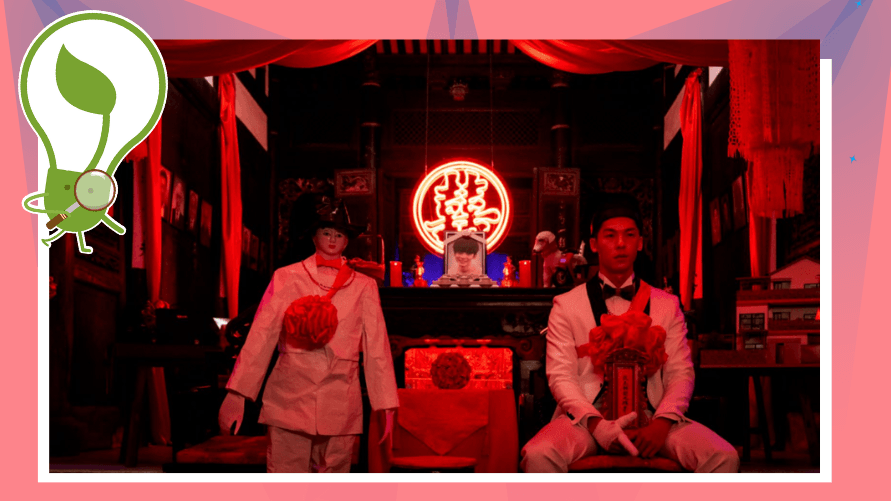
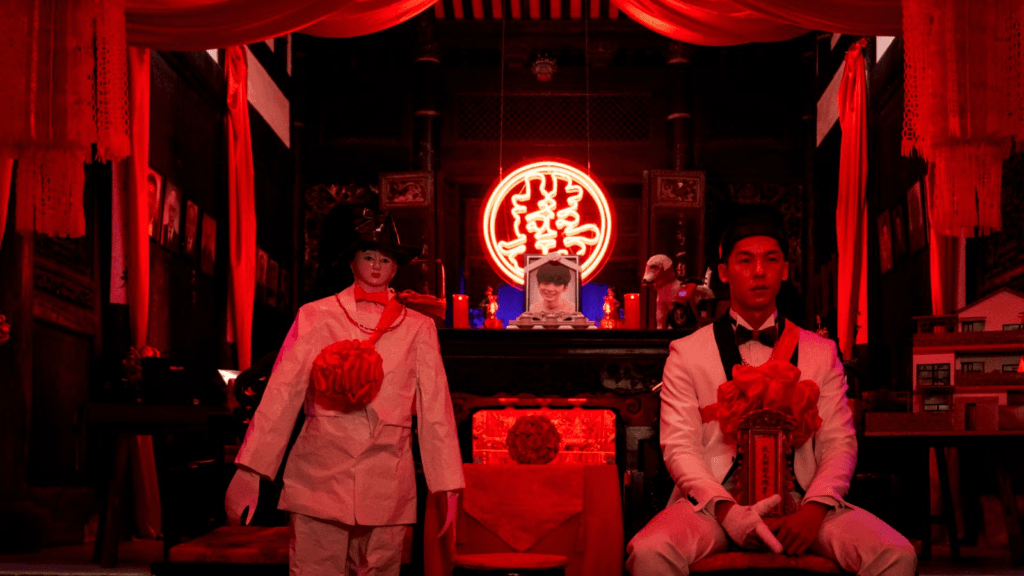
Ming Han in a ghost wedding to ward off bad luck Cr: Netflix
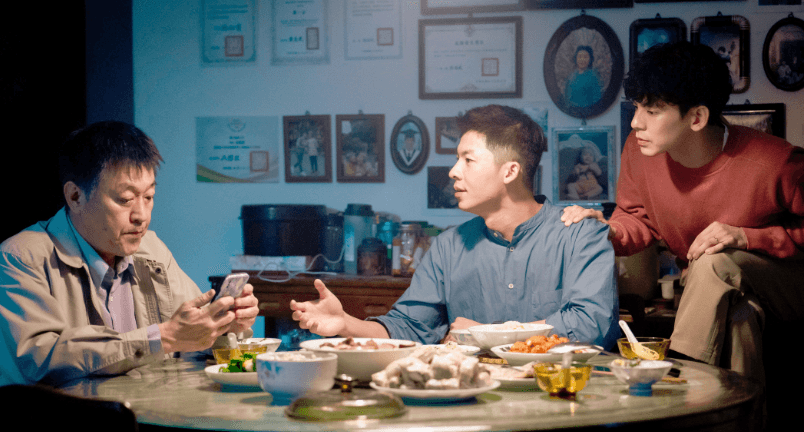
Marry My Dead Body is a funny Taiwanese LGBTQ-themed movie that weaves in themes of love, compassion, and forgiveness. Some minor spoilers will be shared here, please proceed with caution.
In brief, the movie is about a straight homophobic and ghostphobic male cop, Ming Han, who was compelled to marry a male gay ghost, Mao Mao, in a traditional ghost wedding, to avoid a string of bad luck.
Through a series of hilarious interactions between the cop and the ghost, we see the relationship transform from intense animosity to tolerance, acceptance, and love. Below are three Dhammic lessons I glimpsed when watching the movie!
Cultivating Love for Difficult People:
What do you think when I mention Love? You are probably thinking of your past unrequited love aka crush, or if you are lucky, romantic love, yet the word love encompasses more than just romantic love. Psychologist Robert Sternberg proposes the Triangular Theory of Love, which consists of 3 components of love that includes 1) commitment, 2) passion, and 3) intimacy.
Love takes on diverse forms, like a tapestry woven with romantic love, companionate love, friendship love, and consummate love.
Romantic love ignites quickly with passion and intimacy but can fizzle without lasting commitment.
In enduring relationships, passion may dim, but companionate love emerges, where commitment and intimacy persist, transforming partners into best friends.
Friendship love is marked by heartfelt intimacy, yet it lacks the fiery passion and enduring commitment found in romantic relationships.
The pinnacle is consummate love in Sternberg’s theory – the trio of commitment, passion, and intimacy, a love that endures through time, keeping the flames of passion and intimacy alive.
Love conquers all may be a cliché that we often hear, but does it ring true in Buddhism? What does the Buddha have to say about love? The Buddha teaches and encourages us to cultivate love – specifically, in the form of Mettā or Lovingkindness.
Metta & the gay ghost
The cop & the ghost argue. Cr: Netlfix
In the practice of Mettā, besides finding it hard to extend lovingkindness for oneself, the other group of people we find challenging to practice with would be the “Difficult People” in our lives.
Similarly, in the movie, the homophobic cop has a hard time extending love, care, and concern to the gay ghost. The cop felt that he was tricked into the arranged marriage, plus, he embraces a more macho, no-nonsense approach to life, whereas the ghost appears to be more effeminate, and playful to his liking.
Nevertheless, after an extended period of interaction and understanding the challenges the ghost has to endure, he slowly opens up to the ghost. He is able to extend goodwill towards his adversary – the ghost.
I recall in one of Ajahn Brahm’s talks, he shared a technique on how to extend lovingkindness to a difficult person in our life. Ajahn Brahm encourages us to look at a person’s face and see if we can extend Lovingkindness to the person’s eyes, nose, ear, mouth, or other features of the face that are acceptable enough for us to extend our love towards.
Another cliché comes to mind, “How do you eat an elephant? One bite at a time!” The point here is to break the hard and challenging part of extending Mettā towards our “Enemies” into small bite-sized forms, and you may find the Mettā flows freely towards them!
Compassion for Others’ Suffering:
Suffering is inevitable in our daily lives, and when we are overwhelmed with our pain and losses, we may find it hard to extend compassion to others around us.
However, to alleviate our pain and suffering, sometimes, it helps to turn outward to others around us, and see how we can help those in need. In psychology, this technique would be called downward social comparison, whereby instead of comparing ourselves to others who are doing better than us, we would compare ourselves to those who are worse off than us.
By doing this, we can learn to 1) be grateful for the things going well for us; and 2) extend our compassion towards those in need.
When Ming Han, the cop, saw that Mao Mao was dealing with unrequited one-sided love with his boyfriend, Ming Han realized that despite having a different sexual orientation from Mao Mao, the desire to love and be loved is natural and universal.
This was observed when we saw that Mao Mao wanted to get married to his boyfriend, following the legalization of gay marriage in Taiwan. Mao Mao wanted to gain the legal recognition of marriage like other straight couples.
Finding common ground or values makes it easier to relate and connect to others in our lives. These tiny glimpses into the life of another allow one’s compassion to come forth easily.
For myself, when I am frustrated with my interactions with difficult people, I remind myself that they too desire happiness. Of course, our approach to achieving happiness may differ, but that does not mean that I have the right to stop them from pursuing their happiness.
Compassion helps to buffer against suffering in two ways, 1) by helping to neutralize and reduce the impact of negative thoughts that arise in our mind, and 2) by providing the inner-confidence to endure and overcome challenges that come up in our life, so both our heart and mind is steady and collected.
HH Dalai Lama further elaborates that compassion causes our brain to function better and brings inner strength, which serves as a source of happiness. For a person who has to deal with not only his own suffering but also the suffering of the Tibetan people, the Dalai Lama has a higher level of acceptance and compassion towards the suffering of others than I do.
Forgiveness is Always Possible:
I recalled in the Dec 2022 meditation retreat that I attended with Ajahn Brahm, I was having a challenging time practising. I tried my usual array of Mindfulness, Lovingkindness, and Compassion meditation, yet they all failed to calm my agitated mind towards the difficult person in my workplace.
Then, I remembered the Forgiveness practice that I learned with my Buddhist lay teacher – Jeff Oliver, and I downloaded his e-book – “Forgiveness of Everyone” to dive deep into the practice and I found that Forgiveness worked! I had immense gratitude to the retreat participant who asked a question about Forgiveness and to Ajahn Brahm for eloquently elaborating on the Forgiveness practice, which planted the seed for me to give Forgiveness practice another try during the retreat.
The power of forgiveness comes alive during the movie. It made me ponder, that sometimes, the key to letting go of a difficult situation or person in our life is by forgiving them.
In the movie, a poignant part is where the ghost’s father seeks forgiveness for his dismissive behaviour toward his son’s decision to marry his boyfriend.
The act of seeking forgiveness, despite not being able to interact with Mao Mao (the ghost) directly, helps to absolve the guilt of the father, and also for Mao Mao who was able to hear the love flowing from his father helped him to be absolved from his worldly attachment and be set free.
Mao Mao’s Father & the Cop interact as Mao Mao watches over Cr: Netflix
As viewers, through the backstory, we actually see that there was a big misunderstanding between the father and the ghost, resulting in anger and frustration in their already tense relationship.
Similarly in life, we may rightfully be upset with our friends and loved ones over their seemingly “wrong” behaviour, but we may be clouded with our own thoughts and fail to see the true reason why they may behave the way they did.
Hence, open communication and forgiveness may help smoothen our social relationships before they deteriorate. We do not want to wait until the inevitable (Death) happens, and we cannot mend our relationships.
Conclusion
In conclusion, if you are looking for a light-hearted movie to ease your mind off your daily grind yet want to gain some wisdom from watching movies, check out Marry My Dead Body.
Besides having a good laugh, you may discover additional nuggets of wisdom to better navigate your relationships in life and gain a better understanding and compassion towards LGBTQ+ individuals. Let us strive to help ourselves, and our fellow beings lead a happier and more compassionate life, in whatever small ways we can.
Wise Steps:
To increase our tolerance towards people of different values and experiences, try to read a short article or a book, or even talk to someone who has that lived-in experience, and see how your views and attitudes may change after a chat. Or you can try to practice sending Mettā first, before engaging with them.
Try to imagine yourself in a challenging situation in life who desires help and support from others. Similarly, others are also seeking relief from suffering. What small ways can we help those in need? Donating $1 or $2 to the tissue seller by the street is my small way of extending my compassion to those in need, how about you?
In dealing with difficult people in our lives, we may not be able, nor do we wish to seek direct communication with the other party. Still, we can use a tip from psychological research – write a letter to the other person, to express our views and forgive them. This may be the release you need for self-healing.
For those who self-identified as LGBTQ+ Buddhist or allies, you can check out Rainbodhi Singapore community, explore the website here or join the Telegram group for event updates here.
Hello. Welcome to another episode of the Handful of Leaves podcasts, where we bring you practical Buddhist wisdom for a happier life. I am Kai Xin
[00:00:10] Cheryl:
and I’m a ghost. No kidding! I’m Cheryl… with flu.
[00:00:14] Kai Xin:
And today we are gonna talk about ghosts. It’s gonna be interesting because we’ve collected some stories from some of you, our subscribers. We’re gonna share three stories and also insert the Buddhist perspective of ghosts as well as the ghost month.
So for myself, I used to be very fearful of ghosts. You know, when you’re a kid in primary school, I don’t know if you remember the chain messages that say like, “Oh, if you don’t send this to 10 people, then at night somebody will knock on your door or somebody will hide under your bed.”
Yeah. That scared of the hell of me. I thankfully don’t feel scared anymore. So actually, I like watching ghost movies. In fact, I feel that they’re a little bit sad. And yeah, people jio (invite) me to do crazy things like go to abandoned Istana buried deep in the woods, it’s like those abandoned house.
(I was also) quite daring as a teenager also, you know, cycle midnight, go to Old Changi Hospital and then got caught by the police as we were coming out, ’cause we didn’t know there’s like CCTV installed.
[00:01:18] Cheryl:
It’s like you don’t just enjoy ghost movies. You wanna put yourself in a ghost movie like that!
[00:01:22] Kai Xin:
No, I don’t do that to find trouble, but it’s just more to explore and adventure ’cause I just find them interesting.
[00:01:28] Cheryl:
I’m the total opposite of you. I would not wanna go to any of those places and I don’t wanna watch ghost movies. Last time on my way to school, I used to sit those public buses and then to entertain us a whole bunch of high school girls, right, the driver he’ll play a ghost movie and it’s usually the very, very scary one. He’s those like, Thailand Ghost movie or Japanese ghost movie? Like The Shutter.
[00:01:51] Kai Xin:
Japan’s one is the worst. Yeah.
[00:01:53] Cheryl:
It’s very scary and he’ll play it on repeat. So first time, I close my eyes. Second time, my friends watched so I need to pretend to be very courageous, and even after watching like one snippet for 15 minutes, 20 minutes, I cannot shower for like a whole week. Many years later, I’ll still think of the scene (in fear).
[00:02:11] Kai Xin:
I can empathize. I’ve been there before and I think we can also share a little bit more about perspective on ghosts, how to view them, how do we respond when we actually encounter one, or in the scriptures, what did the Buddha teach about all this.
In fact, this entire month is also known as the Hungry Ghost Festival. The seventh month in the Chinese calendar, which falls in August and people believe that this month the Hell Gates will open and then the beings from the underworld they’ll come out and it includes the ancestors that have passed away.
[00:02:45] Cheryl:
Most people would usually have more ghostly encounters as well.
[00:02:50] Kai Xin:
Oh, yes. Or like you would suddenly see a lot of funerals under your void deck.
Yeah. Goosebumps.
By the way, we are recording this at 1125pm. Cheryl is making a cockroach looking expression. Hopefully the fear would change to something else at the end of the episode.
All right. So I think we can start off by asking first the whole thing about Ghost Month, is it a Taoist thing or is it a Buddhist thing?
[00:03:10] Cheryl:
I think a lot of people’s knowledge is that, Ghost months you just make sure when you walk on the road, just avoid all the Joss sticks or the paper. Actually it’s very interesting, the Ghost Festival, has its roots in the Buddhist festival, Ullambana.
So the Buddhist origins of the festival can be traced back to a story from India. There was this well to do merchant Maha Mogallana who gave up his trade and he then went on to become a Buddhist monk, and he was the monk That’s foremost in psychic, and so after he became an Arahant (fully awakened being), you know, being very filial and all that, he wonder, “Hey, what happened to his parents?” So he used his psychic power to travel all the universes and realms. After you died and born either of the higher realms or the lower realms.
So he found his father in heaven. Good. Nothing needed. But then when he found his mother, his mother was reborn in the realm of hungry ghosts. As a lay woman, she was very rich, but she was not generous.
So when she died, she was reborn in this low realm. So Maha Mogallana Alana went down to the Hungry Ghost realm, and eventually saves her from this plight, and the story ends with this festival and the rescue of his mother from hell.
[00:04:23] Kai Xin:
The interesting part of the story is that the Buddha, specifically in the Sutta, the Ullambana Sutta mentioned that even like the Heavenly Kings, and even Maha Moggalana, an Arahant, by using his power, he was not able to be able to elevate the mother from, suffering from the hell realm. So Ullambana is basically a gathering of all the Sangha members, the monastic, and then lay people would offer certain things usually like robes or food and it’s believed that the power of this gathering and the merit, probably uplifts the mind of the lower beings to then be able to reborn in a better place. Which we will cover more, later how, you know, the mechanism work, ’cause I think there’s also a lot of misconceptions around it.
And interestingly we have a submission of a story from KS, and this is in Malaysia and I wouldn’t say it’s like a ghost, ghost story, but I found it quite touching actually.
I’m gonna give some context first for clarity. ’cause this is a recount of, his or her aunt. And basically what happened was the, the aunt has four children and passed away at a relatively young age because of cancer. So, The account over here is not long. About few months after the passing away of aunt who, whose name is Ah Soon, uh, suddenly a family member received the information from somebody through word of mouth to say, “Hey, somebody is looking for the husband of this person, named Ah Soon, which is the aunt,” and then the uncle was then notified and apparently it was some person from the temple that is really far away from where this family is living, and it’s like, okay, what’s going on? So they brought the entire family there, located like eight km away. They’ve never heard of this temple before.
And apparently in the temple there is this medium did this ritual where, um, kind of get the aunt to communicate through his body I mean as a medium. So in the conversation, the aunt actually communicated how she felt very unjust and resentful, like why does she have to pass away at such a young age? And then very painfully due to cancer at the age of 40, and then living behind a husband and four children who are still relatively young. I think the max that was mentioned here was like secondary school age. So she also shared that she’s currently residing in the third level of hell and she was quite descriptive during this whole ritual.
She explained that there are levels of hell categorized by punishment, torture or suffering. And the first level is the least suffering and the deepest, which is the 18th level being the harshest suffering. Then, her current level is third level, so she can still chant every day and shared that she’s destined to be reborn in human realm again after 10 years.
Then according to the uncle and cousin, who’s the children of the aunt, this was the first and the only time that the aunt came to the temple conversed with them through the medium and there’s no other accounts already.
[00:07:40] Cheryl:
I think the part where she was lamenting about having passed away so painfully, the submitter also shared that through some notes that the deceased wrote few months before her passing, she did indeed share that same sentiment.
It is quite interesting because such a far away temple was able to accurately know the name, the situation. So what do you think Kai Xin? Do you think hell really exists? What do you think of the story?
[00:08:08] Kai Xin:
I can’t say for sure ’cause I’ve not seen hell, but I do believe and have some faith that it exists. In fact, in the Sutta the Buddha actually described quite in detail, the different levels of hell and the different kinds of punishment.
Some of the realms can actually receive some form of merits from like us human beings. You know, if we dedicate, they’ll feel joyful. But some, no matter how much you try, right, also cannot. So there are different levels and there’s more than one Sutta that actually talks about hell in the, the Pali canon and in the Mahayana scripture. In fact, I think the question is why are peopleborn in hell.
Right? We, I think just now we have, uh, an example about being stingy. You know, we are not generous enough. And then in terms of like the account of KS, so it is believed that if you die with a very negative mental state, the negative energy will just bring you down to the lower realm.
Yeah. And the last thought is very important, so it might be the case that she feel that resentment and that became a condition for her. So in other there’s this very interesting exchange between Yan Luo Wang, or King Yama, and somebody who just entered the hell realm.
King Yama or the hell of God.
[00:09:35] Cheryl:
The God of hell.
Hell of God. Yeah, it’s God of hell.
[00:09:41] Kai Xin:
He’s like the God of hell. And it’s interesting because God of hell is actually very compassionate when it’s described in the Sutta and it’s also there to teach beings in that realm of what they did wrong so that they can reflect.
What happened is that, the King Yama was lecturing this being and say, Hey, you know, uh, didn’t it occurred to you that if a person were to do evil deeds, even before you die, you’ll already be tortured, which is true, right?
[00:10:17] Cheryl:
If you conduct a crime, let’s say you go scot-free for 10 years.
But can you imagine the torture every day? Just worrying whether people will find out whether there’s any tracks that she didn’t cover.
[00:10:29] Kai Xin:
Yeah, it’s a mental torture in itself, right? Very interesting ’cause king Yama was saying that, even like here and now, evil actions have a punishment, then what more the life after?
So from that note, Wouldn’t you reflect that, hey, I need to do good with my body speech and mind. And he say, as we are living on earth, we will probably see the divine messengers . So, sickness, aging, and death. Then didn’t it occur to you that you are subjected to all of this and because of that, you shouldn’t just squander your youth away.
You should use the time to, be a person of integrity, do good, guide your mind, et cetera, which I found to be quite interesting ’cause we don’t necessarily have to even believe in the afterlife, but you just think about like this life, and if we are able to see like the divine messengers, then we would be able to do good, purify our mind a little bit and uplift our entire spirit.
[00:11:30] Cheryl:
We think about hell as external, a place to go to a, a place to be fearful of. But hell is actually within your own mind.
[00:11:42] Kai Xin:
Yeah. So you ask how exists or not, it can be metaphorical or it can be literal, right?
[00:11:47] Cheryl:
Yes. And there’s this, Sutta sharing, it says that evil is done by oneself. By oneself is one defiled; evil is left undone by oneself, by oneself is one cleansed.
It shows that hell, suffering is a consequence of unwholesome actions. but you also have the ownership to get out of that place. You can change if you find yourself to be suffering because, you do a lot of unwholesome things but there is the opportunity for you to take responsibility, to get yourself out of that hell. Evil is left undone by oneself, by oneself is one cleansed. So there is no God there to punish you.
[00:12:32] Kai Xin:
Then some people might ask we offer all this food. If cannot, then why do I offer all this food?
I think sometimes it’s also about whether we have the capacity to. If I’m just overwhelmed and overcome by anger, it’s actually very difficult to think straight and to say that, oh, you know, I have to repent and I have to do good. ’cause it’s always in hindsight.
We need like a spiritual friend or some wise people to pull us back on the path, in order to have that clarity of mind. So regarding the question at the very beginning we talk about, hey, you know, all this offering, does it really work? What’s the mechanics behind?
I got this Karma point and got this karma point, but it’s really about recollection of one’s virtue. So like you say, right? Because if the evil is done by oneself, then oneself is being defiled. If a person has virtue, and we recollect that virtue, then the mind brightens. So the, there’s also another Sutta that talks about specifically offering food to deceased relatives.
So it’s like, outside the walls they will stand and then they return home. Then, no one remembers them and say, oh, such is the karma of this being. There’s no person to actually, dedicate.
[00:13:48] Cheryl:
Oh, that’s quite sad.
[00:13:50] Kai Xin:
So, I think even like in this lifetime, sometimes we are forgotten by people, and you see people who are very lonely, they age alone and stuff.
Some people can also attribute that to causes and condition and karma, like, have you been a good person? The more virtuous you are, then you’re surrounded with great friends that are very appreciative, that would support you. So if you’re talking literally in the Sutta, it was described that, those who feel sympathy for their relatives will actually give timely donations, and you’ll wish may this relative be well, which I think is very beautiful act as well, because it’s like you’re appreciating them like, ah, you were my relative who have done me good, or I’ve benefited from your presence.
[00:14:34] Cheryl:
And it’s also simply that, that gratitude, right? Where it’s understanding without you, I won’t be here as well. Without all your ancestors, even though you don’t know them by name or form, without them, you can’t be here.
[00:14:46] Kai Xin:
So it’s not so much like we do all these offerings, , tolong (please) don’t come and disturb me. But it’s more like, oh, this is an occasion for me to appreciate you and to practice gratitude.
[00:14:56] Cheryl:
There was this case where King Bimbisara was very lucky to offer the Buddha, a wonderful meal, Dana.
But then he forgot to share merits to his relative. So after that meritorious deeds, what happened was that he heard a lot of crying sounds, so then he could ask Buddha, Hey, Buddha, how, why, like that Then Buddha say, ah, cause , you never go and share your merits and this occasion to, give food to the Buddha is so, so rare, your relatives have been waiting for a very long time, but you didn’t share with them, so they are quite upset with you. So then, King Bimbisara did it again, and then this time he shared all the merits re- collecting all the goodness that he’s done, wishing for his relatives to take part and rejoice and, there was no more, wailing sounds and, and they were also very happy after that.
[00:15:49] Kai Xin:
Every time we do good, we must think off the conditions that allowed us to do good and just dedicate the merits to our departed relatives. And going back to the question of, okay, so how does it work? I thought we are the owner of our own Kamma.
I had this question many years ago and a friend gave me this super cool analogy if you are sentenced to say 10 year of prison sentence, right?
You can’t do anything in prison. And he is like, oh, I have to wait it out. And sometimes the conditions can, can be quite bad, like depending on, you know, which squad. So he kind of compared it to like, hell. If somebody visit you at the prison, like a relative and say that, Hey, I did this, this, this good deed, and when I did those, I thought of you or I donated this, in your name, how would you feel?
Like, wow, happy, right? Like you thought of me, I don’t feel so lonely. Then because you feel that maybe your conduct in prison would be better and because of that your jail sentence is also shortened. So, It’s not so much that you are, paying off people’s negative, karma or like helping them to free them from punishment.
We are still the owner of a karma, but it’s more of like both the receiver and the giver gain merits because we are happy about the process of giving and it’s the uplifting of the mind. And because of that, then we create the conditions to be in a better space. Yeah.
[00:17:23] Cheryl:
It’s so important because it’s so easy to forget the goodness and the merits that we do. So if I recollect the times where I feel very depressed and I feel like, oh, life doesn’t have any meaning, uh, that sort of dark mental state just clouds the mind and I’m just not able to remember or think about any of the goodness I’ve done and that further weighs me down.
[00:17:47] Kai Xin:
That’s so true.
[00:17:49] Cheryl:
So having that brightness, of good deeds just being shared, just being generously, uh, rejoiced in, is, is so, so, so powerful. And that one mindset can lift beings up, sometimes even from the hell real to an instantaneous rebirth. If it’s lifted so high, especially if maybe it’s a form of recollection with regards to the Buddha, and maybe a faith that is so strong can instantaneously lift them into a higher, a better rebirth.
[00:18:19] Kai Xin:
Yeah. Yeah, that’s so true. In fact, a friend has shared with me before when she was in a really dark place, She’s like, can you share, some good things ’cause I really cannot think of anything that is joyful. I can’t think of any good things that I’ve done. Can you just share with me, what is good in your week so that I can rejoice?
Sometimes even this life, the darkness just clouds your mind and it really helps to have somebody there with you to recollect.
[00:18:46] Cheryl:
A very good practice for, for everyone also who perhaps find themselves sometimes pegged down by the burdens of the world and we can become a bit pessimistic, is to have a diary or a small journal to just write down all the good deeds that you do and how you’ve helped someone, how you even thought a good thought, in your mind. You know, maybe feeling happy for a friend. Just write that down. And occasionally when you’re feeling down, you can just look at it again.
I have a relative who shared with me that I’ve actually done a lot of good things in my life. A lot, a lot, a lot of good deeds, but I don’t remember them. And that’s why I always feel very depressed. So then she also started this and it helps her, not only recollect that, on her death bed, but also on her day-to-day to increase her wellbeing.
Speaking about death, it is a good practice to read to a person who is dying, recollect all the good things that they have done so that their, their mind is bright when they’re departing. And, it’s also said that, you shouldn’t be crying. It’s like, why you leave me? It, it’s kind of like the auntie story, right? It’s like, I’m so young. I feel bad for leaving my kids behind, my family behind. Then they go with a very, very down mind. So it’s good to have this diary so that your loved one, like let’s say if I’m on my death, Cheryl please share it to me all the good things I’ve done. All the times a lot la uncountable good deeds done.
[00:20:19] Kai Xin:
I’m not sure whether I can recollect all of them when I die. I think who, who knows The bad karma in the past might have ripened during my death moment. So yeah, it would definitely be helpful to have this, jot down somewhere.
And I think it helps the living as well to be able to look at your loved one to say, wow, actually this is such an amazing person, how actually the best lesson learned from separating from loved one is to live your life well as like a living person, that’s the best gift that you can give to them.
[00:20:54] Cheryl:
I don’t understand that. Can you share more?
Why is it the best gift? The person died already.
[00:21:02] Kai Xin:
To lead a good life yourself is the best gift that you can give to them. So that they don’t have to worry. You know, like how they wouldn’t know, ah, haven’t you seen ghost movies, the attachment is a thing, right?
So if a person is burdened by family duties is good to live a good life so that you don’t have to worry them and you don’t be the cause of why they are in a lower realm. Just like, you know, my life is good. Don’t have to worry. Just go, go to a better place. Everything is taken care of.
[00:21:35] Cheryl:
And I guess like if you live well, you’ve got more good things to share, more merits to, to give them as well. And, that will be very helpful. Like if they happen to be lower. We can also share some interesting things about merits.
[00:21:51] Kai Xin:
I’m gonna share another story. This one is Army. So people, guys who have served the army probably also have experienced, something similar. Like how, how do you react or respond when they are supernatural encounters?
So this story goes like this, OCS days, that’s like about a decade ago up. So this person, our follower Jaden, was sharing the story of how they had to do like this night navigation at the top of Rambutan Hill. Never served NS before so some of the terms I don’t know, but basically, this hill, you have to go in groups and then there are different checkpoints to clear, within a stipulated amount of time that everyone would have like their helmet, their vests, et cetera, and the torchlight.
And they would tape up with a red tape with very, very small square window so that the light emitted is very minimal. So he was navigating the pitch black forest for very long. Only cleared two out of four checkpoints and was very desperate.
So at the time, most of the other cadets have already completed their course and went down to the foot of the hill and to prevent losing cadets in the forest, the instructor, would say that if you cannot finish clearing your checkpoint by a certain time, and if you hear the whistle start walking down a hill or return to the last checkpoint that you were at.
So it was really humid at night, and he was very tired from climbing the steep terrain and from all the falls that he had. And he was walking around aimlessly, like there’s no sense of direction, but he knew that he was somewhere near the highest edge of the hill because of the, the noise of the highway beside, which also meant that he was very far away from the base.
Then suddenly he saw someone in uniform. Cheryl is making a funny expression. And she says she pretend not to hear. Okay, I’m gonna continue anyway,
Those of you who are scared also, you can, uh, fast forward. So suddenly he saw someone in uniform walking towards him. But he was very happy. He was happy to see this other person because he was walking alone for a good 15 to 20 minutes and he couldn’t quite see the face, like, ’cause you know, helmet was low.
Then his eyes squinting ’cause all the sweat and he went to ask this person, do you wanna join me and find the checkpoint together? And the person didn’t look at him, always had his back facing him. So he told Jayden that he came from a checkpoint that is not too far from where he was.
And then he pointed the direction. Then suddenly the whistle sounded so it’s like a cue for them to go back. So Jayden invited him to walk to the checkpoint that he said that he came from since the course has already ended, so we have to go to the nearest checkpoint.
Then, weirdly enough, this person rejected the offer and insisted on going to another checkpoint on his own. Then the whistle sounded again. So I, I think at this point you can really tell that maybe the person is not a person.
So he’s just like, ah, yeah, this very stubborn guy. So he made his way down to the direction.
Then just like all 10, 20 steps, and then he saw other cadets and instructor. Then the instructor shout at him and asked him whether he saw anyone who was also like as equally lost as him, and then, He said yes, but then he turned back then ’cause 10, 20 steps only, he turned back then suddenly nobody.
So very long story short, the instructor informed all the other instructors via the walkie talkie to do a head count at the base. And then, they call back and say that everyone has returned, left only the three of us at the checkpoint. After returning to the base, he went to ask around if anyone saw him, talk to him. Like who was this like fellow? And most of them look like they have been back for a very long time. Uh, then he look at the direction of this dark hill, then he froze.
And before leaving the base and returning back to, their bunks, he look up at the night sky and then he put his palms together. He believed there Bear spirits everywhere in trees, in rivers. And that one just had to be respectful to the environment, especially if it’s not our property and place.
So I think he realized that, actually the someone that he saw that was actually nice enough to help him was not a person ’cause everyone else was already at the base. And, so all the goosebumps are for nothing. ’cause this is not really a scary story. Some might say that he’s a bit thinking too much or maybe he counted wrongly or hallucination, but he truly believed that it was like somebody that he talked to.
There’s really no way for the person to return in such a short span of time, after that interaction. And he felt thankful that the being actually led him to the checkpoint ’cause he was so lost and he told himself to be more respectful and believe that Hmm, perhaps there are also good spirits around.
So it’s not really like a malicious spirit per se. It’s like Casper, the friendly ghost.
The very long and interesting story. What’s your take on this? Are you less scared of ghost now? Like you had the perception like, oh by, hey, this, this goes so nice.
[00:27:12] Cheryl:
I still scared.
[00:27:16] Kai Xin:
Why are you scared?
[00:27:30] Cheryl:
I think it’s just the idea of something that is not human anymore that is very scary. But of course they may have good intentions. They sometimes may have not so good intentions, but it’s like how we are scared of sharks because of all the movies that portray them to be extremely dangerous.Yeah sharks are so gentle.
They generally don’t bite humans unless unless you’re go and agitate them. I think a lot of this fear is very, unfounded is coming from misinformation, and unfamiliarity. So there’s this story that Ajahn Somchai, a monk, the vice abbot of what Maja, um, shared actually about fear and ghost.
So it’s very common for these monks to, you know, go to the charnal ground where, you know, they just put the dead body there, in the open or because they’re planning to cremate it maybe the next day or something. So he was sharing how one of the novices the brother died, uh, young, some young boiler.
And so they placed the body of the young boy and he planned to do his meditation there. So usually what monks would do is that they’ll go in the afternoon to survey the area so that they recognize the trees. They know that at night if they think too much , it’s just overthinking, ’cause they already saw the tree in the afternoon, but he didn’t get to do it in the morning.
So he could only go into the charnel area at night. and that was when everything is extremely scary. So he was sharing his experience, how he sat there and he was just so terrified. He kept looking over to the area of the boy ’cause he was scared, like, “Oh my God, the boy is going to like, suddenly stand up and, scare me or like, haunt me or whatever.” For many, many, many hours, he just couldn’t make his mind settle down. ’cause he was that terrified. It was just pitch dark. It’s only him and the body there. And so he made the determination. He’s like, okay, this fear is not going to go away. I will just keep doing my walking meditation until it goes away. So, For the first few hours he, when he was walking, he was just, he kept like imagining every time he turned around, the being was gonna be behind him but through his perseverance, he managed to overcome that fear, to realize that actually fear is not so much in external things in the ghost, in the body, uh, in the whatever thing out there, but rather fear is within himself.
And with that, he was able to watch over the fear in his mind , and he was able to overcome that fear of death, of channel, ground, of the body. And his mind became very, very, very bright because of the peace and wisdom that he found.
And long story short, while I’m sharing this story, is because, yes, I’m very scared because the external goals is very unfamiliar to me.
I don’t know where the ghosts come from. Is it a bad intention or good intention ghost, but knowing that fear is within my mind, is something that I can overcome with mindfulness, brings the power back to me and I don’t have to be so scared. And I can then choose to use Metta like the Buddha shared in the Metta Sutta, right?
To share loving kindness, goodwill to all beings, regardless of what form they take, whether it’s scary or pretty or whatever. That’s my reflection.
So are you less scared now?
I talk until I less scared now.
Kai Xin:
If we can see them in a different light and learn from them, uh, that, that’s how I overcame my fear. ’cause if you think about it, if I die and like I need help, then I go to my relatives, or my family then they run away from me. I’ll feel so sad. It’s like, hello, you’re supposed to help me. The more you go near them, the more they run faster.
Exactly. I do feel that these beings are very sorrowful and to our best of our ability. Of course, provided that we have virtue, then we have something to share.
Then on another hand, it’s also, virtue really helps to stabilize the mind. ’cause if I never do anything wrong, then why am I scared of? Why, why am I afraid that they would come after me?
Cheryl:
No, I kind of disagree. Like you scared sometimes it’s not about what you are trying to hide, but it’s more about trying to protect your life. Like what if they come in, I dunno, possess me, then I don’t have my life anymore or what, right?
[00:31:59] Kai Xin:
I think if the virtue is strong enough, then your mind would be bright and they wouldn’t be able to disturb you . Of course there are malicious beings. Not to say that, all beings are kind. Some might actually be very revengeful. So we definitely have to be careful and like, uh, Jayden mentioned, right? Be respectful of the environmental, don’t purposely go and find trouble or criticize them.
If we can understand causes and condition, and I think virtue, not in a sense that, we got nothing to hide, therefore we are not scared of them, but we are so confident in our own morality that there’s really nothing to be scared of. That’s like literally the best protection. It’s not the amulets, but even when we chant, you know, it’s a way of to dispel the spirit.
But actually in the middle of the chanting we are steadying our mind and recollecting the virtues, and that is the protection. I feel like virtue is very important. There’s, uh, then there’s nothing really very much to be scared of. Rather it just like, oh yeah, you come, then I feel for you. Uh, is there anything that I can share than just wish them, well.
In fact, the, there is one famous discourse called the Karaniya Metta, where the monks actually encountered beings that are very naughty. Like they go and disturb the monks when they were trying to meditate in the forest. So it was close to the Rains retreat, I think. And then they’re like, they all have their own experiences like that.
The ghosts going to disturb them. Then they realized that everyone is being disturbed by this ghost. That, okay. Okay. Go back to the Buddha and ask like, for his advice and the Buddha’s, like why, why you come back and, uh, ask them to chant this, go back again. And the entire suta is basically recollecting about how one should be contented, easily satisfied.
And it, it’s not really like, oh, go, go away or hey, you know, stop doing all this nonsense, but it’s really about rejoicing what are some of the, the virtues that we should be cultivating in this life and whatever beings you are think of that as well. And the beings actually stop disturbing the monks, and they coexist during the period.
Mm then it always goes back, right, that the mind is a fore runner of things like how keeping your mind in a wholesome state is what protects you in moments of fear, in moments of the unknown.
Cheryl:
I actually really like the point about being respectful. I think if we can just treat like other beings even including ants or animals, insects, with respect as you were to a friend, rather than criticize or be rude and offensive.
I know someone who can connect with these beings, have shared experiences of where these being can be offended through wrong speech.
[34:55:44] Kai Xin:
In fact, one of our listeners shared a story about how she was disturbed by a spirit because of something inappropriate, which he said he or she, this is anonymous, so happened around like Bukit Timah area, at night.
So when, I’ll just take it as a “She”, when she came home, then she felt very uneasy and, uh, chanted like, oh, money pay me home. But it didn’t really help and it was quite, uh, visual. So she sat at the side of the bed and somehow just lie down as if cannot be controlled, if feels almost like a possession.
This my interpretation and felt like, oh, this invisible energy creeping up, from the leg to the body as if somebody, something is taking over the body. Right when it’s just right below the nose, like creeping up, she chanted Guru Rimpoche seven line prayer and suddenly felt the force retreat. And it was scary because it’s like the thing is still in the room and felt really disturbed for the period and had like a mental meltdown and snap, and so this person has access to some high Tibetan Monk who happened to be in Singapore during that period and felt like the force just needed to seek help from the high master.
Two points to take away from this story from my perspective is, number one, guarding our speech. Be respectful. I’m not sure whether the inappropriate thing was about the being or something they walked past, or is it just about somebody? And then, somehow there’s this being kind of just latched on and it seemed like the being is also trying to ask for help in order to meet like the high master to maybe gather some merits as well.
Yeah. I personally have heard, some stories in the monasteries where beings will come and, just like really want to tap on the merits in order to then be reborn in a better realm. Yeah.
Cheryl:
Yeah. I think putting it in the perspective is just turns on the switch of compassion, right? It’s like, you can see them as beggars, that they need something that we have, that we can offer, and beggars, if you think about it, they don’t come in lavish clothes, right? They usually come in very, dilapidated, outfit, and their hair is disheveled. Their face is dirty. So in that, in that same sense, they don’t always appear very beautifully. But that’s because they, they, they don’t have much and they need something and we can always, give them and, and share with them, hopefully to alleviate their, their misery.
Kai Xin:
The Ghost Month really have a lot of things to teach us. We’ve covered quite a lot. I mean, stories as well as, you know, the, the different, conditions. In terms of teaching, to me, I feel number one, compassion is definitely yes. And then filial piety or a sense of appreciation and gratitude and also teaches us how not to end up in those state. It it’s really about guarding our body, speech and mind to cultivate virtue.
And even if we don’t believe that hell exists, it doesn’t matter because just in this life we will be able to reap all of the benefits of all the, the good virtues that we have cultivated. And like you say, like you mentioned quite a few examples about how when the mind is very down, you know, or depressed or like angry, we are in hell on earth.
So it’s important to take this away rather than look at the hell beings or ghost in a fearful light, think about what they can teach us.
Cheryl:
Yeah. And one more thing to add is the idea of karma, right? That all actions, um, be it wholesome or unwholesome, there will be a certain result and you, the person who had the intention and conducted whatever act you’ll be the owner, you’ll be the heir, you’ll inherit, this karma as well. And no one, even the loved ones or no external god creator, can take that for you, can save you away from that.
The power is within your hands to change to be more intentional in cultivating the wholesome, the skillful. With that, then you can be assured that you are, wherever you go. There will always be good wholesome results following you. With good coming down and with the good and wholesome results. Also remember to think of people who have helped you along the way and in the best of your abilities, dedicate them to your departed relatives or any beings who need them.
Kai Xin:
If you have an opportunity to take part in the, the Ullambana ceremony, Sadhu, it’s very virtuous. Otherwise, you don’t have to wait for ghost month in order to dedicate merits. I think you can do it on a daily basis, we make it a habit actually after every Dhamma talk. There’s this sentence that I really like a lot.
I feel joy listening to the Dharma talk. I, I wish that other beings would be able to experience this joy as well. Or like, may they be free from suffering and may I be free from suffering?
Cheryl:
Oh, I’ve not heard of that. Thanks for sharing.
Kai Xin:
Yeah. So we wish others well. And may you be well listening to This’s episode and if you wanna continue to do good things or you wanna do more, you can go to our directory directory. Handful of leads live for events. listen to DMA talks, volunteer. Do offerings like there’s alms giving every weekend, actually every day at Wat Palelai Buddhist Temple as well where you can offer food to the monks and me your virtue allow you to build the conditions to meet with more goodness.
Yeah. Hope you’re not too freaked out by this episode it’s actually not very scary. I think it’s more heartening and inspiring than scary. So may you be well till we meet again. Goodbye. Stay happy and wise!
Buddhist Youth Network, Lim Soon Kiat, Alvin Chan, Tan Key Seng, Soh Hwee Hoon, Geraldine Tay, Venerable You Guang, Wilson Ng, Diga, Joyce, Tan Jia Yee, Joanne, Suñña, Shuo Mei, Arif, Bernice, Wee Teck, Andrew Yam, Kan Rong Hui, Wei Li Quek, Shirley Shen, Ezra, Joanne Chan, Hsien Li Siaw, Gillian Ang.
Editor and transcriber of this episode: Cheryl Cheah, Susara Ng
Ghost Month Series: This series explores different angles of the 7th Lunar Month, also known as the Ghost Month. Festivals, Cultures, and Religions often mix together in one place, offering space for different interpretations. We, like you, are keen to explore more. Discern what is helpful to your practice and discard whatever is not.
TLDR: Cultivating a harmless and blameless way of life gives you internal confidence in the face of fear. We can also try to practice compassion towards supernatural beings, in place of fear.
If you clicked on this article because you read the title and thought “that’s me!” – there is no shame. I feel like most people have some level of fear around the supernatural – even those who claim to believe in scientific evidence, who say they don’t believe in ghosts. Put anyone in a graveyard in the middle of the night and all rationality goes out the window!
When I was a kid, I was definitely afraid of ghosts.
When I told my mum this, she said something like: “If you never do anything bad, why would they need to come after you?” She always said this with such conviction and fearlessness.
Her statement was a teaching in sīla (morality). It’s the idea that when we take care of our speech and conduct, we offer the gifts of harmlessness and fearlessness to ‘limitless numbers of beings’. In return, we gain a share in this freedom from harm and danger (see AN 8.39).
I once heard a story from my Ajahn, a monk from the Thai forest tradition, who said that one shouldn’t practice in the forest if one’s sīla is not well-kept. He told of an incident where an Ajahn brought a group of monks to stay in the forest for a few days. In the end, all the monks made it out except two who had died during the journey. When asked why this happened, the Ajahn replied that it was because they did not have good sīla.
In case you didn’t know, the Thai forest Ajahns are super hardcore. They live in deep forests with nothing material for protection, putting their lives on the line to do the practice – that’s the depth of their faith in the Buddha and his teachings.
That may have made you go ‘sure anot’, but I resonate with it because I’ve seen the impact of practising sīla in my life. When I was younger, I had a lot of fear around the idea of supernatural beings. But I found that as I grew up and started practising Dhamma, that fear began to reduce and a sense of confidence began to grow. In situations where fear arises (e.g. alone in my apartment at night, in a dark forest on a retreat), I recollect my sīla. Knowing that I have done my best to keep my precepts well and to live a wholesome life helps to soothe that fear.
Since I consistently put in effort not to harm other beings, I have no reason to be harmed or to fear being harmed. It’s reassuring, and not in a ‘wishful thinking’ kind of way – it’s a sense of real confidence in my actions and their results.
Good Vibes Are Important
I believe that cultivating wholesomeness creates wholesome energy. OK, this may sound a bit like hippie flower child stuff but hear me out.
Have you ever been to a monastery or church and the energy there just feels serene and safe? I think it’s because the activities and intentions carried out there are peaceful and wholesome, and this translates into the energy of the place.
In 2019, I stayed at Wat Buddha Dhamma (WBD) in New South Wales for a retreat. This monastery was located deep in the forest of a national park and there were times where I felt fear walking from the meditation hall back to my hut in the dark of the night, with only my torch and the moon for some light. But I realized that this fear was all in my mind; there were probably no beings around that would harm me. That’s because I could feel that the energy of the monastery was light and wholesome, given that all activities there were aimed towards peace.
The forest at Wat Buddha Dhamma
I think wholesome energy is important because energy attracts and influences, a bit like how we attract or gravitate towards like-minded people. If one constantly aims to cultivate wholesomeness in thought, speech and conduct, this is bound to permeate one’s surroundings. A good example is a friend of mine who has had many (sometimes aggressive) encounters with ghosts throughout their life.
Recently, they noticed that since performing more acts of generosity and wholesomeness, they haven’t been visited by such beings lately.
Perhaps a good landmark example of the importance of “good vibes” can be found in the teachings of the Buddha: In the time of the Buddha, there was a group of monks who were disturbed by certain beings when they tried meditating in a particular forest. When they went to the Buddha and informed him of this, he taught them the Discourse on Loving-Kindness (Metta Sutta) for their protection.
The monks then went back to the forest, practised this instruction, and radiated thoughts of loving-kindness, so much so that the beings were subdued by this and allowed them to meditate in peace.
What are Ghosts Really?
I think movies and stories throughout human history have created a universal perception of ghosts as scary beings that pop up out of nowhere and want to kill you for some reason. But actually, what is a ghost?
The Hungry Ghost Festival is celebrated every July of the Lunar calendar in Chinese culture. It is believed that during this time, ghosts are allowed to come to earth for a visit… In my mind, the concept that ghosts wait all year to ‘come out’ only to hang around for one month and then obediently ‘go back’ to where they came from is pretty funny. I think ghosts are everywhere all the time since they’re just another type of being in one of the 31 planes of existence according to Buddhist teachings.
They are born into this lower realm because of past unwholesome deeds or the lack of wholesome deeds. They are in a state of constant deprivation, equivalent to beggars or homeless people in the human realm who need help because they don’t have enough to fend for themselves.
Based on the principle of rebirth, these beings could even be people we knew, such as departed relatives and friends, who may come to us looking for help.
If we keep this in mind, then we don’t need to be afraid – what they need from us is compassion and merit.
I have another friend who often has supernatural encounters at home. It’s come to a point where we no longer speak about these beings in a taboo or fearful way; they are like any other being in need of help. Following the Buddha’s advice, my friend makes offerings on behalf of them and shares the merit with them as an act of generosity and compassion.
The Bottom Line
If you took nothing else away from this article, just remember this: continue cultivating wholesome qualities and abandoning unwholesome qualities, and trust in the strength of that for protection.
Wise Steps:
Recollect the qualities of the Buddha, Dhamma and Sangha. Personally, recollecting the qualities of the Buddha helps because the purity of the Buddha feels so powerful and awe-inspiring that it makes this fear or the object of fear seem mundane and trivial.
Mindfully watch the fear in your body.For me, fear arises in the heart space like a sharp, cold sensation. Centring your attention on bodily sensations can help you focus on the reality of the fear rather than the narratives in your mind being fueled by it.
Recite the Metta Sutta and emit thoughts of loving-kindness.